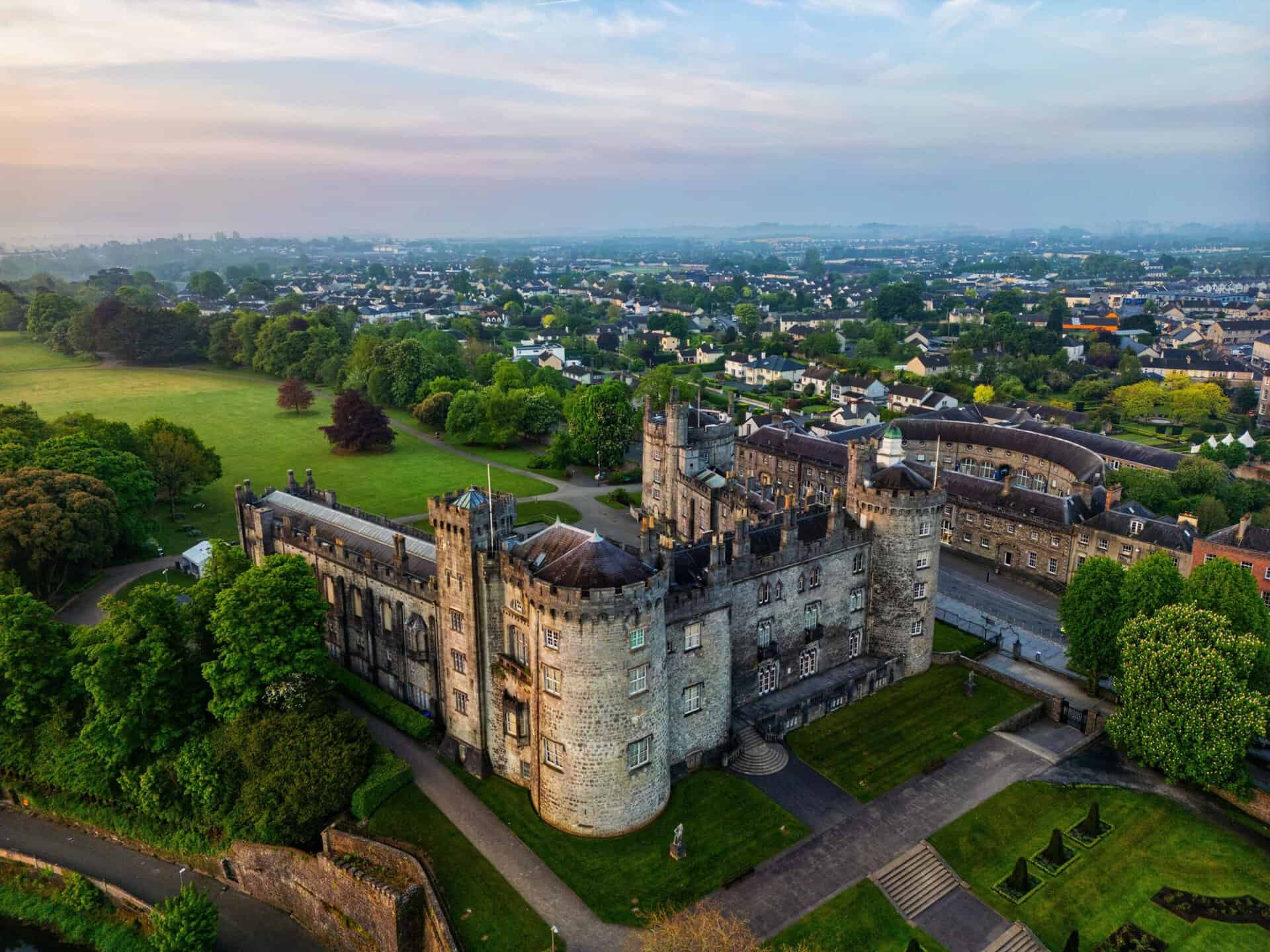
Kilkenny Castle is worth visiting if you want one of Ireland’s most accessible big-name castles, especially for a first trip to Kilkenny, a family day out, or anyone who likes historic interiors as much as defensive stonework. It suits people who want a polished, easy-to-plan visit more than those chasing a remote ruin or a full-on medieval fortress experience.
For a broader shortlist, see our guide to the best castles in Ireland. If Kilkenny is already on your route, this Kilkenny Castle Visitor Guide will help you work out how long to allow, what you can actually see, and where to go once you leave the grounds.
Search by castle, county or nearby town, then click a marker to open the complete IrelandWide visitor guide.
Kilkenny Castle works well because it gives you two very different visits in one place. Inside, you get restored period rooms, the long Picture Gallery, and a sense of how the Butler family lived after the site shifted away from pure military use. Outside, you get one of the easiest castle park walks in an Irish city, with the River Nore, formal gardens, lawns, and mature trees all a few minutes from shops and cafés.
That mix makes it a safer bet than a ruin if you are travelling with mixed interests. One person can care about Norman origins, another can just want a solid stroll and a few good photos, and both come away happy. If you tend to compare castle experiences before choosing, it sits closer to a grand house-and-grounds visit than something like the wilder drama in our Dunluce Castle visitor guide.
If you are building a wider county itinerary, our Kilkenny travel guide and best castles in Ireland guide pair well with this stop.
Kilkenny Castle is open all year. The official operator lists castle opening hours as 09:15 to 17:30 from April to September, with last admission at 17:00, and 09:30 to 17:00 from October to March, with last admission at 16:30. Because access can change at short notice due to weather or operational issues, check the official page before you set off.
Official self-guided admission is listed at €8 adult, €6 senior/group, €4 child/student, and €20 family. Guided tickets are listed at €12 adult, €10 senior, €6 child/student, and €30 family. For a major state-run castle in a city centre, that is still pretty reasonable by Irish standards.
Guided tours run daily and usually last about 50 minutes. The official Kilkenny Castle guidance says tickets can be bought online and on site, but online booking is limited to individuals and a maximum of six tickets. Places for guided tours are limited, so if you care about seeing the Medieval Foundations, West Tower, and Ducal Palace Exhibition, book early or arrive with a backup plan.
Do not buy from third-party ticket sellers. Only official sales are accepted.
The strongest part of the interior is the run of restored Victorian period rooms. The library, drawing room, nursery, bedrooms, and the Picture Gallery are the highlights most people remember. This is not a bare-shell castle with a few information boards and an apologetic rope barrier. It is a furnished historic house inside an older stronghold.
If you only have limited time, focus on three things. First, the contrast between the castle’s medieval roots and its later domestic interiors. Second, the Picture Gallery, which is one of the grandest spaces in the building. Third, the sense of the Butlers’ long hold on Kilkenny, which shaped the city for centuries.
Guided tours add access to areas not always included in a standard walk-through, so they make more sense for history-minded visitors than they do for people who just want a quick look. If your taste runs toward grand interiors more than battlements, you would probably also enjoy reading is Ashford Castle worth it in 2026 for a very different take on Irish castle luxury.
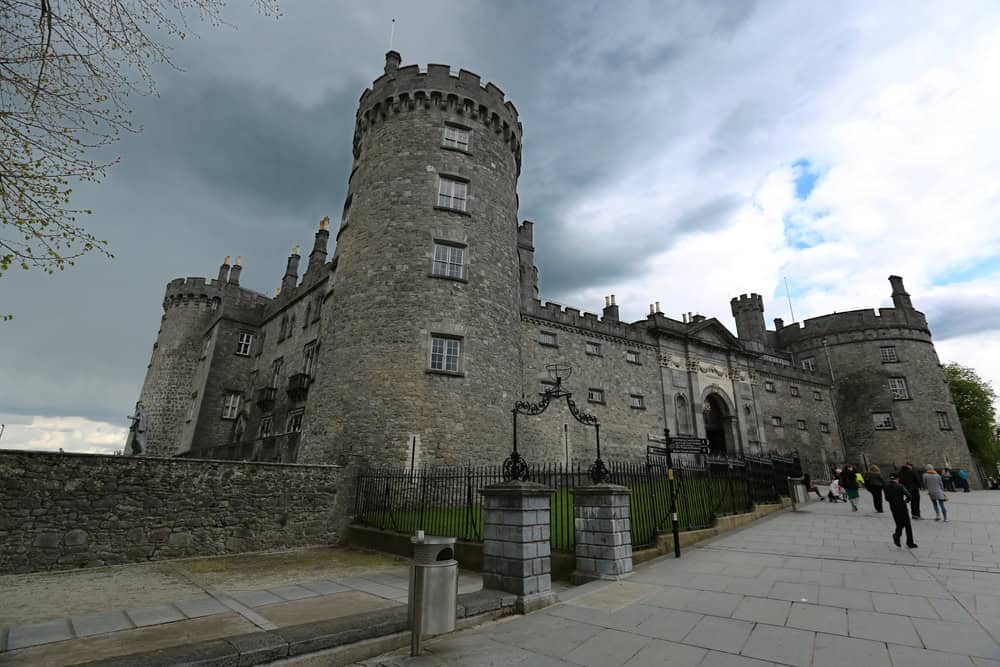
Kilkenny Castle began as a 12th-century Norman castle, and although it was heavily remodelled, this is not a fake Victorian fantasy with no earlier structure behind it. The site still preserves core medieval fabric, and guided tours specifically mention access to the Medieval Foundations and the West Tower.
What you are seeing, though, is a building that changed repeatedly over time. If you want a castle that feels fully martial and severe, with every wall shouting siege history at you, Kilkenny is only partly that place. Its appeal lies in the overlap between fortress, estate house, and public park.
The documented outline is clear. The castle was built in the 12th century and became the principal seat of the Butler family for almost 600 years. The city of Kilkenny grew in influence under that family, and the castle itself was later remodelled in Victorian times. The Irish State took it over in 1969, after which major restoration work followed.
There is no need to pad out the story with spooky legends or half-remembered folklore. The real history is substantial enough on its own, and it is better documented than most castle ghost tales anyway.
Give the castle itself 60 to 90 minutes if you are doing a self-guided visit at a sensible pace. Add a guided tour and some time in the grounds, and two to three hours feels more realistic.
The parkland is free to enter, so you can also split the visit. Some people tour the interior first, break for lunch in town, then come back for the gardens and riverside paths when the light is better. That works particularly well on a city break or as part of a 7 day Ireland itinerary where you do not want one stop swallowing the whole afternoon.
Large bags are not allowed in the period rooms. The official visitor guidance says only small bags up to roughly A4 size are permitted, and lockers are available on site.
The grounds are one of the best reasons to come even if you are only mildly interested in interiors. The wider parkland includes the Rose Garden, riverside walks, lawns, woodland areas, and a children’s playground. Entry to the park and gardens is free, which makes this an easy add-on even for people who skip the ticketed rooms.
Families usually do well here because there is room to reset after the indoor visit. Children still need to be supervised throughout the castle building, and the official guidance is strict on that point, but the outdoor space takes the pressure off. On busy summer weekends, the playground and garden paths can feel a bit hectic around midday, so earlier or later tends to be calmer.
This is not a fully step-free castle experience. Official guidance notes that parts of the castle may not be suitable for visitors with reduced mobility, so it is worth contacting the site directly if stair access or route planning is important for your group.
Non-flash photography is allowed in the period rooms for personal use. Video is not permitted. All visitors queue to enter the building, and the queueing system is outdoors, so dress for Irish weather rather than the optimistic version of it you had while packing. Even on dry days, the grounds can be damp underfoot after rain, so proper shoes are a smarter choice than flimsy trainers.
For exterior shots, the best views are usually from the park side and from paths near the River Nore. The Rose Garden side gives you a cleaner, composed view of the façade. Late-day light can be kinder on the stone and on your camera roll.
Inside, keep expectations realistic. Historic interiors often mean mixed light, no flash, and people drifting into frame exactly when you have finally found the angle. If you want the best interior photos, choose an early slot and move steadily before rooms get crowded.
Kilkenny Castle sits on The Parade, Kilkenny City, R95 YRK1. If you are already in the city centre, it is an easy walk. That is one of the big advantages here. You do not need a long rural detour, and you are never far from the rest of Kilkenny’s main sights.
If you are driving, plan to use city-centre parking rather than expecting a large dedicated castle lot at the gate. If you are arriving by public transport, the castle is reachable on foot from Kilkenny’s transport hub and central streets. For first-timers doing a wider road trip, our advice for first time visitors to Ireland covers some of the small logistics that catch people out.
St Canice’s Cathedral is the obvious second stop if you want another major historic site in the city. The Medieval Mile Museum works well if you want more context on Kilkenny’s urban history rather than another aristocratic interior. The Smithwick’s Experience is a good change of pace if your group wants something less architectural.
For more castle-focused detours nearby, pair this guide with our Cahir Castle visitor guide and Trim Castle visitor guide. They make useful comparisons because each handles the fortress-versus-interior-house balance very differently.
Yes, especially if you want one easy, high-quality historic stop in Kilkenny without spending half the day on logistics. It is one of the simplest castle visits in Ireland to slot into a walking day in a historic city.
If your ideal castle is a roofless ruin on a dramatic hill, this may feel a bit tidy. If you want substance, atmosphere, and practical ease, it earns its place.
Official self-guided admission is listed at €8 for adults, €6 for seniors/groups, €4 for children and students, and €20 for families. Guided tours cost more, with official rates listed at €12 adult, €10 senior, €6 child/student, and €30 family.
Advance booking is a good idea for guided tours because places are limited. Self-guided entry can also sell through busy periods, and the official booking system allows online purchases up to 28 days ahead.
Most people should allow 1.5 to 3 hours. A self-guided interior visit can be done in about an hour, but the grounds are worth extra time.
Yes. The parkland and gardens are free to enter, while the castle interior requires a ticket.
Yes. The combination of furnished rooms, open parkland, and a playground makes it one of the more family-friendly major castle visits in Ireland.
Partly. Some areas may not suit visitors with reduced mobility, so check with the site directly if step-free access is important for your plans.

Dan is the founder and editor of Ireland Wide. Born and raised in Ireland, he researches the country’s history, mythology and cultural traditions using museum collections, heritage authorities and historical sources. He leads the site’s editorial team, with a particular focus on distinguishing documented history from later folklore and modern interpretations.
At Ireland Wide, our aim is to bring authentically Irish insights to you, wherever you are.
Whether you have some feedback or would like to offer some of your own insights for everyone else to explore, don't hesitate to get in touch with us!