
Ireland and Northern Ireland are full of castles, from major state-run sites like Kilkenny Castle and Trim Castle to cliff-edge ruins such as Dunluce Castle and Kinbane Castle. If you want one page to help you decide where to go first, this is it.
This guide covers the whole island. Jurisdiction labels are included throughout, so you can quickly tell what is in the Republic of Ireland and what is in Northern Ireland. Practical details stay broad on purpose. This is the entry point, not a 3,000-word parking guide for one keep.
You will often see claims that Ireland has around 30,000 castles and castle ruins. Treat that as a popular estimate, not a precise official count. There are certainly a lot of them, which is both useful and mildly inconvenient when you only have one week.
Search by castle, county or nearby town, then click a marker to open the complete IrelandWide visitor guide.
On this island, the word castle covers a few different things. Some are large Norman fortresses like Trim Castle and Carrickfergus Castle. Some are later tower houses, which were fortified homes built for local lords and landowners. Others are grand country-house castles or castellated mansions such as Glenveagh Castle.
You will also run into sites like the Rock of Cashel, which is not a single fairytale castle in the theme-park sense, but a major medieval complex with immense historical weight. For most trip planning, that distinction does not matter much. If the place delivers history, atmosphere and a good visit, it belongs on the list.
The table below is the broad, island-wide shortlist. Coordinates are approximate enough for map planning. Visitability tells you whether the site is typically entered, viewed mainly from outside, or primarily appreciated as ruins and scenery. A few are really hotel estates first and foremost, so if you want bedrooms rather than battlements, skip ahead later to the stay-in options or browse these Airbnb castles in Ireland.
| Castle | County | Jurisdiction | Coordinates | Visitability | Typical Visit Time | Nearest Base | Official Source |
|---|---|---|---|---|---|---|---|
| Dublin Castle | Dublin | Republic of Ireland | 53.3429, -6.2674 | Interior and grounds | 1 to 2 hours | Dublin | Heritage Ireland |
| Malahide Castle | Dublin | Republic of Ireland | 53.4509, -6.1544 | Interior and estate | 2 to 3 hours | Malahide | Malahide Castle & Gardens |
| Swords Castle | Dublin | Republic of Ireland | 53.4597, -6.2196 | Grounds and ruins | 30 to 60 minutes | Swords | Fingal |
| Trim Castle | Meath | Republic of Ireland | 53.5561, -6.7917 | Guided keep tour | 1 to 2 hours | Trim | Heritage Ireland |
| Slane Castle | Meath | Republic of Ireland | 53.7090, -6.5448 | Estate and events focus | 1 to 2 hours | Slane | Slane Castle |
| Kilkenny Castle | Kilkenny | Republic of Ireland | 52.6498, -7.2494 | Interior and parkland | 1.5 to 2 hours | Kilkenny | Heritage Ireland |
| Blarney Castle | Cork | Republic of Ireland | 51.9295, -8.5703 | Interior ruins and grounds | 2 to 3 hours | Blarney or Cork | Blarney Castle |
| Barryscourt Castle | Cork | Republic of Ireland | 51.8878, -8.2941 | Castle visit | 45 to 90 minutes | Midleton or Cork | Heritage Ireland |
| Blackrock Castle | Cork | Republic of Ireland | 51.8999, -8.3984 | Castle exterior and observatory use | 45 to 90 minutes | Cork | Blackrock Castle Observatory |
| Charles Fort | Cork | Republic of Ireland | 51.7005, -8.4971 | Star fort site | 1 to 2 hours | Kinsale | Heritage Ireland |
| Rock of Cashel | Tipperary | Republic of Ireland | 52.5194, -7.8908 | Major monument complex | 1.5 to 2 hours | Cashel | Heritage Ireland |
| Cahir Castle | Tipperary | Republic of Ireland | 52.3766, -7.9212 | Interior and riverside site | 1 to 2 hours | Cahir | Heritage Ireland |
| Bunratty Castle | Clare | Republic of Ireland | 52.6996, -8.8147 | Castle and folk park | 2 to 3 hours | Bunratty or Shannon | Shannon Heritage |
| Knappogue Castle | Clare | Republic of Ireland | 52.8060, -8.9027 | Exterior and grounds focus | 30 to 60 minutes | Quin or Ennis | Shannon Heritage |
| Dunguaire Castle | Galway | Republic of Ireland | 53.1420, -8.9228 | Exterior landmark and seasonal access varies | 30 to 60 minutes | Kinvara or Galway | Shannon Heritage |
| Ashford Castle | Mayo | Republic of Ireland | 53.5423, -9.2847 | Hotel estate | Stay or book activities | Cong | Ashford Castle |
| Ross Castle | Kerry | Republic of Ireland | 52.0413, -9.5064 | Castle visit in national park | 1 hour | Killarney | Heritage Ireland |
| Ballyseede Castle | Kerry | Republic of Ireland | 52.2457, -9.6458 | Castle hotel | Stay or dine | Tralee | Ballyseede Castle |
| Carrigafoyle Castle | Kerry | Republic of Ireland | 52.5670, -9.3078 | Ruins and exterior | 30 to 60 minutes | Ballylongford | Heritage Ireland |
| King John’s Castle | Limerick | Republic of Ireland | 52.6681, -8.6268 | Interior exhibition and walls | 1.5 to 2 hours | Limerick | King John’s Castle |
| Parke’s Castle | Leitrim | Republic of Ireland | 54.0488, -8.3020 | Restored manor house and courtyard | 45 to 90 minutes | Leitrim Village or Sligo | Heritage Ireland |
| Donegal Castle | Donegal | Republic of Ireland | 54.6547, -8.1124 | Interior and restored rooms | 1 hour | Donegal Town | Heritage Ireland |
| Glenveagh Castle | Donegal | Republic of Ireland | 55.0374, -7.9968 | Castle and national park | 2 to 4 hours | Letterkenny | National Parks and Wildlife Service |
| Lough Eske Castle | Donegal | Republic of Ireland | 54.6409, -8.1405 | Hotel estate | Stay or spa visit | Donegal Town | Lough Eske Castle |
| Duckett’s Grove | Carlow | Republic of Ireland | 52.7365, -6.7843 | Ruins and grounds | 45 to 90 minutes | Carlow | Carlow Tourism |
| Huntington Castle | Carlow | Republic of Ireland | 52.5787, -6.6476 | Private historic house and gardens | 1 to 2 hours | Clonegal | Huntington Castle |
| Cabra Castle | Cavan | Republic of Ireland | 53.9141, -6.8008 | Castle hotel | Stay or dine | Kingscourt | Cabra Castle |
| Kylemore Abbey | Galway | Republic of Ireland | 53.5618, -9.8880 | Abbey interior, church, gardens, and estate | 2 to 4 hours | Clifden or Galway | Kylemore Abbey |
| Lismore Castle | Waterford | Republic of Ireland | 52.1396, -7.9299 | Public gardens and gallery; castle is private | 1 to 2 hours | Lismore or Dungarvan | Lismore Castle Arts |
| Ballynahinch Castle | Galway | Republic of Ireland | 53.4607, -9.8616 | Castle hotel and estate | Stay, dine, or book activities | Recess or Clifden | Ballynahinch Castle |
| Drimnagh Castle | Dublin | Republic of Ireland | 53.3240, -6.3338 | Guided castle and garden visit | 45 to 90 minutes | Dublin | Drimnagh Castle |
| Birr Castle | Offaly | Republic of Ireland | 53.0951, -7.9157 | Gardens, science centre, and historic telescope | 2 to 3 hours | Birr | Birr Castle Demesne |
| Castle Leslie | Monaghan | Republic of Ireland | 54.3182, -6.8958 | Castle hotel and country estate | Stay, dine, or book activities | Glaslough or Monaghan | Castle Leslie Estate |
| Clontarf Castle | Dublin | Republic of Ireland | 53.3647, -6.2064 | Castle hotel, dining, and events | Stay or dine | Dublin | Clontarf Castle |
| Aughnanure Castle | Galway | Republic of Ireland | 53.4166, -9.2744 | Restored tower-house visit | 45 to 90 minutes | Oughterard or Galway | Heritage Ireland |
| Glin Castle | Limerick | Republic of Ireland | 52.5704, -9.2828 | Private residence and exclusive rental | Stay or attend a booked event | Glin or Listowel | Glin Castle |
| Markree Castle | Sligo | Republic of Ireland | 54.1742, -8.4614 | Castle hotel and wedding venue | Stay or attend an event | Collooney or Sligo | Markree Castle |
| Kilronan Castle | Roscommon | Republic of Ireland | 54.0622, -8.1666 | Castle hotel and spa | Stay, dine, or spa visit | Ballyfarnon or Boyle | Kilronan Castle Estate |
| Lough Rynn Castle | Leitrim | Republic of Ireland | 53.9032, -7.8554 | Castle hotel, gardens, and estate | Stay, dine, or garden visit | Mohill or Carrick-on-Shannon | Lough Rynn Castle |
| Athenry Castle | Galway | Republic of Ireland | 53.3019, -8.7468 | Interior, Great Hall, and medieval town setting | 45 to 90 minutes | Athenry or Galway | Heritage Ireland |
| Enniskillen Castle | Fermanagh | Northern Ireland | 54.3466, -7.6415 | Museum and riverside site | 1 to 2 hours | Enniskillen | Enniskillen Castle Museums |
| Castle Coole | Fermanagh | Northern Ireland | 54.3382, -7.7078 | Neo-classical mansion and estate | 1.5 to 2 hours | Enniskillen | National Trust |
| Florence Court | Fermanagh | Northern Ireland | 54.2566, -7.7150 | House and estate | 2 to 3 hours | Enniskillen | National Trust |
| Carrickfergus Castle | Antrim | Northern Ireland | 54.7144, -5.7988 | Interior and battlements | 1 to 2 hours | Carrickfergus or Belfast | Communities NI |
| Dunluce Castle | Antrim | Northern Ireland | 55.2046, -6.5792 | Ruins and cliff site | 45 to 90 minutes | Portrush or Bushmills | Communities NI |
| Kinbane Castle | Antrim | Northern Ireland | 55.2369, -6.2988 | Ruins and steep coastal walk | 45 to 90 minutes | Ballycastle | Discover Northern Ireland |
| Glenarm Castle | Antrim | Northern Ireland | 54.9668, -5.9580 | Estate and gardens | 1.5 to 2 hours | Glenarm | Glenarm Castle |
| Olderfleet Castle | Antrim | Northern Ireland | 54.8492, -5.8156 | Tower house and heritage site | 30 to 60 minutes | Larne | Mid and East Antrim Borough Council |
| Castle Ward | Down | Northern Ireland | 54.3775, -5.5815 | Estate and house | 2 to 4 hours | Strangford | National Trust |
| Portaferry Castle | Down | Northern Ireland | 54.3795, -5.5470 | Exterior and town stop | 20 to 40 minutes | Portaferry | Ards and North Down Borough Council |
Next, we will go through all 50 castles with specifics and additional information on each.
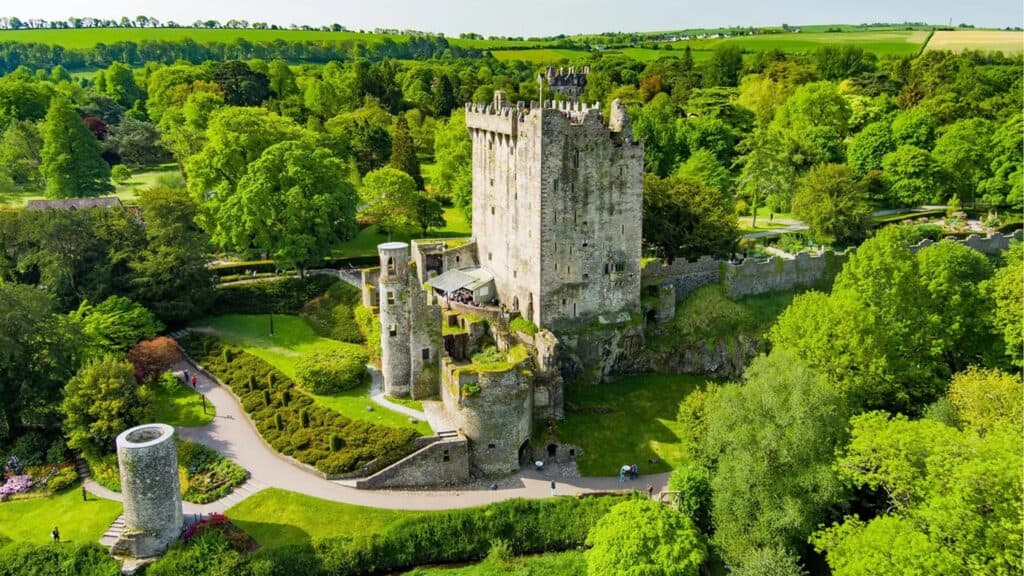
Blarney Castle, built in 1446, is one of Ireland’s most iconic landmarks. Located in County Cork, it is renowned for the Blarney Stone, believed to bestow the gift of eloquence to those who kiss it. I like Blarney Castle because it’s surrounded by so much greenery and wildlife.
The castle has a rich history, featuring stunning gardens and a dramatic landscape. It attracts visitors from around the world, primarily due to its legendary stone.
Blarney Castle is surrounded by lush grounds, making it a beautiful spot for exploration. Many flock here not just for the stone but also for the charming architecture and historical significance.
For more details, visit Blarney Castle and Gardens.
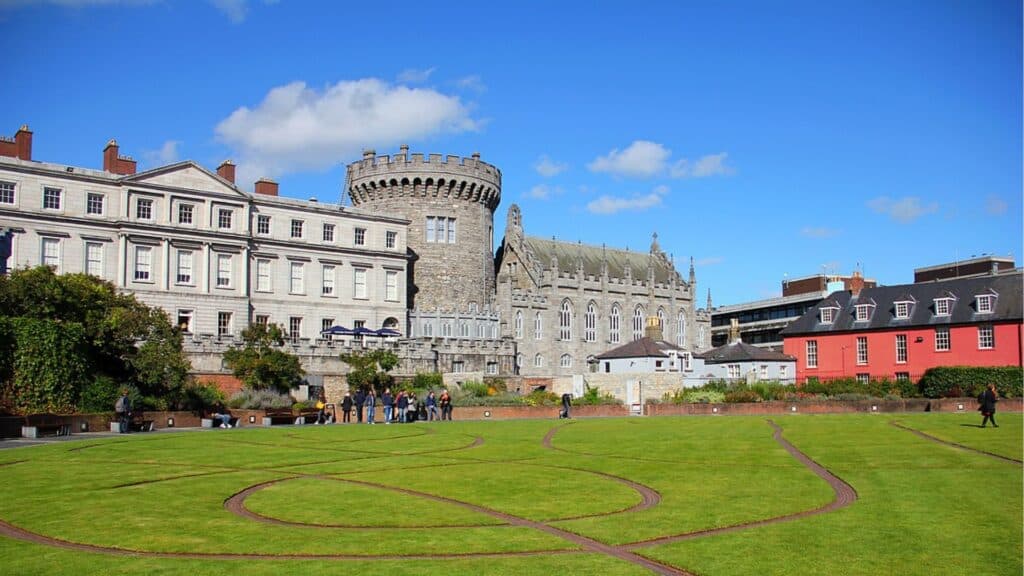
Dublin Castle, constructed in 1204, is a historic fortress located in the heart of Dublin. It was originally built on the site of a Viking fortress and has served various roles throughout history, including as a royal palace and government complex. Dublin Castle is great becuase it’s right in the middle of the capital which is a great reminder of Ireland’s complex history.
Known for its impressive architecture, Dublin Castle showcases a blend of medieval and modern elements. The State Apartments are particularly notable, offering insight into Ireland’s turbulent history and governance.
The castle also hosts significant events and ceremonies, making it a central cultural hub. Visitors can explore its rich past and stunning grounds. More details can be found here.
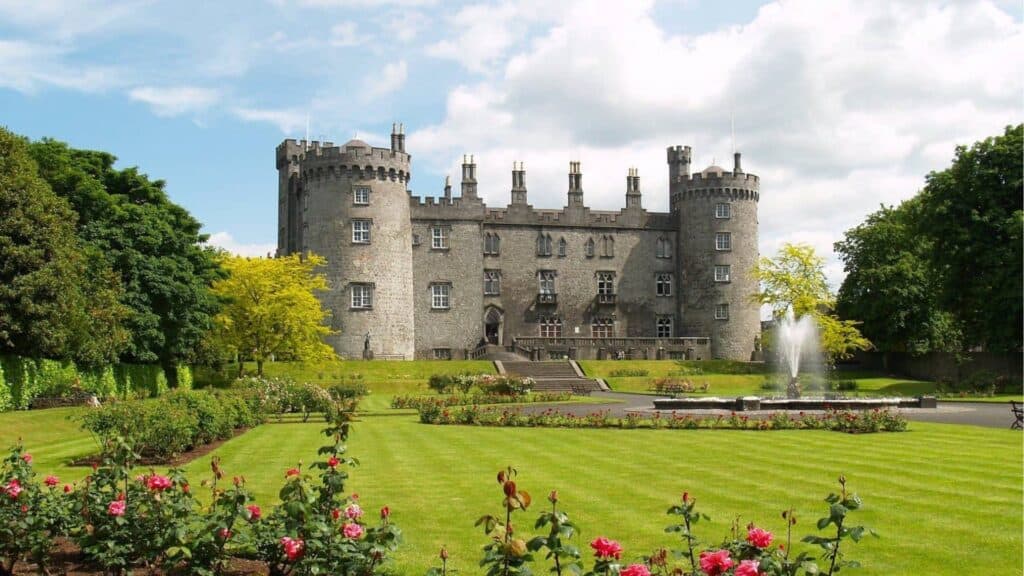
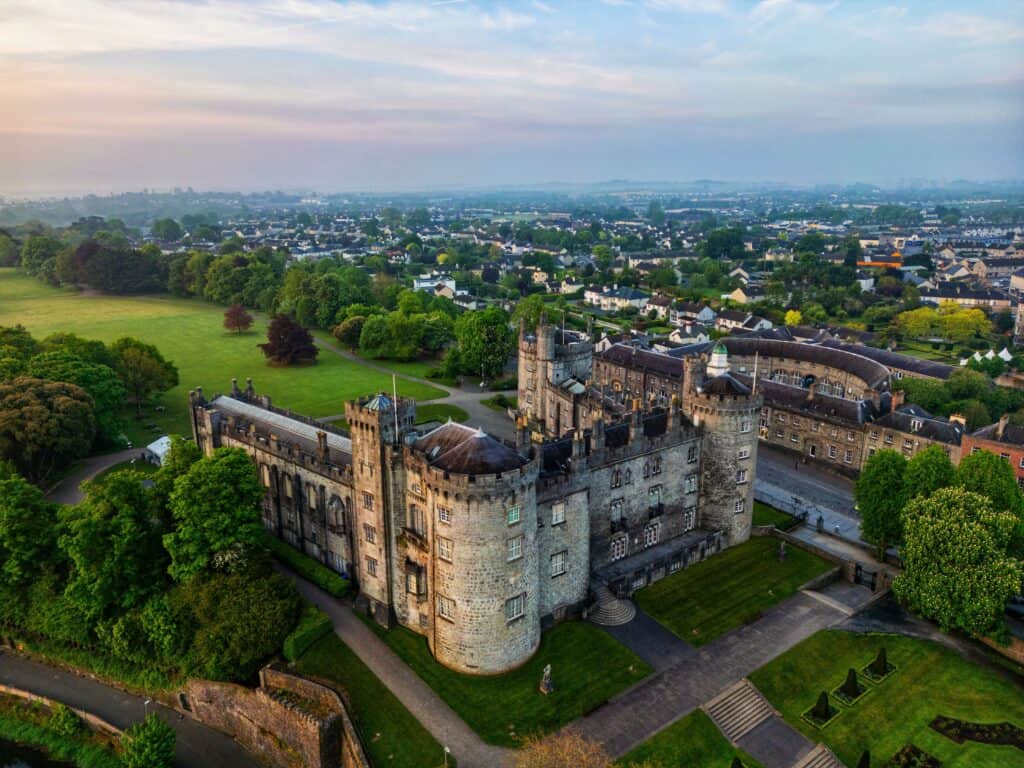
Kilkenny Castle was constructed in 1195 to control a strategic crossing over the River Nore. It served as the residence for the powerful Butler family for nearly 800 years.
The castle showcases impressive Gothic architecture, notably transformed in the Victorian era. Its extensive grounds include beautiful gardens and walking paths, making it a popular destination for visitors. This castle looks great with its bug chimneys and large windows.
Kilkenny Castle is renowned for its rich history and well-preserved interiors, which include a grand library and opulent drawing rooms. It offers insights into the lives of its former inhabitants.
Visitors can learn more about this historical landmark at Ireland Travel Guides.

Bunratty Castle, constructed in 1425, is one of Ireland’s most renowned medieval castles. It is located in County Clare and is famous for its impressive architecture and historical significance.
The castle features an authentic 16th-century interior with period furnishings. Visitors can explore its expansive grounds and enjoy the adjacent Folk Park, which showcases a living history experience. I always think this castle looks a bit like a large Lego structure.
Bunratty was originally built on the site of a Viking trading camp from 970. Today, it remains a popular attraction for tourists, offering insights into Ireland’s rich past. For more details, visit Bunratty Castle & Folk Park.

Ashford Castle, constructed in 1228, is located in County Mayo and is renowned for its luxurious accommodations and rich history. Originally built as a fortress, it has transformed into a five-star hotel.
The castle stands on the shores of Lough Corrib, offering stunning views and activities like fishing and golfing. It features beautifully restored interiors that reflect its medieval origins. Nowadays, Ashford Castle looks like somethign out of a movie, especially with its ivy-lined walls.
Ashford Castle has also hosted notable guests, including royals and celebrities. It is celebrated for fine dining options and exceptional service, making it a premier destination in Ireland. For more information, visit the Complete Guide to Visiting Ashford Castle in Ireland.

The Rock of Cashel, constructed in the 12th century, is a stunning historical site in County Tipperary. Known for its striking limestone architecture, it features a round tower, high cross, and a Romanesque chapel.
Historically significant, this site served as the seat of the Kings of Munster. Legend holds that St. Patrick converted the king of Munster to Christianity here in the 5th century. This is a great castle for those who appreciate ruins and time-tested medieval structures over modernised, rennovated fortresses.
Visitors can explore its remarkable medieval buildings and enjoy panoramic views of the surrounding landscape. The site is a testament to Ireland’s rich heritage and attracts many tourists every year. For more information, visit Heritage Ireland.
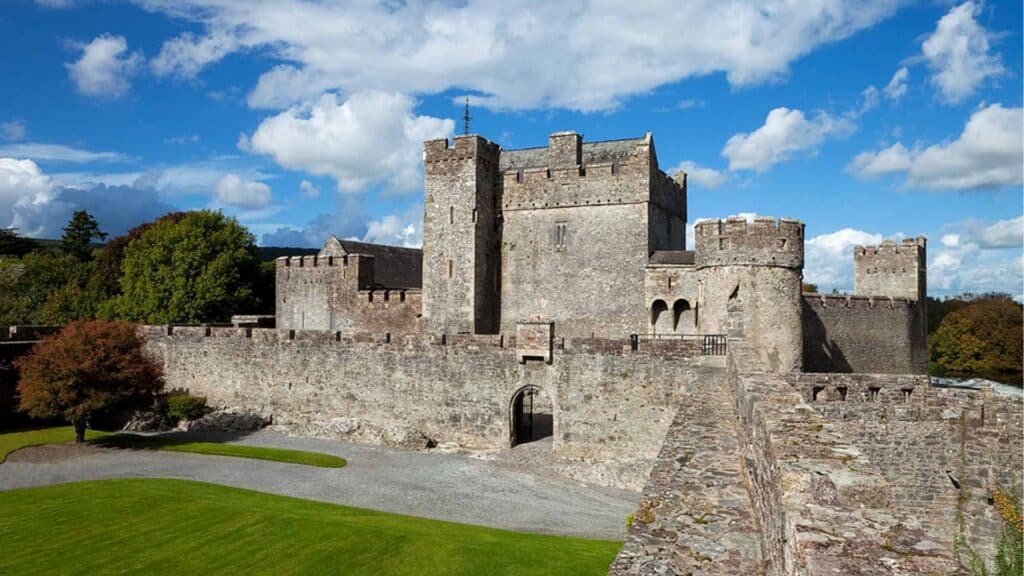
Cahir Castle, located in County Tipperary, is one of Ireland’s largest and best-preserved castles. Constructed in 1142, it was initially built by the Anglo-Normans.
The castle is renowned for its impressive fortifications and historical significance. It features a unique landscape, standing proudly on a rocky island in the River Suir. This one is quite a modest castle compared to the others, but it is a very strategic structure and was occupied by very a powerful family.
Cahir Castle was held for six centuries by the Butler family, making it a symbol of their enduring power. It was captured only once in 1599 during the Elizabethan wars.
Visitors can explore its rich history and stunning architecture. For more information, you can visit Heritage Ireland.

Kylemore Abbey, built in 1868, is located in County Galway’s scenic Connemara region. Originally constructed as a castle, it became an abbey when a Benedictine community settled there in 1920.
The site is renowned for its stunning Victorian-era architecture and picturesque surroundings. It spans a 1,000-acre estate featuring gardens, woodlands, and a tranquil lake. Kylemore Abbey looks incredible on the edge of Pollacapall Lough with its green backdrop and walled fronteir.
In addition to its architectural beauty, Kylemore Abbey has a rich history, including the establishment of a boarding school for girls that operated until 2010. Visitors can explore its fascinating past and tranquil environment at Kylemore Abbey’s official site.
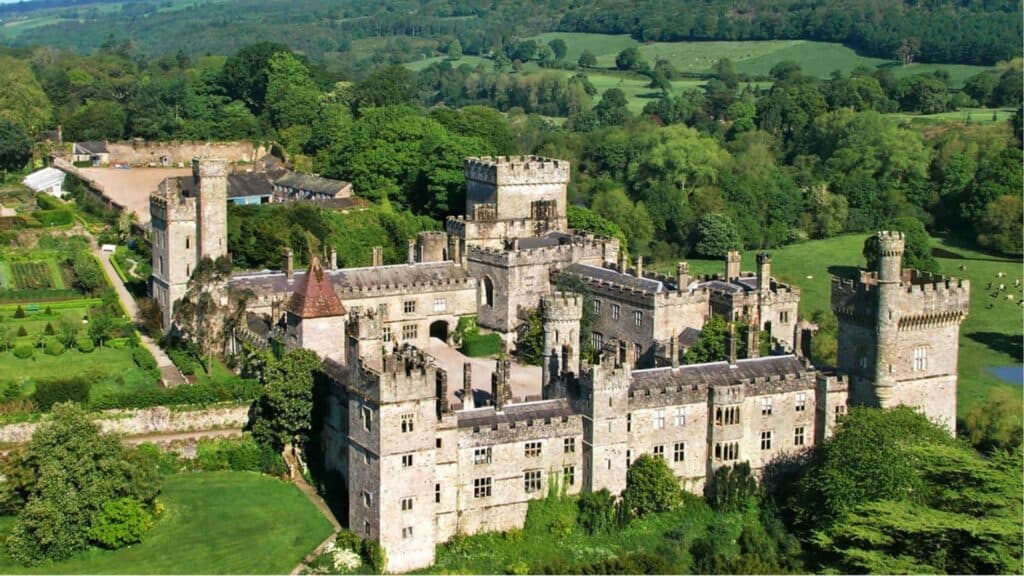
Lismore Castle, located in County Waterford, was originally constructed in 1185. It is recognized for its rich history and stunning gardens. The castle has changed hands multiple times, belonging to the Earls of Desmond and later to the Cavendish family. I always think of Lismore Castle as being the ‘quintessential’ castle due to its square design and its many different turrets.
This castle is not open to the public as it serves as the private residence of the Duke of Devonshire. However, the Lismore Castle Gardens are accessible year-round, showcasing a variety of plants and landscape designs. Visitors can appreciate its historical significance and scenic beauty.
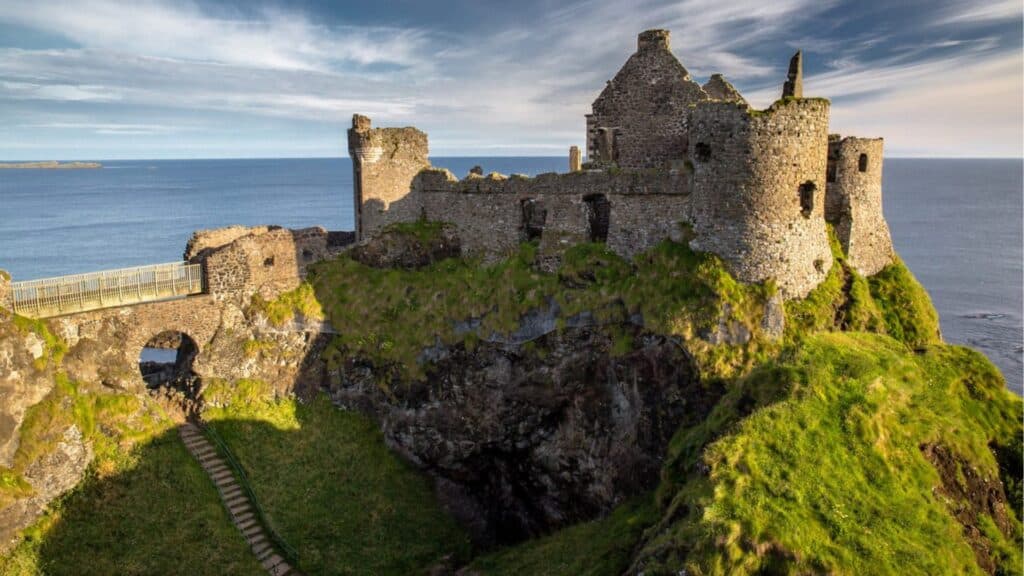
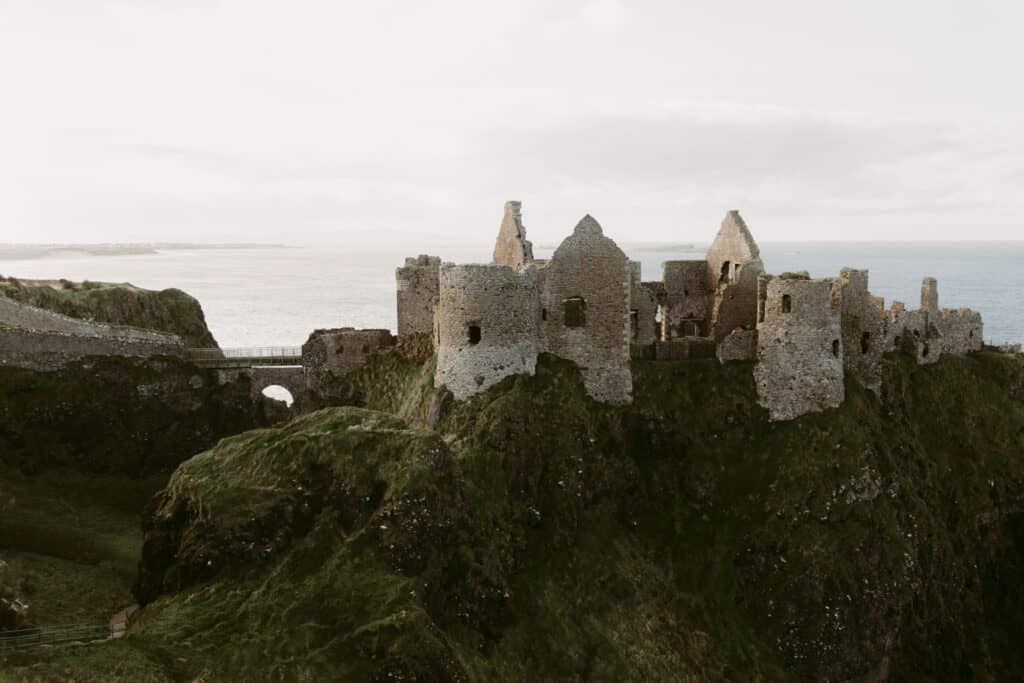
Dunluce Castle is a striking medieval fortress situated on the rugged coast of County Antrim. It was built in the 13th century by the McQuillan clan.
This castle is known for its dramatic cliffside location, offering stunning views of the Atlantic Ocean. Its history includes being captured by the MacDonnell clan in the 1500s, who made it their stronghold. Dunluce Castle is more understated but you can’t beat that view!
The castle’s ruins are a significant attraction, showcasing the architectural style of the time. Visitors can access it via a bridge connecting to the mainland. For more detailed information, visit Ireland.com.
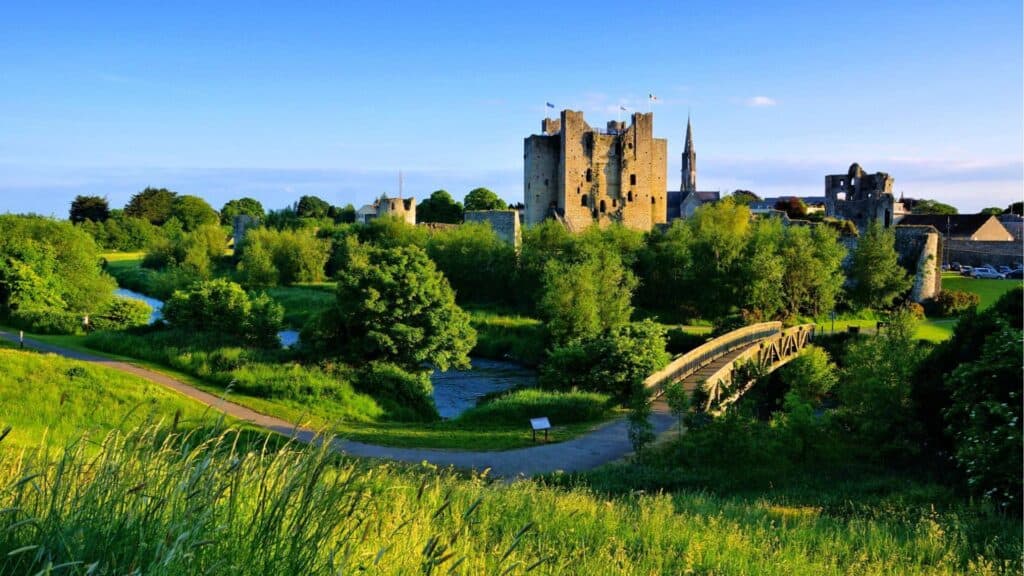
Trim Castle, constructed in 1172, is the largest and best-preserved Anglo-Norman castle in Ireland. Its impressive structure was built over approximately 30 years by Hugh de Lacy.
This castle is notable for its role in the film “Braveheart,” where it represented the walled city of York. Trim Castle’s architecture features a distinctive keep and extensive defensive walls. It stands as a testament to the turbulent history of English and Irish relations during the medieval period.
Visitors can explore its fascinating ruins and learn about its historical significance. More information can be found here.
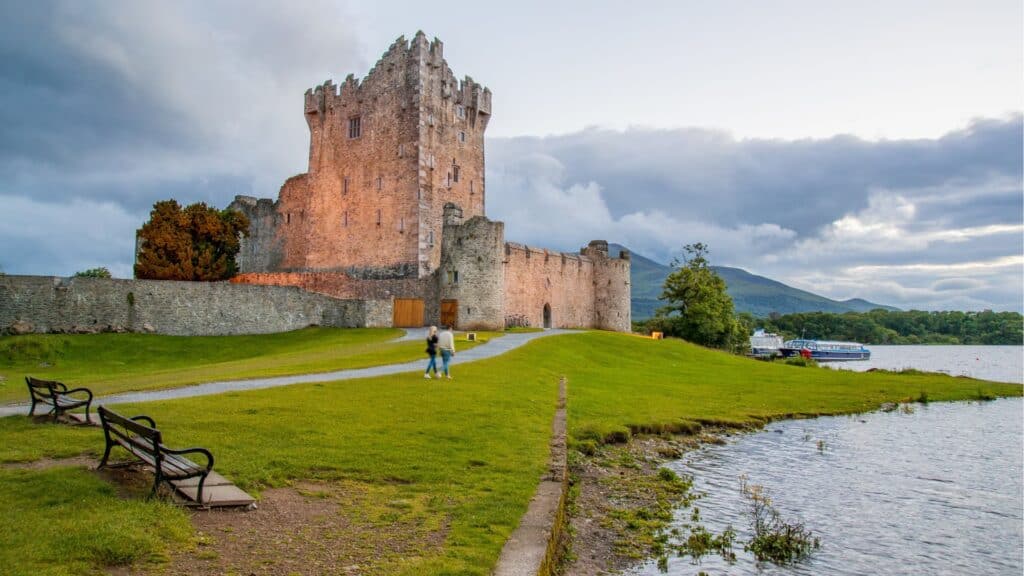
Ross Castle, built in the 15th century, is located on the edge of Lough Leane in County Kerry. It is known for its picturesque setting and storied history as a stronghold of the O’Donoghue clan.
Visitors can explore its unique architecture and learn about its past through guided tours. The castle opens its doors from February 29th to November 3rd, allowing guests to appreciate its grandeur. Ross Castle is lovely as its right on the edge of the gorgeous Lough Leane, originally intended to guard Ross Island.
Walking trails nearby connect the castle to the town of Killarney, enhancing the scenic experience. For more information, visit Ireland Travel Guides.
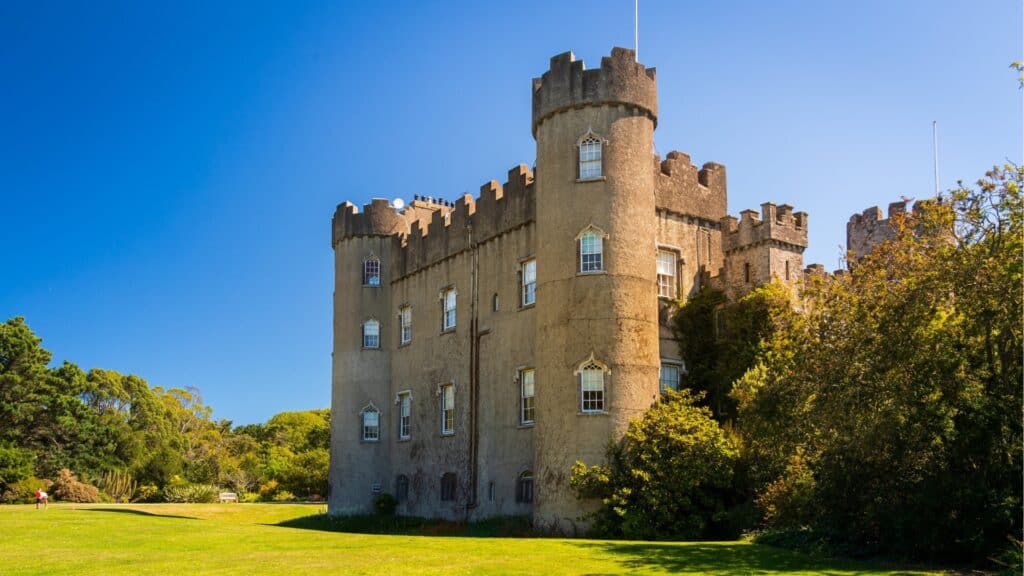
Malahide Castle, constructed in 1185, boasts a rich history as a residence of the Talbot family for nearly 800 years. Its architecture reflects various styles due to numerous renovations over the centuries. This one is great as it’s so symmetrical and compacy, which contrasts some of the other best castles in Ireland.
The castle is renowned for its picturesque surroundings, set within 260 acres of gardens and parkland. Visitors can explore the Butterfly House and enjoy scenic walking trails.
An interesting fact is that the castle remained in the Talbot family until 1976, with the exception of a brief period during the 17th century. For more information, visit Malahide Castle.

Ballynahinch Castle is located in the scenic Connemara region of County Galway. Constructed in 1754, it is renowned for its stunning backdrop of the Twelve Bens mountain range and its historical significance. I really like how the windows are all the same design, but in very different sizes.
The castle sits on a 700-acre estate, surrounded by ancient woodlands and the tranquil waters of Ballynahinch Lake. This luxury hotel is known for its commitment to local cuisine, with dishes crafted from the finest local ingredients.
The estate is also famous for its fishing opportunities, particularly salmon fishing. For more details, visit Ballynahinch Castle.

Lough Eske Castle is an impressive structure located in County Donegal, constructed in 1861. It served as the seat of the powerful O’Donnell family and showcases stunning Victorian architecture.
The castle is renowned for its luxurious accommodations and tranquil setting on a 43-acre estate. Visitors enjoy beautifully landscaped gardens and woodland trails, offering a serene backdrop for relaxation. This castle is another of my favourites, following the similar compact deisgn with grand windows and an overbearing turret.
Lough Eske Castle has received multiple accolades, including recognition as the best luxury hotel in Ireland by The Times. Its restaurant focuses on local flavors, creating a unique culinary experience.
For more on the history and offerings of Lough Eske Castle, visit The Enchanting History of Lough Eske Castle.

Drimnagh Castle, constructed in the 13th century, is a notable example of a Norman castle located in Dublin. It is recognized as the only remaining moated castle in Ireland, emphasizing its unique architectural significance.
The castle features a beautifully restored French-style walled garden dating back to the 17th century. Visitors often appreciate its well-preserved interiors and the palpable sense of history within its walls. I love this castle with its long drieway, nestled in and amongst the local landscape and all its wildlife.
Today, Drimnagh Castle serves as a popular tourist attraction, drawing those interested in medieval architecture and history. For more details, visit Drimnagh Castle: History and All Things You Need To Know.
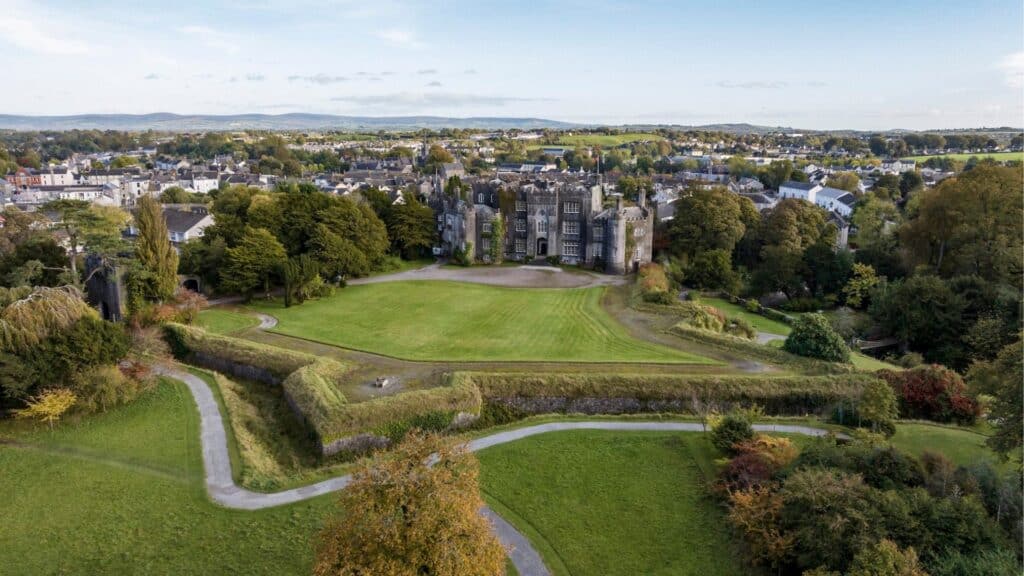
Birr Castle, located in County Offaly, was constructed in 1620. It is known for its impressive architecture and beautiful grounds.
A unique feature is its historic reflecting telescope, which was the largest in the world during the 19th century. This telescope played a significant role in astronomical studies. Birr Castle is an interesting contrast within Offaly, with rows of houses just dozens of metres away.
The castle is still the residence of the 7th Earl of Rosse and offers visitors access to its gardens and a science museum. More information can be found on the official Birr Castle website.

Glenveagh Castle was constructed between 1867 and 1873 by Captain John George Adair. It is located in Glenveagh National Park in County Donegal, Ireland.
The castle is known for its stunning setting amidst mountains, lakes, and gardens. It exemplifies the Scottish baronial architectural style. Visitors can explore the grounds and experience its rich history.
You can tell Glenveagh Castle was built more recently than the others, but that doesn’t take away from its unique beauty – in fact, it adds a certain charismatic charm compared to some other castles and ruins in the list.
Today, Glenveagh Castle serves as a popular tourist attraction. The self-guided tours offer insights into its past while showcasing the surrounding natural beauty. For more information, visit The Irish Road Trip.

Castle Leslie, constructed in 1870, is located in County Monaghan. It is renowned for its stunning architecture and beautiful grounds, covering 1,000 acres of lush Irish countryside.
The estate features a locally run Equestrian Centre, offering horse riding and outdoor activities. Visitors can explore ancient woodlands, lakes, and picturesque landscapes that enhance the castle’s charm. There’s no surprise that Castle Leslie has been chosen by many famous celebrities and royals over the years given its beautiful architecture and rural charm.
Known for hosting notable guests, Castle Leslie maintains a rich history and offers a luxurious experience. For more information, visit Castle Leslie Estate.

Clontarf Castle dates back to 1172, originally built by either Hugh de Lacy or Adam de Phepoe. It has a rich history, having been held by the Knights Templar until the Dissolution of the Monasteries in the 16th century. Clontarf has a very impressive arsenal of historical artefacts, armour, weapons, and other items of interest.
Today, Clontarf Castle serves as a luxury hotel, known for its unique blend of historical architecture and modern amenities. The castle is situated just 10 minutes from Dublin city center, making it an accessible destination for visitors.
Notably, the last prior of the castle, John Rawson, was created Viscount Clontarf in 1541 after surrendering its lands. For further details, visit the official website.

Knappogue Castle was constructed in 1467 in County Clare, Ireland. It was originally built by Sean MacCon MacNamara as a defensive structure against invaders.
This medieval tower house has undergone restoration and is now open for guided tours. Visitors appreciate its well-preserved architecture and historical significance.
The castle is set amid picturesque rolling hills near Quin, reflecting the medieval lifestyle of Irish nobility. This is another of the best castles in Ireland which has quite sharp angles and crennels, making it very memorable.
Knappogue Castle also hosts traditional banquets, providing guests a taste of 15th-century dining experiences. For more information, visit Knappogue Castle.

Dunguaire Castle, constructed in 1520 by the O’Hynes clan, is located on the shores of Galway Bay near Kinvara. It is recognized for its well-preserved 16th-century architecture.
The castle has a rich history, having served as a gathering place for the Irish literary society in the early 20th century. Notably, it was restored by Oliver St. John Gogarty, a poet and senator. I could definitely see myself living here, on the waters edge, although I would certainly need a very large mortgage!
Visitors can experience medieval banquets, which further highlight its historical significance. For more information, visit Visit Galway.
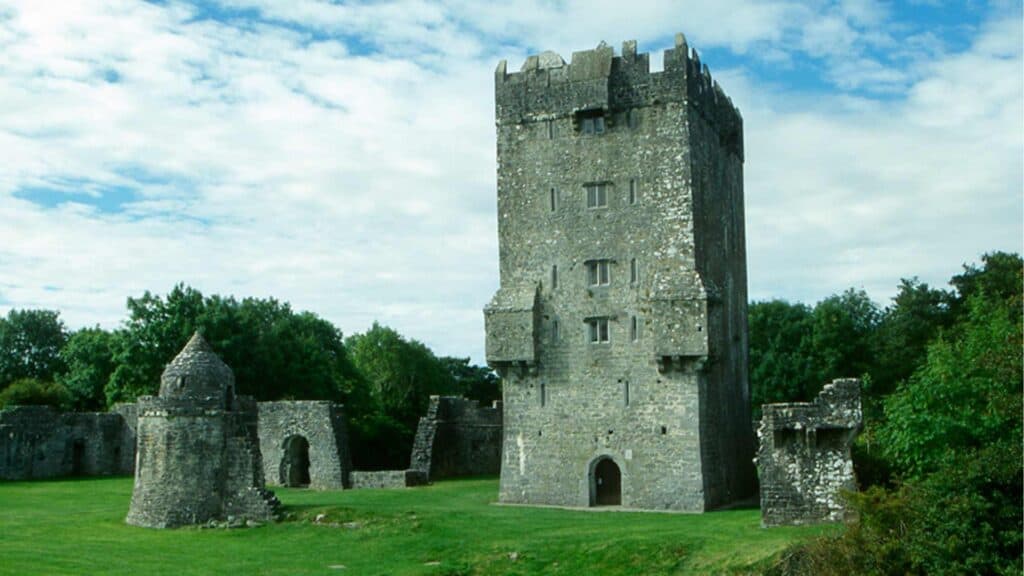
Aughnanure Castle, built around 1500, is located in County Galway, Ireland. It stands as a notable example of a tower house, a style common among Gaelic lords in the region.
The castle served as the main stronghold for the O’Flaherty clan. Its strategic position on the Drimneen River reflects the O’Flaherty tradition of constructing homes near water sources. Aughnanure Castle looks like a structure you might find in a video game, once again highlighting just how impressive Ireland’s castles are.
Visitors often note the castle’s remarkable preservation, allowing them to explore its historic walls and main tower. Local folklore adds to its charm, with tales of supernatural occurrences reported within its grounds.
For more information, one can learn about its haunted reputation and architectural significance here.

Ballyseede Castle, constructed in the 16th century, stands as a remarkable example of Irish heritage. Located near Tralee in County Kerry, it is distinguished as the only castle hotel in the region.
This family-owned establishment offers luxury accommodations amidst historical charm, with features like Doric columns and marble fireplaces. The castle is set on 30 acres of gardens and woodlands, providing a tranquil atmosphere for guests. Ballynahinch Castle looks unbelievable at night with all its glowing lights, appearing more like a mansion than a castle.
Ballyseede Castle played a notable role in Ireland’s history, particularly during the struggle for independence. Today, it is celebrated for its award-winning restaurant and relaxed ambiance, making it a favored destination. More information can be found here.
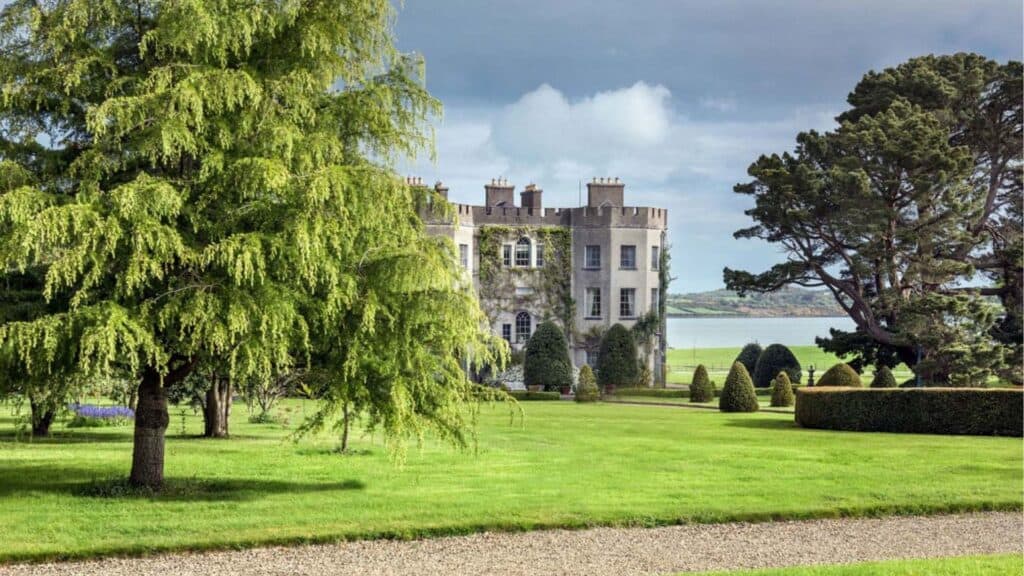
Glin Castle, located in County Limerick, was constructed around 1450. It has become known as the historic seat of the Knight of Glin.
The castle showcases an elegant late 18th-century design, succeeding its medieval predecessor. Its entrance hall features Corinthian pillars, and the reception rooms are adorned with a unique collection of Irish 18th-century mahogany. This is another one of Ireland’s water-shore castles, sitting against a beautiful backdrop.
Glin Castle also offers accommodations, welcoming visitors from March to November. For more information, visit Glin Castle.
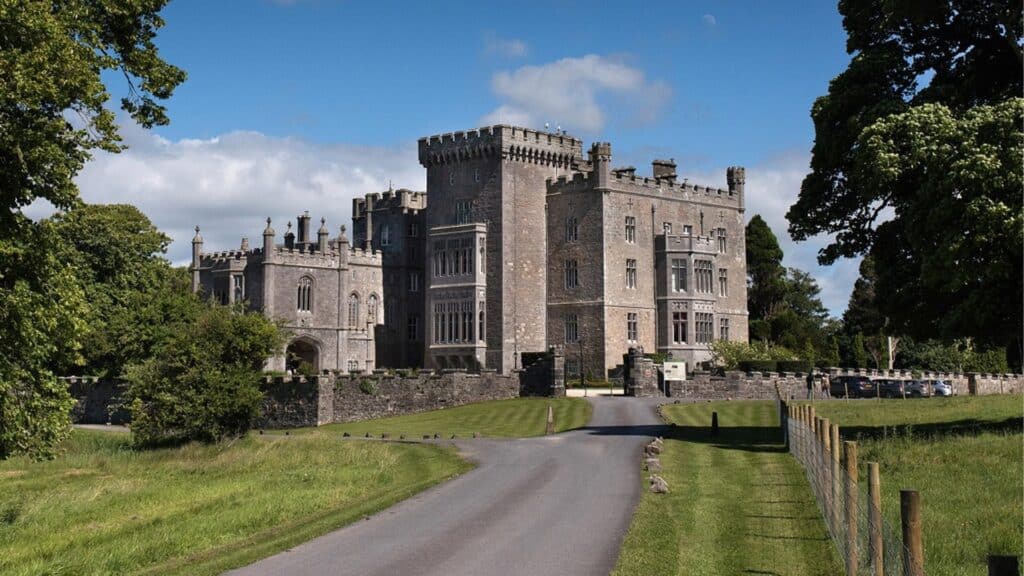
Markree Castle is located in Collooney, County Sligo. It was constructed in 1802 and is one of the largest privately-owned castles in Ireland.
The castle is known for its stunning Gothic architecture and extensive renovations completed in 2017. This transformed it into a luxurious venue for weddings and events. This is one of the best-looking castles in Ireland, with its impressive gatehouse, unique bay windows and angular design.
Markree Castle also holds historical significance as the site of Ireland’s lowest recorded temperature of −19.1 °C (−2.4 °F) on January 16, 1881. Visitors can enjoy its picturesque 500-acre estate, which reflects the beauty of the Irish landscape.
For more information, visit Markree Castle.
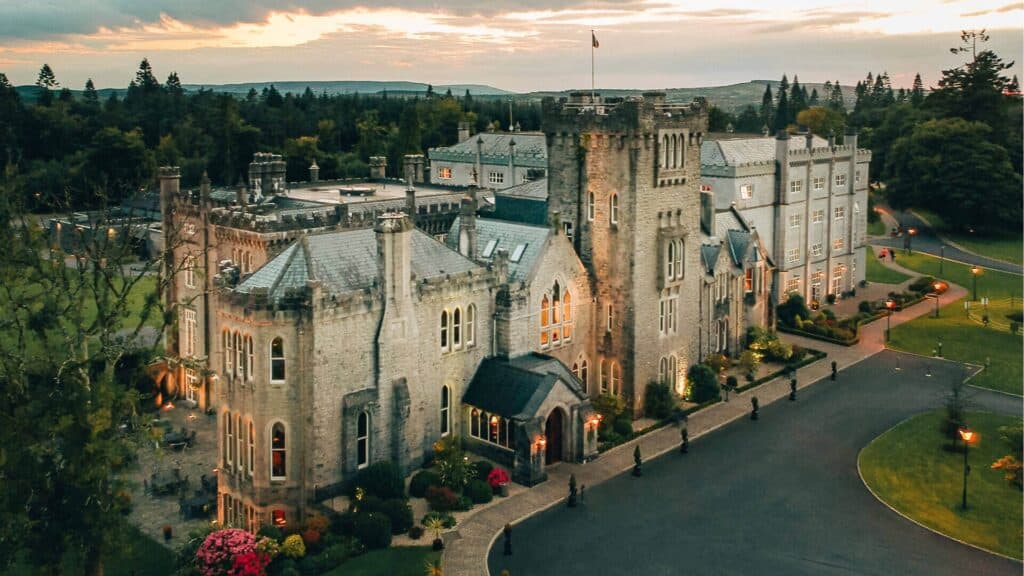
Kilronan Castle was constructed in 1804 by Colonel Edward King-Tenison. It is renowned for its stunning architecture and luxurious accommodations.
The castle showcases period features and is set on 16 hectares of beautiful woodland. Guests enjoy elegant four-poster beds and exquisite dining crafted by an award-winning kitchen. This one looks like a castle you might find on TV on a show like Downton Abbey, or even Harry Potter.
Kilronan Castle also offers a top-tier spa for relaxation and indulgence. This blend of history and modern luxury makes it a unique destination in Ireland. More information can be found at Kilronan Castle Estate.

Lough Rynn Castle, constructed in 1861, is located in County Leitrim, Ireland. It is renowned as one of the finest castle hotels in the country, offering a unique blend of luxury and history.
The castle sits on an isthmus between Lough Rynn and Lough Erril, providing breathtaking views. Its well-preserved Victorian walled garden invites visitors to explore its stunning landscape.
Lough Rynn is also a popular wedding venue, known for its romantic setting and impeccable service. It combines an elegant atmosphere with creative culinary options, making dream weddings a reality.
For more information on this remarkable site, visit the official website.
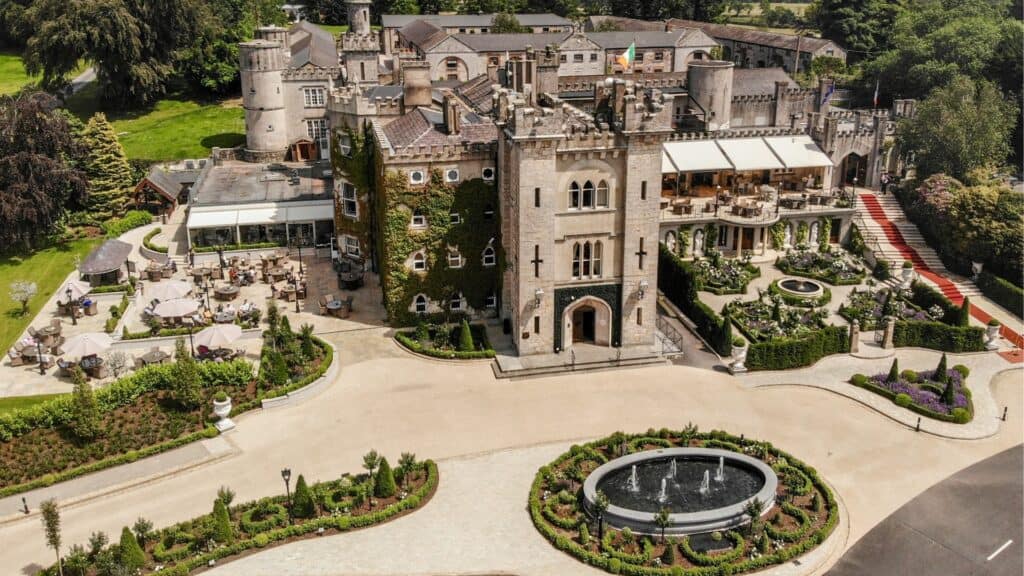
Cabra Castle, located in County Cavan, was constructed in 1699. This historic castle is known for its stunning architecture and rich history.
Set on a 100-acre estate, it offers picturesque views, particularly with the backdrop of Dún a Rí Forest Park. In some ways, Cabra Castle feels all the others on this list tied together in one huge, jaw-dropping structure.
The castle is also renowned as a wedding venue, attracting couples seeking a unique setting. Visitors can explore its intricate interiors and enjoy a variety of accommodations, including luxurious rooms.
For more information, visit the Cabra Castle website.
Swords Castle was built around 1200 as the manorial residence of John Comyn, the first Anglo-Norman Archbishop of Dublin. Rather than serving only as a military fortress, it functioned as an administrative centre and a comfortable residence within a large walled enclosure.
The site includes a gateway, chapel, Constable’s Tower, and sections of the original curtain wall. Its broad courtyard makes the castle feel quite different from the tightly packed tower houses found elsewhere in Ireland.
Long-term restoration has returned important parts of the castle to public use. It has also appeared as a filming location, including in the television series The Tudors.
For more information, visit Fingal County Council.
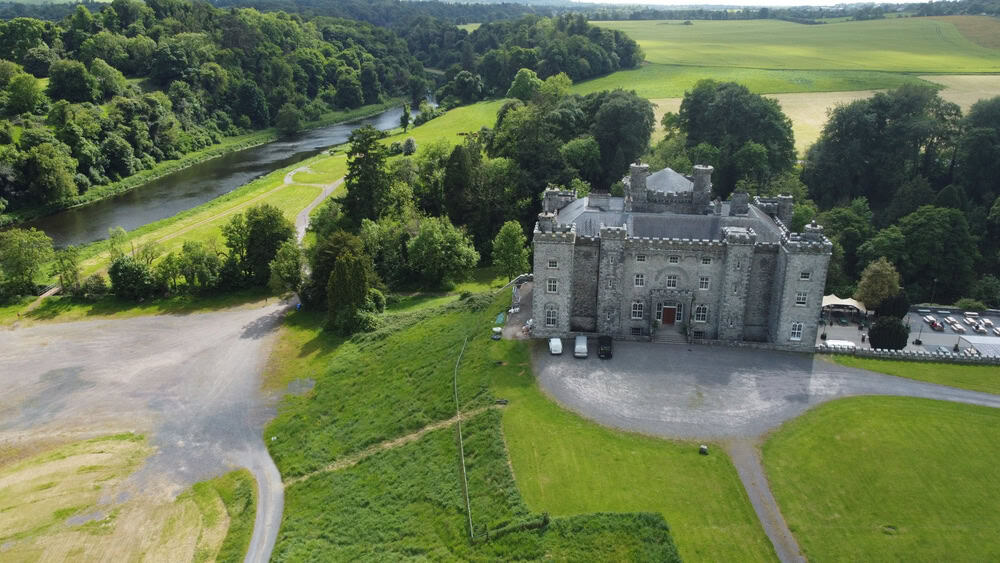
Slane Castle stands on a large estate overlooking the River Boyne in County Meath. Although the site has older roots, the castle seen today was principally reconstructed from 1785 for William Burton Conyngham and his family.
The building combines dramatic Gothic details with the scale of an aristocratic country residence. Its riverside grounds form a natural amphitheatre, which helps explain why Slane became one of Ireland’s best-known concert venues.
U2, Queen, David Bowie, Bruce Springsteen, and The Rolling Stones are among the major acts associated with concerts at Slane. The castle remains a private family home and exclusive venue, so ordinary access can depend on scheduled tours and events.
For more information, visit Slane Castle.
Barryscourt Castle was built between 1392 and 1420 and became the principal seat of successive Lords Barrymore. Its thick walls, defensive towers, and compact layout show how an influential medieval family could combine security with domestic life.
The castle was partly damaged during the conflicts of the late 16th century, but extensive conservation work has helped preserve its character. The surrounding orchard and recreated medieval-style gardens make the setting softer than its defensive exterior suggests.
Barryscourt is a particularly useful stop if you want to understand how an Irish tower house actually functioned. Access can be seasonal, so it is worth checking current opening information before travelling.
For more information, visit Heritage Ireland.
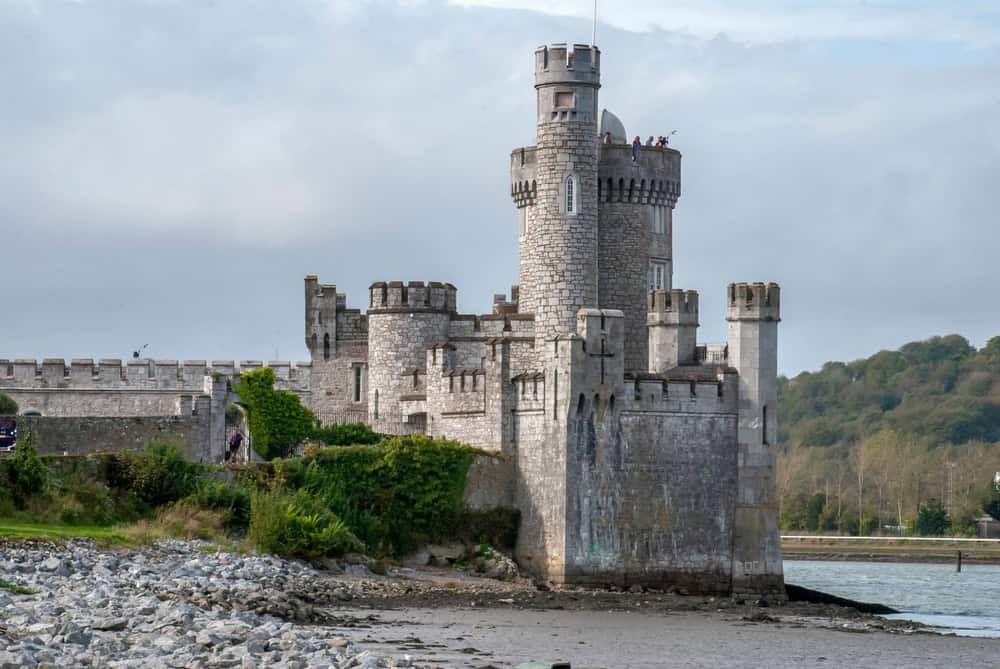
Blackrock Castle was established to help protect Cork Harbour and the shipping routes approaching the city. The original fortified structure dates from the late 16th century, although fires and later rebuilding significantly changed the building visitors see today.
Its location beside the River Lee still gives it a strong maritime character. Parts of the earliest structure survive at lower levels, while the towers and battlements create one of Cork’s most distinctive riverside landmarks.
Today, Blackrock Castle Observatory is home to a space science centre developed through Cork City Council and Munster Technological University. It is a rare place where you can move from local maritime history to radio telescopes and the wider universe in the same visit.
For more information, visit Blackrock Castle Observatory.
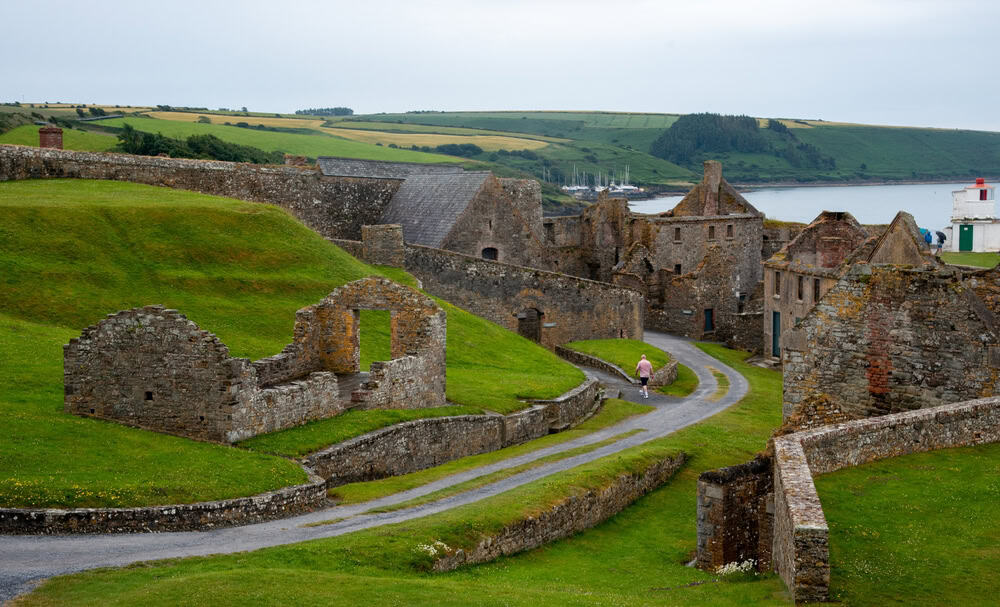
Charles Fort was constructed from 1677 on high ground overlooking Kinsale Harbour. Named after King Charles II, it was designed as a star fort, with angled bastions intended to withstand and return artillery fire.
The fort remained militarily important for centuries and was involved in major events including the Williamite War and the Irish Civil War. Its broad walls and exposed position also provide sweeping views across the harbour, although the wind can be rather enthusiastic.
Visitors can explore the ramparts, ruined barracks, defensive gateways, and exhibition spaces. Charles Fort is technically a fort rather than a traditional castle, but its scale and history comfortably earn it a place in an island-wide castle itinerary.
For more information, visit Heritage Ireland.
Carrigafoyle Castle is a five-storey tower house standing close to the Shannon Estuary near Ballylongford. It was probably built in the 1490s by Conor Liath O’Connor Kerry and controlled an important approach used by ships travelling toward Limerick.
Its position led to the nickname the Guardian of the Shannon. At high tide, water once surrounded the castle like a moat, while a small dock allowed boats to reach the stronghold directly.
The castle suffered a brutal artillery attack during the Second Desmond Rebellion in 1580. Much of the western wall was destroyed, but the surviving tower and staircase still give visitors a sense of its original height and strength.
For more information, visit Heritage Ireland.
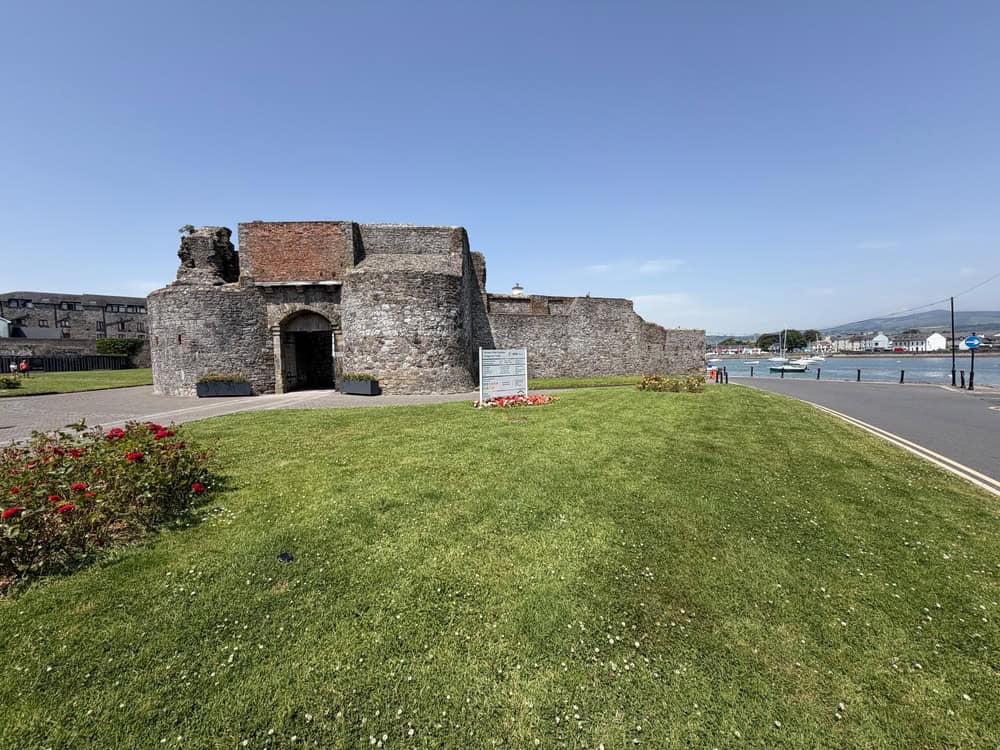
King John’s Castle was built in the early 13th century on King’s Island in Limerick. The Normans reused a strategically important site that had previously formed part of a Viking settlement and defensive stronghold.
Massive corner towers, curtain walls, and the remains of earlier structures reveal how the site evolved through repeated sieges and political upheaval. The views from the walls across the River Shannon are almost enough to distract from how often people fought over the place.
The modern visitor experience includes exhibitions, archaeological remains, and access to the castle walls. Its central location makes it one of the easiest major Irish castles to include in a city break.
For more information, visit King John’s Castle.
Parke’s Castle stands on the northern shore of Lough Gill in County Leitrim. Robert Parke built the plantation-era manor in the early 17th century, reusing portions of an earlier castle associated with the Gaelic O’Rourke family.
The restored building surrounds a cobbled courtyard and combines defensive features with the more domestic layout of a manor house. Its pale stone walls look especially striking against the dark water and wooded hills around the lake.
The lakeside location is a major part of the appeal, and some itineraries pair a castle visit with a boat journey on Lough Gill.
For more information, visit Heritage Ireland.
Donegal Castle rises above the River Eske in the centre of Donegal Town. The O’Donnell chieftains established the stronghold in the 15th century, making it an important seat of Gaelic power in the northwest.
After the Flight of the Earls, the castle passed into English hands and Sir Basil Brooke added a Jacobean-style manor wing. The resulting building places two different architectural and political traditions side by side.
Restoration has made the interior accessible, including the tower, stone stairways, and richly detailed rooms. Its town-centre location means you can visit without committing to a long rural detour.
For more information, visit Heritage Ireland.
Duckett’s Grove was once the centre of a vast County Carlow estate owned by the Duckett family. The house was substantially developed in the early 19th century, with architect Thomas Cobden helping create its theatrical Gothic appearance.
A fire destroyed the interior in 1933, leaving the outer walls and towers as a dramatic ruin. The surviving silhouette looks like the set for a ghost story, although the restored gardens are considerably more cheerful.
Two interconnecting walled gardens now bring visitors to the estate for walks, plants, photography, and seasonal events. Duckett’s Grove is a good choice for anyone who prefers atmospheric ruins to carefully furnished rooms.
For more information, visit Carlow Tourism.
Huntington Castle was built in 1625 as a garrison and family residence in the village of Clonegal. The house remains privately owned by descendants of the original family, which gives it a lived-in quality that is difficult to reproduce in a museum.
Over time, the fortified building developed into a more comfortable country house surrounded by formal gardens, woodland, and a picturesque riverside setting. Peacocks roaming the grounds add a slightly eccentric finishing touch.
Guided visits introduce the castle rooms, family stories, and the Temple of Isis located in the basement. Opening arrangements can be seasonal, so check before making a special journey.
For more information, visit Huntington Castle and Gardens.
Enniskillen Castle was founded in the 1420s by Hugh the Hospitable, a member of the ruling Gaelic Maguire family. Its position beside the River Erne allowed the Maguires to control movement through the surrounding lakelands.
The complex changed substantially after the Plantation of Ulster. It became an English garrison fort and later a military barracks, while the twin-turreted Watergate developed into one of Fermanagh’s most recognisable historic structures.
Today, the site contains Fermanagh County Museum and The Inniskillings Museum. Exhibitions cover the castle’s medieval origins, local archaeology, military history, and life across the county.
For more information, visit Enniskillen Castle Museums.
Castle Coole is an elegant 18th-century mansion set within wooded parkland near Enniskillen. It was designed by James Wyatt for Armar Lowry-Corry, the 1st Earl Belmore, as a powerful display of status and fashionable Neo-classical taste.
The restrained exterior gives way to ornate rooms and a surprisingly extensive world below stairs. Servants’ rooms, service corridors, and working spaces reveal how much labour was needed to keep such a polished house running.
The surrounding estate is also popular for walks, even when access to the mansion is limited. Castle Coole is less battlements and boiling oil, more columns and carefully arranged drawing rooms, but it remains an important part of Ireland’s castle story.
For more information, visit the National Trust.
Florence Court was the country residence of the Cole family for more than 250 years. The main house took shape during the mid-18th century and sits beneath Benaughlin mountain in a particularly scenic corner of County Fermanagh.
Visitors can explore the Georgian mansion, pleasure grounds, woodland trails, walled garden, and kitchen garden. The estate is also home to the celebrated Florence Court yew, believed to be the original source of the upright Irish yews planted around the world.
This is another site where the landscape is as important as the building. Leave enough time for a walk, because rushing straight through the house and back to the car would miss much of the reason to visit.
For more information, visit the National Trust.
Carrickfergus Castle was begun in 1177 by the Anglo-Norman knight John de Courcy. Its position on a rocky projection into Belfast Lough allowed it to control the harbour and defend an important route into Ulster.
Successive rulers expanded the keep, outer ward, gatehouse, and defensive walls. The castle faced attacks from Scottish, Irish, English, and French forces, which is an impressive collection of enemies for one building.
Much of the medieval structure survives, including the great keep and battlements overlooking the lough. Its preservation and easy access from Belfast make Carrickfergus one of Northern Ireland’s essential castle visits.
For more information, visit the Department for Communities.
Kinbane Castle was built in 1547 by Colla MacDonnell on a narrow headland between Ballycastle and Ballintoy. The name comes from the Irish for white head, a reference to the pale limestone promontory beneath the ruins.
English forces damaged the castle during sieges in the 1550s, and only a portion of the original structure remains. The setting, however, is spectacular, with views toward Rathlin Island and the Antrim coast.
Reaching the ruins involves a steep coastal descent and the return climb can feel considerably longer. Sensible shoes and calm weather make the experience much more enjoyable.
For more information, visit Discover Northern Ireland.
Glenarm Castle is the ancestral home of the MacDonnell family, Earls of Antrim. A castle has stood at the estate since the 17th century, although rebuilding and architectural changes have shaped the elegant residence seen today.
The castle itself remains a private home, while the estate’s walled garden and woodland walk are the main visitor attractions. The garden dates to the 1820s and has been extensively restored with colourful planting, orchards, and historic features.
Glenarm is a good choice for visitors who want a polished estate experience rather than a roofless medieval ruin. Castle tours and other experiences may be offered on selected dates, so planning ahead is useful.
For more information, visit Glenarm Castle and Garden.
Olderfleet Castle stands on Curran Point at the southern side of Larne Harbour. Although local tradition links the site to an earlier Bissett castle, the surviving structure is generally identified with a tower house or fortified warehouse shown on early 17th-century maps.
The harbour location made this a useful place to watch shipping and control access to the lough. Only part of the once four-storey building survives, including thick masonry and gun loops at basement level.
Olderfleet is a brief stop rather than a full castle-day attraction, but it adds useful context to the harbour’s military and trading history. It also proves that not every historic stronghold comes with a gift shop and a two-hour audio tour.
For more information, visit the Department for Communities.
Castle Ward is an eccentric 18th-century mansion overlooking Strangford Lough. One side presents a restrained classical Palladian face, while the other embraces Gothic arches and pointed details, reportedly reflecting the differing tastes of Bernard and Anne Ward.
The wider estate includes woodland, shoreline trails, gardens, a historic farmyard, and Old Castle Ward, an earlier tower house built around 1600. This mixture gives visitors far more to explore than the main mansion alone.
The farmyard and surrounding landscape appeared as Winterfell in Game of Thrones, adding another layer of interest for television fans. Even without the screen connection, the architecture and lough views make Castle Ward one of County Down’s standout estates.
For more information, visit the National Trust.
Portaferry Castle is a compact 16th-century tower house built by the Savage family. It occupies a prominent slope above the harbour, with views across the water toward Strangford and other defensive sites around the lough.
The square tower originally rose through three main storeys with an attic. A projecting corner turret contained the entrance and stairs, while defensive details included a murder hole above the ground-floor doorway.
The castle is now a roofless ruin and is best treated as a short heritage stop while exploring Portaferry. Its harbour position makes the strategic logic immediately clear, even if the surviving building is modest beside Ireland’s larger fortresses.
For more information, visit Visit Ards and North Down.
Athenry Castle was built during the 13th century by the de Bermingham family after the Anglo-Norman expansion into Connacht. Its large rectangular hall-keep guarded a strategic crossing on the Clareen River and became the centrepiece of the developing medieval town.
The castle retains original battlements, deep arrow loops, and carved details around the entrance to the Great Hall. Its solid shape is less theatrical than some later Irish castles, but that simplicity makes the medieval defensive purpose very easy to see.
A visit works especially well when combined with Athenry’s surviving town walls, medieval street plan, Dominican priory, and heritage centre. Together, they provide a broader picture of medieval urban life rather than treating the castle as an isolated monument.
For more information, visit Heritage Ireland.
Ireland’s castles are more than just impressive structures; they are symbols of the nation’s history and cultural identity. Their evolution and role in local society reflect the complex dynamics of power, architecture, and heritage.
Castles have long served as the heart of Irish communities. They were not only military strongholds but also centers of administration and social life. The local nobility resided in these castles, which played vital roles in the governance of their regions.
Through festivals, gatherings, and markets, castles fostered a sense of community. They represented stability and safety in turbulent times, becoming focal points for cultural expression. Craftsmen, musicians, and artists often showcased their talents within castle walls, allowing traditions to flourish.
Visitors can witness this influence in the architecture and stories that surround each castle, providing insights into local customs and historical events.
The architectural design of Irish castles showcases a remarkable evolution influenced by various historical periods. Initially, early fortifications like ringforts reflected the need for defense and communal living. These simple structures gradually paved the way for more sophisticated designs.
By the 13th century, stone castles emerged, featuring tall towers and thick walls. These fortresses symbolized power and were strategically placed to control the land. Examples include McDermott’s Castle in Lough Key, reflective of medieval strength.
Later developments included fortified manor houses and tower houses, adapting to changes in military technology and societal needs. The blend of styles over centuries illustrates the rich tapestry of Ireland’s historical narrative.
This section addresses common inquiries about Ireland’s notable castles, covering their popularity, family-friendly options, fame, and size. Each question highlights specific attributes that make these castles unique.
Some of the most popular castles in Ireland include Blarney Castle, known for the famous Blarney Stone, and Dublin Castle, a symbol of Anglo-Norman power. Other notable castles are Kilkenny Castle and Bunratty Castle which attract many visitors each year.
For families seeking accommodation in castles, Ashford Castle offers a luxurious experience with various activities for all ages. Bunratty Castle also provides family-friendly experiences, featuring a folk park where children can explore and learn about Irish history.
Blarney Castle is often regarded as the most famous castle in Ireland, primarily due to the Blarney Stone, which attracts thousands of tourists each year who wish to gain the “gift of gab” by kissing it. This castle’s rich history and picturesque gardens contribute to its global recognition.
Trim Castle holds the title of the largest castle in Ireland. This impressive Anglo-Norman fortress boasts a substantial structure that reflects its historical significance and strategic design, drawing numerous visitors eager to explore its grounds and learn about its past.
Ireland is home to over 30,000 castles and castle ruins, ranging from fully intact fortresses to historical remains. Northern Ireland has approximately 50 castles, though the exact number varies depending on definitions of castles and ruins. These castles reflect Ireland’s rich history, shaped by medieval clans, invasions, and strategic military constructions.
Families usually do best at castles where there is room to move, toilets nearby, and more than one thing to look at. Bunratty Castle is strong on that front because the folk park turns the day into more than a stair-climbing exercise. Malahide Castle also works well because the estate gives kids space after the interiors. Kilkenny Castle is another easy pick thanks to the city setting and surrounding parkland.
Trim Castle is great for older children who enjoy actual fortifications, walls and defensive design. Very young kids may prefer castle grounds to guided interior-heavy visits. That is normal. Medieval architecture has its limits as a toddler entertainment platform.
If sleeping in a castle is part of the plan, start with Ashford Castle, Ballyseede Castle, Cabra Castle and Lough Eske Castle. These are not casual pop-ins in the same way as state sites. They are better for a celebratory night, a meal, or a hotel-based stop on a road trip.
Castle hotels are a different category from ruins and monument sites. You usually go for the grounds, atmosphere and service, not for a textbook lesson in curtain walls and arrow slits. Both kinds of trip are valid. If you want a bigger shortlist, start with these best castles in Ireland and then narrow down which ones are actually bookable overnight.
Not every castle day needs tickets and timed entry. Swords Castle, Duckett’s Grove, Kinbane Castle, Portaferry Castle and often the exterior views at Dunguaire Castle can give you a memorable stop with little or no spend beyond transport and parking where applicable.
For low-cost paid entries, Trim Castle is one of the easiest to recommend because the official prices are clear and modest. Rock of Cashel, Kilkenny Castle and Cahir Castle are worth paying for if you want heavyweight heritage sites rather than roadside photos.
If you are plotting by county, start here.
Day 1: Dublin Castle and Malahide Castle. Day 2: Trim Castle and Slane Castle. This is the easiest route without a long drive.
Start with Blarney Castle and Charles Fort. Continue to Rock of Cashel and Cahir Castle. Finish with Bunratty Castle. This one is strong if you want famous names without adding Northern Ireland.
Start at Carrickfergus Castle, then drive north to Glenarm Castle, Dunluce Castle and Kinbane Castle. If you are already doing the Giant’s Causeway route, these fit naturally.
Check the official site before setting off. Opening hours, guided tour times and access conditions can change, especially at state monuments and seasonal properties. For example, Heritage Ireland lists Kilkenny Castle with longer summer opening hours than winter, and the Rock of Cashel advises ringing ahead for tour times because they can change at short notice.
Do not judge every castle by the same standard. Some places are about interiors and interpretation. Others are ruins on dramatic ground. Dunluce Castle and Kinbane Castle are partly about weather, sea views and the approach. Kilkenny Castle and King John’s Castle are much more straightforward museum-style visits.
Give yourself enough time for the grounds. At Blarney Castle, Malahide Castle, Glenveagh Castle and Bunratty Castle, a rushed one-hour stop will feel thin. Those are half-day sites for many people.
If you want the strongest all-round set, pick Rock of Cashel, Blarney Castle, Trim Castle, Dunluce Castle and Kilkenny Castle. That gives you a major religious-political complex, a famous tower and gardens, a heavyweight Norman fortress, a clifftop ruin, and a polished city castle.
If you only want one in each broad region, go with Dublin Castle in the east, Blarney Castle in the south, Bunratty Castle in the west-shannon corridor, and Dunluce Castle in Northern Ireland. That is a practical, low-regret shortlist.

Dan is the founder and editor of Ireland Wide. Born and raised in Ireland, he researches the country’s history, mythology and cultural traditions using museum collections, heritage authorities and historical sources. He leads the site’s editorial team, with a particular focus on distinguishing documented history from later folklore and modern interpretations.
At Ireland Wide, our aim is to bring authentically Irish insights to you, wherever you are.
Whether you have some feedback or would like to offer some of your own insights for everyone else to explore, don't hesitate to get in touch with us!