Atlanta, known as the capital of the South, is home to a rich and diverse cultural heritage shaped by the contributions of immigrant communities. Among them, the Irish have played a pivotal role in building the city and enriching its culture. From the early days of settlement to modern celebrations of Irish heritage, Atlanta’s Irish community has left an enduring mark on the city.
The Irish in Atlanta date back to the 1840s, when Irish workers helped build the railroads that created the city, and today about 403,000 people in metro Atlanta report Irish ancestry, according to the US Census Bureau.
Quick answer: the Irish in Atlanta at a glance
- Arrived: from the 1840s, mainly as railroad laborers; the 1850 census counted just 45 Irish-born residents, rising to about 422 by 1880.
- Oldest Irish institution: the Hibernian Benevolent Society of Atlanta, founded in 1858.
- Biggest event: the Atlanta St. Patrick’s Parade in Midtown, which reached its 142nd edition in March 2026.
- Key landmarks: the Catholic Shrine of the Immaculate Conception (1873) and Oakland Cemetery.
- Irish ancestry today: 6.4% of metro Atlanta residents, with the highest share in Cherokee County (12.1%).
Atlanta Irish History
The Irish began arriving in Atlanta in the 19th century, drawn by opportunities in construction, farming, and the burgeoning railroad industry. As the city grew into a transportation hub, Irish immigrants became vital to its development, working as laborers, craftsmen, and engineers. The construction of the Western & Atlantic Railroad, for which Atlanta was originally named, saw significant contributions from Irish workers.
Many Irish immigrants came to Atlanta following the Great Famine (1845 to 1852), bringing with them their resilience and cultural traditions. Though smaller in numbers compared to cities like New York or Boston, the Irish community in Atlanta quickly integrated and established themselves as an influential group in the city’s growth.
The numbers started small. The 1850 census counted just 45 Irish-born people in Atlanta, and by 1880 that had grown to about 422, with many working as shopkeepers, grocers and clerks once the railroad work was done. Families such as the Lynch brothers, who left Slane in County Meath in 1847, became merchants and quarry owners, and Patrick Lynch hosted the first Catholic Mass in the city in his home in the 1840s.
Irish Contributions to Atlanta’s Growth
The Irish community played a significant role in shaping Atlanta’s economy, infrastructure, and culture. In the years following the Civil War, Irish laborers were instrumental in rebuilding the city. Many found employment in construction and railroads, helping Atlanta rise from the ashes of war to become the economic powerhouse of the South.
One Irishman is credited with saving part of the city before the ashes even settled. In 1864, Father Thomas O’Reilly, a priest from County Cavan, persuaded Union officers to spare the Church of the Immaculate Conception and several nearby churches and civic buildings when Sherman’s army burned Atlanta.
Irish entrepreneurs also contributed to Atlanta’s development, opening businesses, shops, and pubs that became staples in the community. Additionally, Irish leaders in politics and education helped shape the city’s policies and institutions, advocating for workers’ rights and community development.
3 Irish Neighborhoods in Atlanta
Unlike cities with well-defined Irish enclaves, Atlanta’s Irish population spread across the city. However, certain areas became focal points for Irish-American life:
- Cabbagetown: Originally settled by mill workers from the north Georgia mountains, many of Scots-Irish descent, who worked in the Fulton Bag and Cotton Mill from 1881, this historic neighborhood reflects the working-class roots of Atlanta’s Irish community.
- Midtown and Virginia-Highland: These neighborhoods are home to Irish pubs and cultural hubs that keep the spirit of Ireland alive in modern Atlanta.
- East Atlanta: Known for its diverse community, East Atlanta has strong Irish influences, visible in its events and cultural establishments.
How Many Irish Americans Live in Atlanta?
Today, about 403,031 people in the Atlanta metro area report Irish ancestry, or 6.4% of residents, according to the US Census Bureau’s American Community Survey 2020 to 2024 estimates. That is below the national figure of 9.4% and Georgia’s 6.9%, but the City of Atlanta itself has bucked the trend: residents reporting Irish ancestry rose from 22,521 to 33,092 since the 2010 to 2014 survey, while the metro total dipped slightly. Around 1,000 metro Atlanta residents were born in Ireland.
Use the chart below to see where Irish Atlanta lives today, county by county, by number of people, share of residents and change over the past decade.
Ireland Wide · Data
Where Irish Atlanta lives: Irish ancestry by county
About 403,000 people in metro Atlanta report Irish ancestry, 6.4% of residents. Cherokee County has the highest share (12.1%), Fulton the most people, and the City of Atlanta grew fastest, up 47% since 2010 to 2014.
As of October 2026 · irelandwide.com
St. Patrick’s Day in Atlanta
Atlanta’s St. Patrick’s Day celebrations are among the largest and most vibrant in the Southeast. The Atlanta St. Patrick’s Parade, first held in 1858, is one of the oldest St. Patrick’s Day parades in the United States. Featuring marching bands, Irish dancers, and colorful floats, the parade attracts thousands of attendees each year.
The parade was started by the Hibernian Benevolent Society and is now run by Irish Network Atlanta and the Atlanta St. Patrick’s Foundation. The 142nd parade took place on Saturday, March 14, 2026, running down Peachtree Street in Midtown from 15th Street to 5th Street, with more than 100 parade units. It is the longest-running public event in Atlanta’s history. If you’re comparing celebrations, our guide to St Patrick’s Day in Ireland covers how the day is marked back home.
In addition to the parade, the city hosts various St. Patrick’s Day events, including:
- Shamrock ‘N Roll Road Race: A family-friendly event featuring 5K and 10K races and festive activities around Atlantic Station in past years, so check the current listing before you plan around it.
- Irish pub crawls: Popular in neighborhoods like Buckhead and Midtown, these crawls bring revelers together to enjoy Irish beer, music, and camaraderie.
- Live music and dance performances: Local venues and cultural organizations showcase traditional Irish music and dance throughout the city during the holiday season.
The Top 4 Irish Pubs in Atlanta
Atlanta’s Irish pubs serve as cultural landmarks, offering traditional Irish fare, live music, and a welcoming atmosphere. Some notable pubs include:
- Meehan’s Public House: With multiple locations, this pub combines authentic Irish charm with a modern twist, offering a cozy setting for food and drink.
- Fadó Irish Pub: Located in Midtown at 933 Peachtree Street (the original Buckhead pub has closed), this popular spot and home of the parade’s after-party is known for its lively atmosphere, traditional Irish dishes, and expansive whiskey selection.
- Mac McGee: Situated on Canton Street in Roswell, this pub offers a classic Irish experience with a wide selection of beer and whiskey.
- Limerick Junction Pub: Located in Virginia-Highland and open since 1988, this is Atlanta’s oldest Irish bar and a long-time local favorite.
These pubs are more than dining establishments; they are gathering places where the Irish community and others come together to celebrate Irish culture.
Irish Landmarks and Organizations in Atlanta
Here’s the story of Irish Atlanta at a glance, from the first railroad crews to this year’s parade:
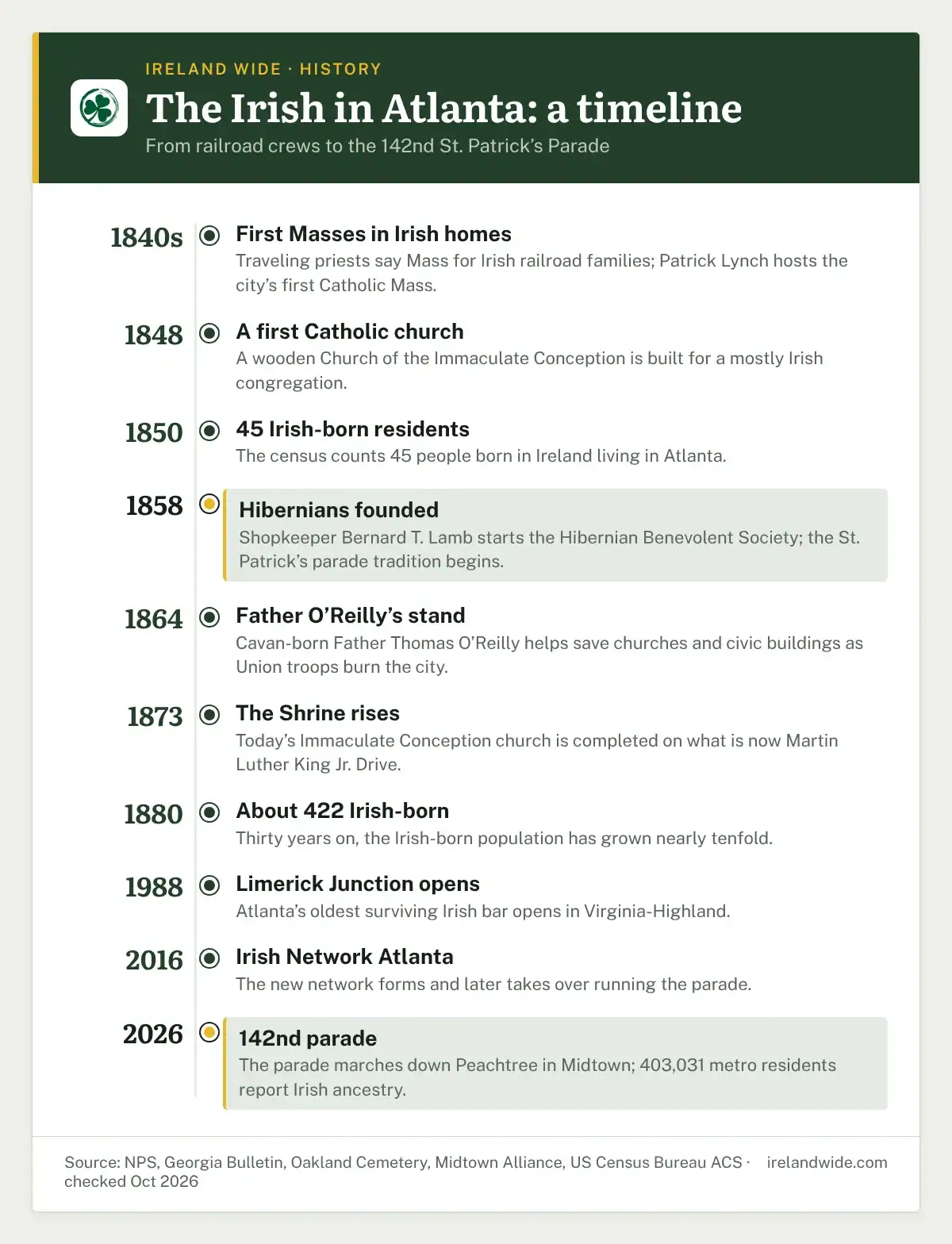
Atlanta’s Irish heritage is preserved through landmarks and cultural institutions that honor the contributions of Irish immigrants:
- The Shrine of the Immaculate Conception: Atlanta’s oldest Catholic church, founded in 1848, served the Irish Catholic community and remains a historic and spiritual landmark. The current building on Martin Luther King Jr. Drive was completed in 1873, and its Civil War pastor, Father Thomas O’Reilly, is honored by the Hibernians every year.
- Oakland Cemetery: Many Irish immigrants who helped build Atlanta are buried here, with gravestones that tell their stories of resilience and community. They include Daniel Dougherty from County Donegal, who opened Atlanta’s first bakery.
- The Irish Network Atlanta (IN-Atlanta): This organization promotes Irish culture and connects Irish professionals in the city. Founded in 2016, it now runs the St. Patrick’s Parade.
- The Hibernian Benevolent Society of Atlanta: Established in 1858 by shopkeeper Bernard T. Lamb, this group originally helped Irish immigrants find jobs and homes, and today it fosters cultural connections and hosts the annual St. Patrick’s Day Mass.
- Consulate General of Ireland in Atlanta: Ireland’s official office in the city, in Buckhead, serves Irish citizens across Georgia, Kentucky, North Carolina, South Carolina and Tennessee.
Atlanta’s Irish Community Today
Today, Atlanta’s Irish-American community remains active and vibrant. Organizations like the Atlanta Irish Network and cultural events ensure the traditions and contributions of the Irish continue to thrive. Irish dance schools, such as the Drake School of Irish Dance, and Gaelic sports clubs, like Atlanta GAA, keep the spirit of Ireland alive in the city.
Events such as the annual IrishFest Atlanta, held each autumn in historic Downtown Roswell since 2013, highlight Irish music, dance, and storytelling, while local pubs and restaurants host regular events celebrating Irish heritage.
Heading to a festival? Our packing list for Irish music and dance festivals covers what to bring.
The North Georgia Highland Games
About two hours’ drive north of Atlanta in Clayton, the North Georgia Highland Games celebrate Irish and Celtic culture through music, dance, and traditional crafts. Held annually each September (the 2026 games ran on September 26), the festival brings together performers and artisans to showcase the rich heritage of the Celtic nations, offering Atlantans a deeper connection to their Irish roots.
The Legacy of the Irish in Atlanta
From their early contributions to the railroads and construction to their vibrant modern-day celebrations, the Irish have left an indelible mark on Atlanta. The city’s Irish community embodies resilience, pride, and a strong sense of heritage. Whether attending the St. Patrick’s Day Parade, visiting historic landmarks, or enjoying a pint at an Irish pub, Atlanta offers countless opportunities to connect with its rich Irish history and culture.
If your own family roots lead back to Ireland, our 7-day Irish ancestry itinerary is a good place to start planning a trip, and you can see how another Southern city compares in the Irish in Dallas.
FAQs About the Irish in Atlanta
When did the Irish come to Atlanta?
The Irish came to Atlanta from the 1840s, mostly to build the railroads that turned the town into a transport hub. Many more arrived after the Great Famine, and the Irish-born population grew from 45 in 1850 to about 422 by 1880.
How many people in Atlanta have Irish ancestry?
About 403,031 people in the Atlanta metro area report Irish ancestry, or 6.4% of residents, based on the US Census Bureau’s 2020 to 2024 American Community Survey. In the City of Atlanta the figure is 33,092, or 6.5%.
Is there an Irish neighborhood in Atlanta?
Atlanta never had one large Irish enclave like Boston or New York. Irish life is spread across the city, with Irish pubs and events concentrated in Midtown, Virginia-Highland and Buckhead, and suburban Cherokee County has the highest share of residents with Irish ancestry in the metro area.
How old is the Atlanta St. Patrick’s Parade?
The Atlanta St. Patrick’s Parade was started in 1858 by the Hibernian Benevolent Society, and the March 2026 parade was the 142nd. It is the longest-running public event in Atlanta’s history.
Is there an Irish consulate in Atlanta?
Yes. The Consulate General of Ireland in Atlanta, on Peachtree Road in Buckhead, serves Irish citizens in Georgia, Kentucky, North Carolina, South Carolina and Tennessee.
Facts and figures checked against the US Census Bureau, the National Park Service and Atlanta sources in October 2026.