
The Anglo-Norman invasion, Tudor conquest, Great Famine, Easter Rising, and partition with the Anglo-Irish Treaty are five major turning points in Irish history. This chronological selection follows changes in power, land, population and political identity. It is a useful introduction, not a definitive ranking of everything that shaped Ireland.
The list runs chronologically through the Anglo-Norman invasion, Tudor rule, the Great Famine, the 1916 Rising, and partition with the Anglo-Irish Treaty. Start with the period you are studying; read together, they make the later chapters a lot easier to follow.
| Event | Date | Main Change | Useful Starting Point |
|---|---|---|---|
| Anglo-Norman invasion | 1169–1171 | Beginnings of sustained English royal involvement in Ireland | Medieval power and landholding |
| Tudor conquest | 1541–1603 | Extension of English crown authority across Ireland | Plantations, religion, and language |
| Great Famine | 1845–1852 | Mass death, emigration, and population decline | Irish diaspora and rural society |
| Easter Rising | 1916 | A failed rebellion that reshaped Irish politics | Independence and republicanism |
| Partition and the Anglo-Irish Treaty | 1920–1922 | Creation of two jurisdictions on the island | Modern Ireland and Northern Ireland |
History rarely behaves like a neat five-stop route. Each event had deep causes and messy consequences, and nobody living through them knew how the story would end. Still, these are solid landmarks for understanding modern Ireland.
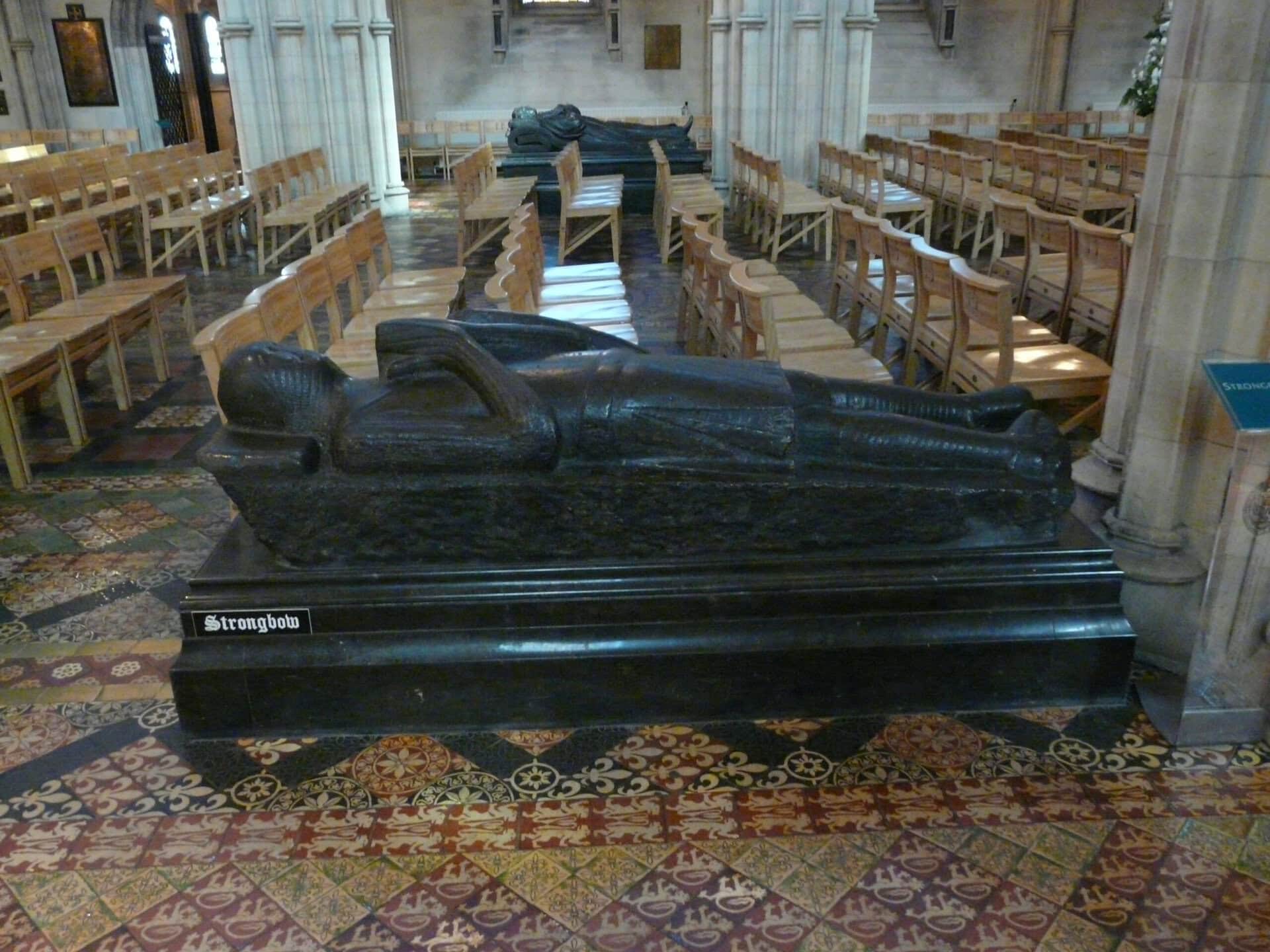
The Anglo-Norman invasion began in 1169 after Diarmait Mac Murchada, the ousted king of Leinster, sought military help from Anglo-Norman lords in Wales. Richard de Clare, commonly called Strongbow, became the best-known of those leaders and married Diarmait’s daughter, Aoife.
King Henry II of England arrived in Ireland in 1171, concerned that his subjects might establish an independent power base across the Irish Sea. His intervention led to the Lordship of Ireland, held by the English crown. It did not bring the whole island under firm English control overnight. Gaelic Irish kingdoms and Hiberno-Norman lordships continued to shape political life for centuries.
The lasting effect was the creation of a durable English claim to authority in Ireland. Landholding, law, alliances, and later conflict developed in the shadow of that claim. Medieval Ireland remained politically fragmented, which can be a bit confusing at first, but that fragmentation is part of the point.
For the island’s medieval religious landscape, see Glendalough’s round tower and monastic setting. The monastery’s origins predate the Anglo-Norman invasion.
The Tudor period saw the English crown seek more direct control of Ireland. Henry VIII took the title King of Ireland in 1541. The statute conventionally titled the Crown of Ireland Act 1542 set out the royal claim; changing the title did not itself bring every lordship under effective control.
That effort unfolded through military campaigns, political surrender agreements, new systems of local government, and land confiscations. It was also tied to the English Reformation. Ireland’s largely Catholic population became subject to a Protestant state church, adding a religious divide to older disputes over power and land.
The Tudor conquest ended with the defeat of the Gaelic lords after the Nine Years’ War, which concluded in 1603. Later plantations, especially in Ulster, settled English and Scottish Protestants on confiscated land. Those demographic and political changes had consequences well beyond the Tudor period.
English pressure also affected how Irish identities appeared in official records and family names. Why some Irish families dropped the O’ from their surnames is a useful guide to that longer process.
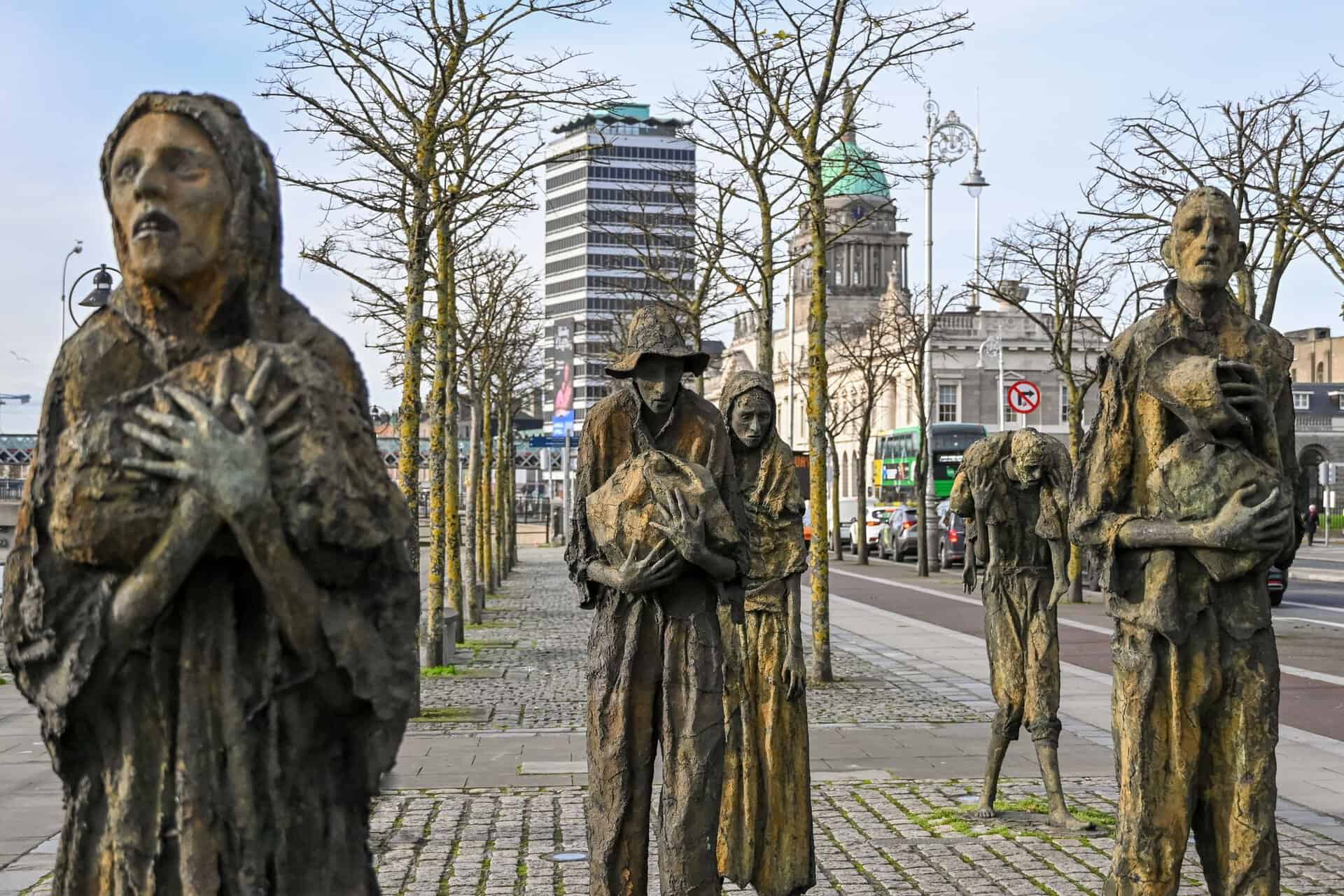
The Great Famine began when potato blight devastated the potato crop in 1845. For many poor rural households, the potato was the main source of food, so repeated crop failures quickly became catastrophic. Food continued to be produced in Ireland, but poverty, land tenure, government policy, and unequal access to food made survival brutally difficult.
Between 1845 and 1852, famine disease and hunger caused mass mortality, while emigration surged. Ireland’s population fell sharply during the famine years and continued to decline for decades afterwards. The famine changed family life, settlement patterns, language communities, and the relationship between Ireland and its diaspora.
The political legacy was just as significant. The conduct and limits of relief under British rule became central to later Irish criticism of the United Kingdom’s administration of Ireland. There is no tidy way around it: the famine became a defining source of grief, anger, and historical memory.
The National Archives’ famine records guide describes the Distress Papers and Relief Commission records. They document pleas for assistance and the official response, making them a useful starting point for research into the period.
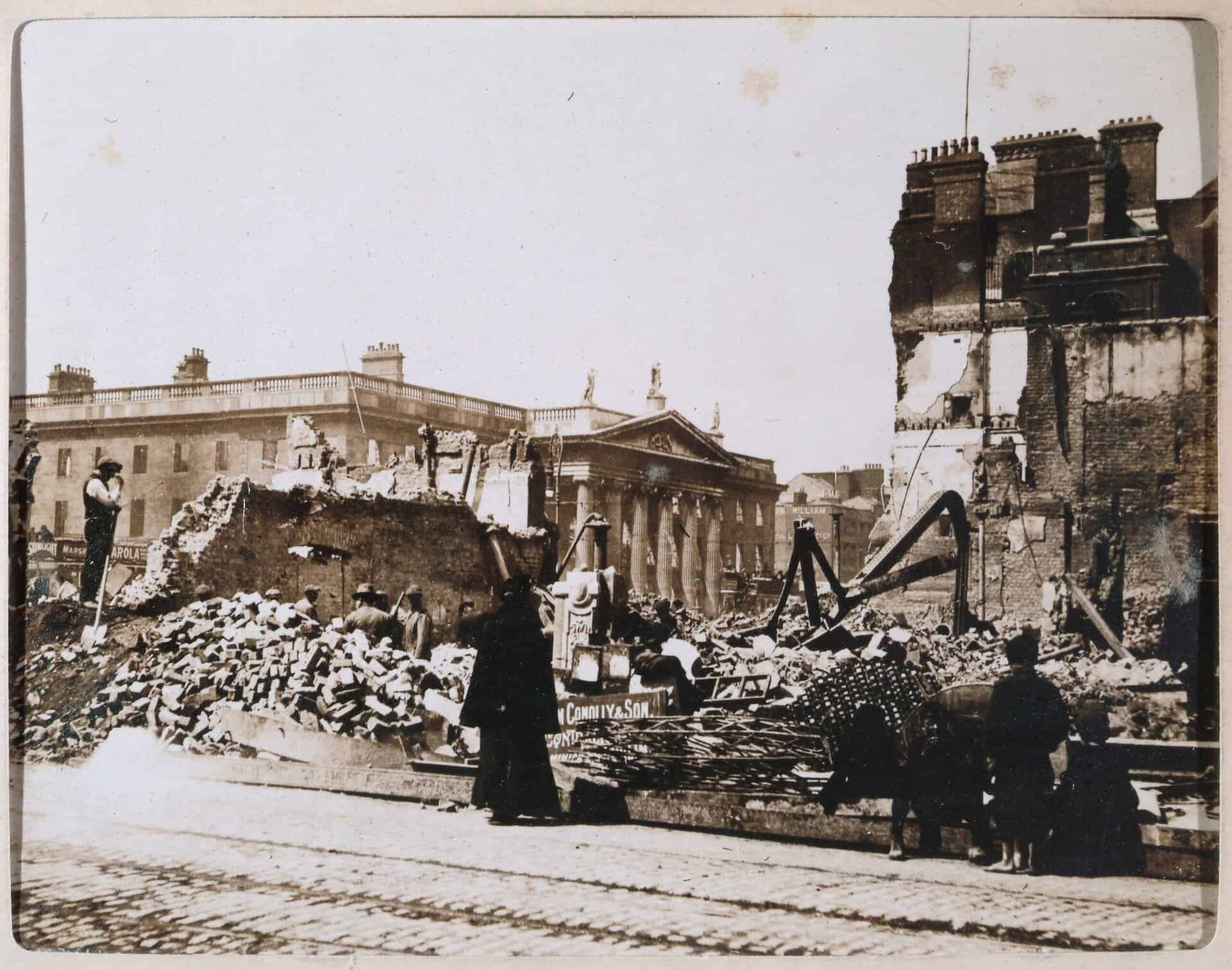
The Easter Rising began in Dublin on 24 April 1916, when members of the Irish Volunteers, Irish Citizen Army, and allied groups seized key locations and proclaimed an Irish Republic. The General Post Office on O’Connell Street served as the rebellion’s headquarters.
British forces suppressed the Rising within a week. The military operation failed, and much of central Dublin was damaged during the fighting. Its aftermath, including executions, arrests and internment, became an important part of the political change that followed.
The National Library of Ireland’s exhibition on the Proclamation’s signatories documents the Rising and its leaders. In the 1918 general election, Sinn Féin won a majority of Irish seats; its elected representatives established Dáil Éireann in 1919, and the War of Independence followed.
The Rising matters because its aftermath helped change the direction of the independence movement. It did not create Irish nationalism from nothing or produce an immediate consensus. Home Rule, republicanism, cultural revival and unionism had different supporters and longer histories.
The Government of Ireland Act 1920 provided for separate parliaments in Northern Ireland and Southern Ireland. The border came into existence on 3 May 1921, with Northern Ireland comprising six counties. The House of Commons Library’s border history explains how the initial administrative boundary became an international border after the Free State’s creation.
The Anglo-Irish Treaty was signed on 6 December 1921, after the July 1921 truce in the War of Independence. It provided for the Irish Free State as a self-governing dominion within the British Commonwealth. The Free State came into being on 6 December 1922, not on the signing date. Northern Ireland exercised the treaty’s option to remain outside it. The treaty text sets out the terms.
The treaty split the independence movement. Supporters saw it as a major step towards sovereignty; opponents rejected the oath to the crown, dominion status, and partition. The disagreement led to the Irish Civil War of 1922–1923, a conflict whose political divisions remained visible in Irish public life for generations.
The result was a new state in most of the island and a continuing United Kingdom jurisdiction in the north. Any account of modern Ireland, Northern Ireland, the Troubles, or the peace process begins with this settlement.
The five events form a chain, even though each has its own causes. The Anglo-Norman invasion created a long-running English claim in Ireland. Tudor centralisation made that claim more forceful, extending it through military conquest, land transfer, and religious change.
The Great Famine exposed the human cost of nineteenth-century poverty and imperial governance, while dispersing Irish communities around the world. The Easter Rising and the independence struggle that followed brought the constitutional relationship with Britain to a breaking point. Partition and the treaty then determined the map and political structures that followed.
If you are tracing Irish family history, the famine and the decades after it are often the most relevant starting point. A practical Irish ancestry itinerary for first-time visitors can help turn historical research into a realistic trip plan.
There is no single agreed answer. The Great Famine, the 1916 Rising, and partition are often treated as defining modern events, while the Anglo-Norman invasion and Tudor conquest explain much of the earlier political relationship between Ireland and England.
The Easter Rising was militarily defeated, but the execution of its leaders and the wider British response changed political opinion. It helped create support for a republican movement that won the 1918 general election and led to the War of Independence.
Yes. Emigration existed before 1845, but the famine drove a vast increase as families fled hunger, disease, eviction, and economic collapse. Its effects can still be seen in Irish communities in Britain, the United States, Canada, Australia, and elsewhere.
The Irish Free State was established on 6 December 1922 after the Anglo-Irish Treaty. Ireland became a republic under the Republic of Ireland Act 1948, which took effect on 18 April 1949. The Republic of Ireland Act’s commencement order sets the later republic date.

Matt Hook is a Canadian writer of Scottish and Irish heritage. He built his writing career creating detailed gaming guides, turning complex mechanics, history and lore into useful information for readers. Matt brings that same research-focused approach to Ireland Wide, where he writes about Irish travel, heritage, history and culture. He also holds CMA and CPA designations as a professional accountant, giving him a strong background in research, accuracy and attention to detail.
At Ireland Wide, our aim is to bring authentically Irish insights to you, wherever you are.
Whether you have some feedback or would like to offer some of your own insights for everyone else to explore, don't hesitate to get in touch with us!