
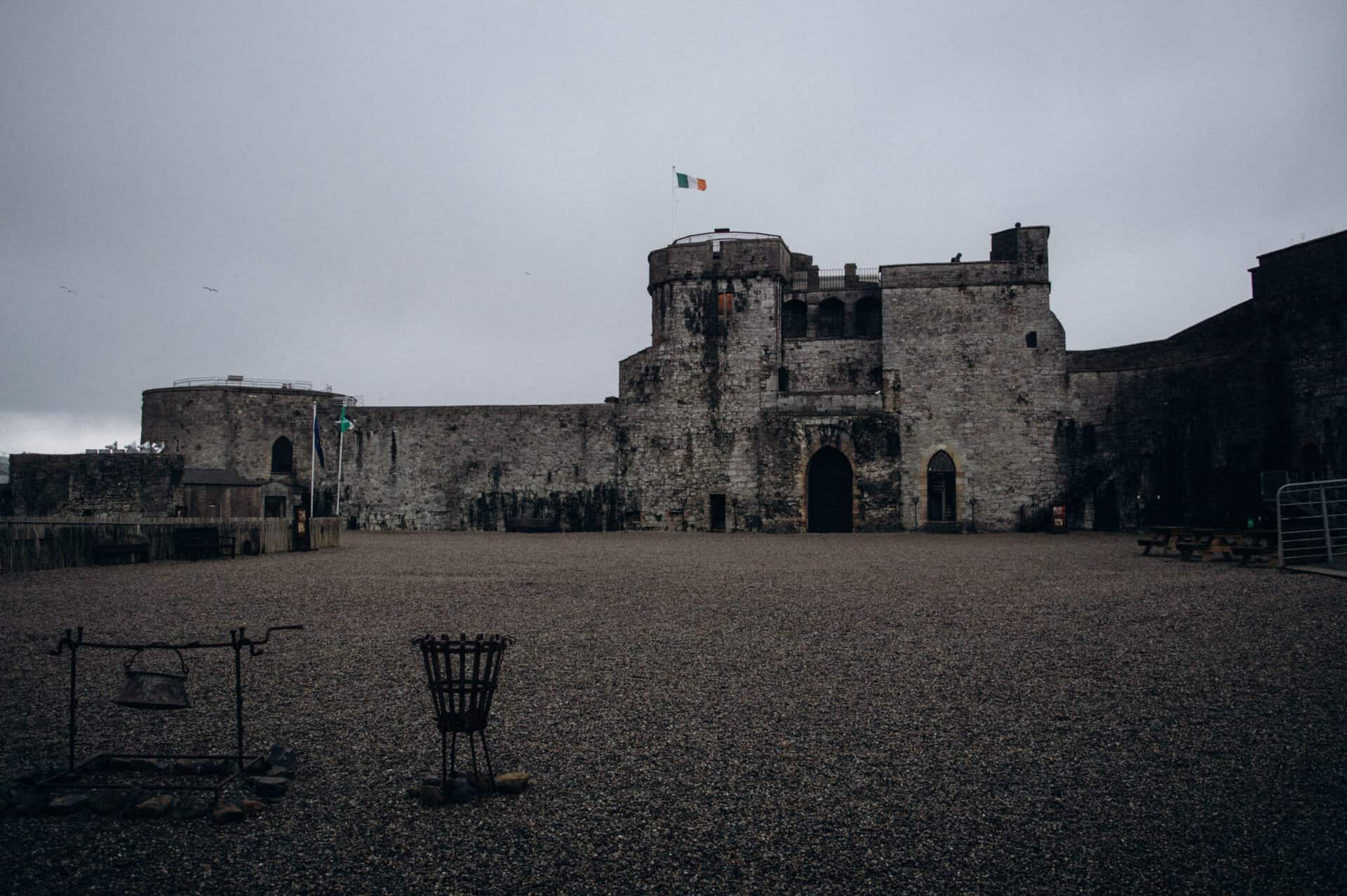
King John’s Castle is worth visiting if you want one place in Limerick that combines major medieval history, river views, and an easy city-centre location. It suits families, first-time visitors to Limerick, and anyone who likes historic sites with exhibitions rather than an empty shell of stone walls.
The castle is also one of the easiest entries into Ireland’s wider castle story, so if you are planning a broader trip, our best castles in Ireland guide is the natural next read. For this stop specifically, expect a substantial Norman fortress on King’s Island, built on a site with earlier Viking history and presented with modern interpretation.
Before you go, check the official operator page for final opening times, ticketing and any private-event closures. Hours checked July 2026 on the official site show the castle open 7 days per week, with winter hours 9:30am to 5pm, last entrance 4pm, and summer hours 9:30am to 6pm, last entrance 5pm.
Search by castle, county or nearby town, then click a marker to open the complete IrelandWide visitor guide.
King John’s Castle stands on Nicholas Street, Englishtown, Limerick, on King’s Island beside the River Shannon. The official address listed by the operator is Nicholas St, Englishtown, Limerick, V94 FX25.
That location is part of the appeal. You are not driving out into the countryside for a ruined tower house. You are visiting a large medieval fortress in the city, with the river, bridges, and old street pattern all helping the place make sense.
If you are building a wider trip, pair this with our Limerick coverage and our broader Ireland castle planning pieces. You can also compare it with other strong urban fortifications in our guide to the best castles in Ireland and local background in what Limerick is famous for.
According to the official operator, King John’s Castle is open 7 days per week. The published schedule is 1 October to 31 March, 9:30am to 5pm, last entrance 4pm, and 1 April to 30 September, 9:30am to 6pm, last entrance 5pm.
Because this is a working attraction that also hosts events, double-check access on the official site before you go. Private functions and special programming can affect entry in ways a guide article cannot safely predict.
Discover Ireland and the official operator are the two most useful planning references for general trip-building and day-of-visit checks. If this is part of a first loop around the country, it also fits neatly into a broader 7 day Ireland itinerary without needing a car-heavy detour.
If you move briskly, you can see the main parts in about 90 minutes. If you read the displays, spend time on the walls, and stop for coffee at Siege Café, give it closer to 2 to 3 hours.
That makes the castle a good half-day anchor in Limerick. It is substantial enough to feel like a proper outing, but not so sprawling that it swallows your whole day.
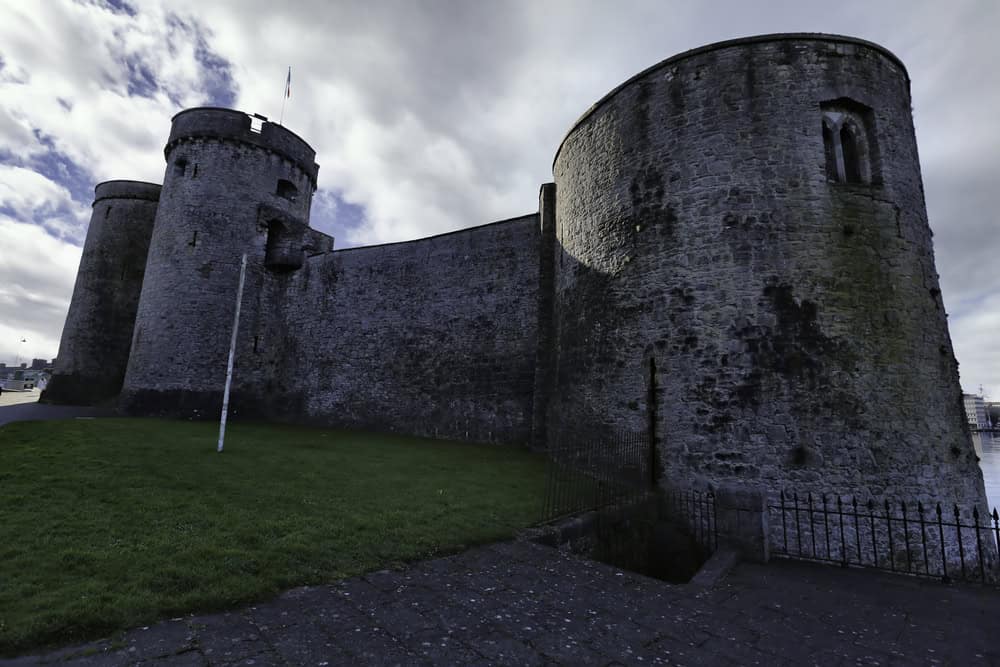
This is not just a gateway and a few battered stones. You can walk the castle walls, enter towers and chambers, and go through exhibition spaces designed to explain both the building and the older settlement underneath it.
The official site describes immersive exhibitions and panoramic views over the Shannon. In practice, people tend to like the balance of archaeology, recreated scenes, and elevated river views, though some find parts of the interpretation more geared toward families than hardcore military-history obsessives. That modern mix is really the point: strong on context, not just on silhouette.
For many people, the best part is the contrast. Down below, you get the archaeological and interpretive side. Up above, you get the military logic of the place, with walls, towers and commanding views over the river crossing.
The documented story starts before the castle itself. King’s Island was a Viking settlement, and that earlier phase is central to understanding why the Normans built here. The site controlled a strategic point on the Shannon and mattered long before the stone fortress appeared.
King John ordered the construction of the castle around 1200, and most general historical summaries place the main building phase in the early 13th century. Its purpose was military and political from the start. This was a statement of control as much as a defensive work.
Over the following centuries, the castle saw sieges, rebellion, and repeated strategic use. The official operator sums up the site as a place shaped by more than 800 years of history, while also acknowledging the older Viking layer beneath it. If that older Norse layer interests you, our piece on Irish Viking surnames gives a useful bit of wider context beyond Limerick itself.
King John’s Castle does not need embroidered legends to hold attention. The documented layers are already strong: Viking settlement, Norman conquest, river control, siege history, and urban survival.
That said, castles in Ireland often gather ghost stories and embellished local lore over time. If you hear dramatic tales on casual tours or social media, treat them as folklore unless they are tied to a named historical source or official interpretation on site.
The big survivors are the features that make the castle visually unmistakable in Limerick: curtain walls, towers, fortified chambers, and the commanding riverfront position. It still reads clearly as a fortress, which is not true of every major Irish castle.
The visitor experience also includes access to evidence of earlier occupation beneath or around the later medieval structure, tying the Norman castle to the Viking history of the island. That deeper timeline is one reason this site feels more layered than a standard castle walk-through.
Yes. This is one of the better family-friendly castle visits in Ireland if your group includes children who like displays they can interact with. The castle is widely described as using multimedia and hands-on interpretation rather than relying on dense text panels alone.
Parents usually have an easier time here than at a ruin with no context. Kids get towers, walls, and a whiff of siege drama. Adults get enough history to justify the stop. Everyone gets river views, which rarely hurt.
No products found.
The castle has a modern visitor setup with toilets, café facilities, and a formal entrance experience, which makes it more straightforward than many historic sites. Siege Café is the on-site food option named by the official operator.
Accessibility can vary within medieval structures because towers, steps, and wall routes are part of the architecture. The attraction does provide modern visitor services, but if step-free access is essential for your group, contact the castle directly before arrival for the most accurate route information.
The easiest win is the exterior riverfront view. The castle’s massing looks best when you include some of the River Shannon in the frame, especially from nearby approaches and bridge viewpoints.
Inside, the mix of stonework and exhibition lighting means your phone camera may handle some spaces better than others. If you want cleaner wall-walk shots, go earlier in the day and leave yourself time to circle rather than taking everything from the first good viewpoint you find.
Because the castle sits in central Limerick, it works well with nearby city sightseeing. The obvious companion stop is a walk through the old streets around Nicholas Street and King’s Island, where the setting helps the castle feel less isolated from the city that grew around it.
If your trip is castle-focused, this pairs well with other major Irish fortresses, including the Dunguaire Castle visitor guide for a very different coastal setting. King John’s feels more urban and strategic; Dunguaire is the one people usually choose for the postcard silhouette.
For a wider overnight planning view, staying in central Limerick keeps the castle within easy reach on foot.
The best first stop is the official King John’s Castle website for hours, booking, and event notices. For broader destination planning, Discover Ireland is useful for city context and nearby attractions.
If you want deeper built-heritage context, the National Inventory of Architectural Heritage and other official Irish heritage records can help, though they are less visitor-friendly than the operator page.
Yes. It is one of Limerick’s strongest heritage attractions because you get major medieval architecture, a central location, and modern exhibitions in the same stop.
Allow 1.5 to 3 hours. A quick circuit can be shorter, but the exhibitions and river views reward a slower visit.
Yes. This is a full visitor attraction, not an exterior-only ruin, and includes access to exhibition areas as well as parts of the fortress itself.
Yes. Interactive interpretation and open fortress spaces make it a more family-friendly option than many castle ruins.
Yes. The official site lists Siege Café, and modern visitor facilities include toilets.
The official operator lists winter hours of 9:30am to 5pm with last entrance at 4pm, and summer hours of 9:30am to 6pm with last entrance at 5pm. Check again before travel in case of event-related changes.
If you only have time for one historic attraction in Limerick, King John’s Castle is the sensible pick. It gives you real medieval fabric, a genuinely important site in Irish history, and enough interpretation that you do not need to arrive already knowing your Anglo-Normans from your Vikings.

Dan is the founder and editor of Ireland Wide. Born and raised in Ireland, he researches the country’s history, mythology and cultural traditions using museum collections, heritage authorities and historical sources. He leads the site’s editorial team, with a particular focus on distinguishing documented history from later folklore and modern interpretations.
At Ireland Wide, our aim is to bring authentically Irish insights to you, wherever you are.
Whether you have some feedback or would like to offer some of your own insights for everyone else to explore, don't hesitate to get in touch with us!