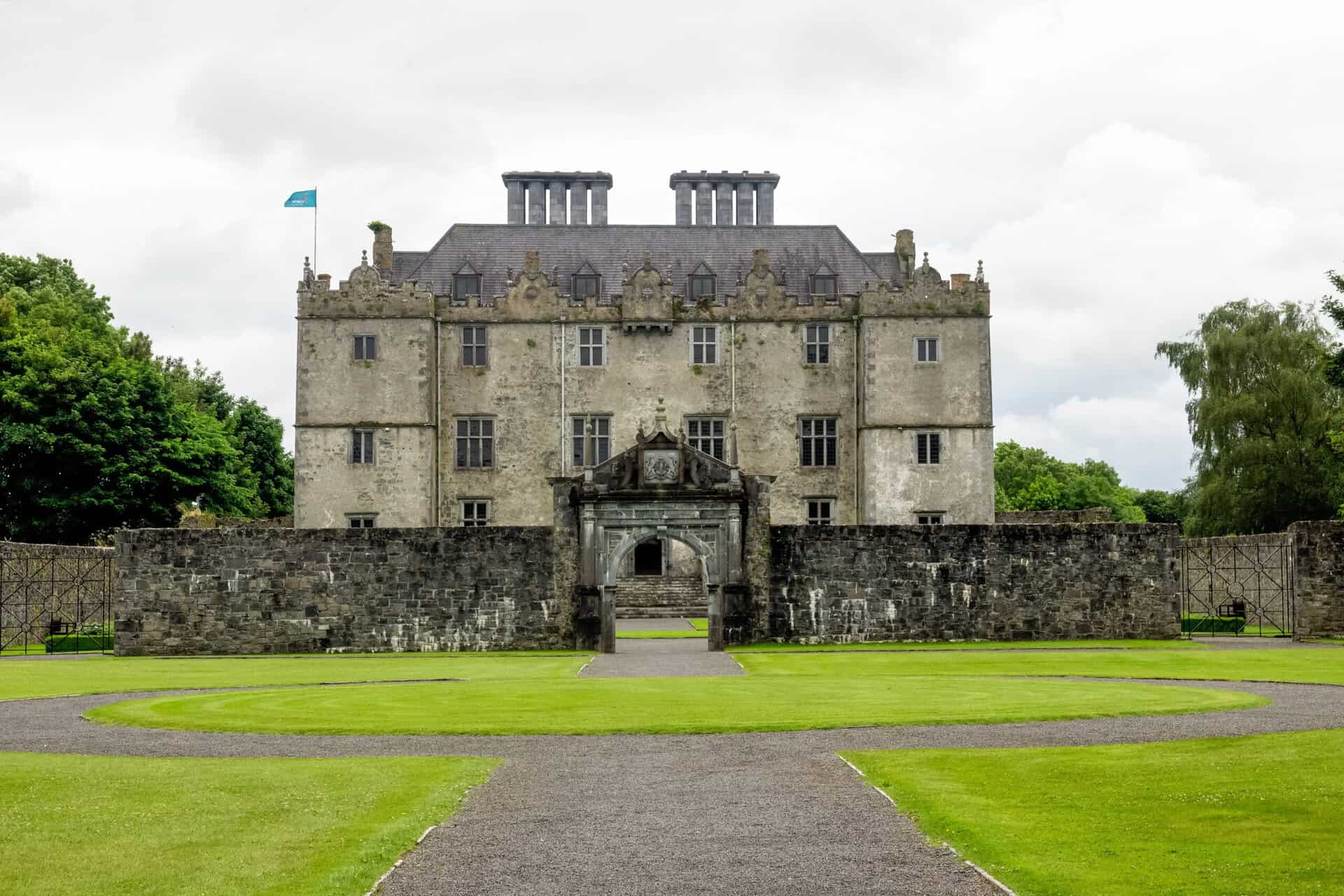
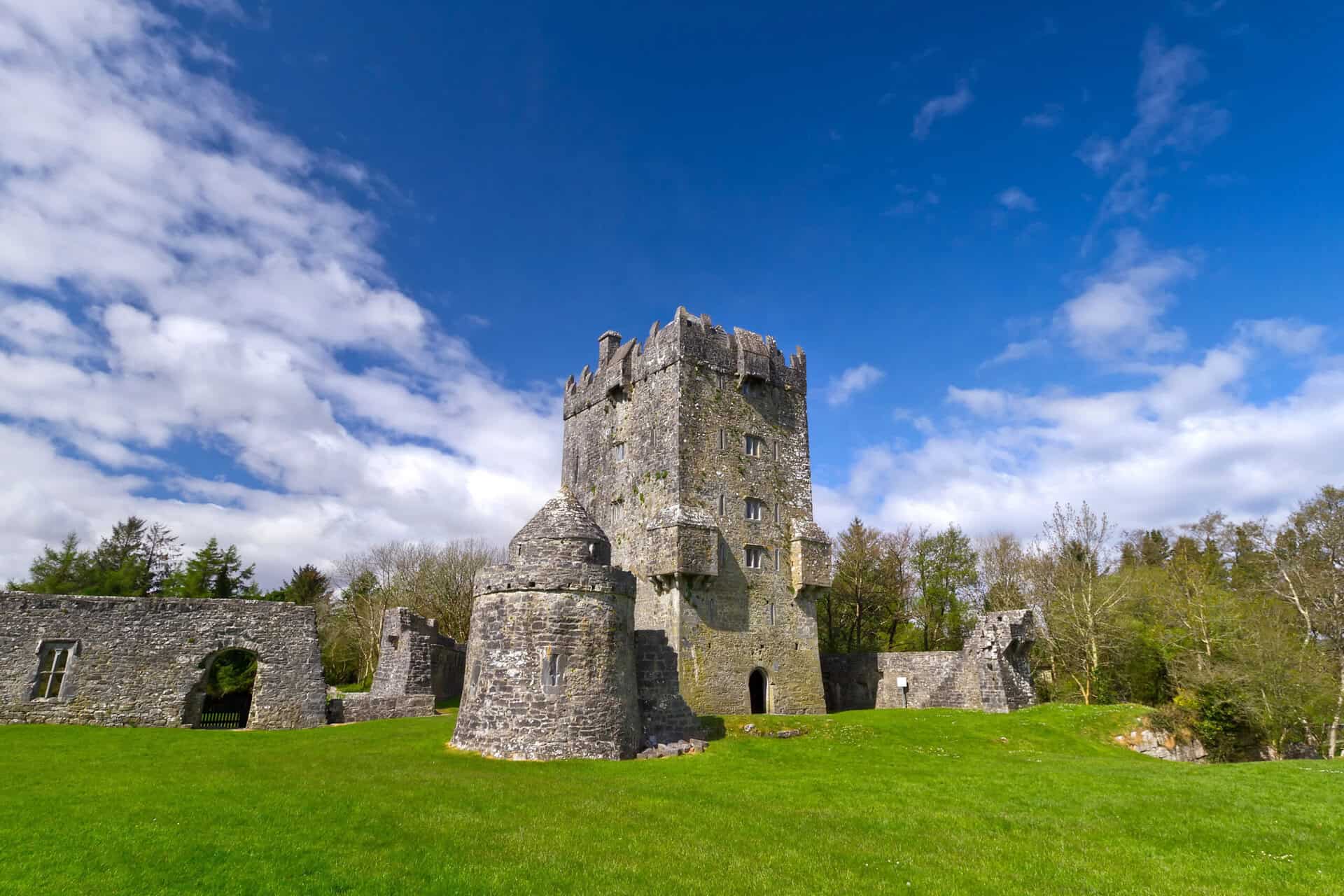
Aughnanure Castle is worth visiting if you want a compact but genuinely substantial medieval site in County Galway. It suits day-trippers based around Oughterard, Galway, Lough Corrib, and Connemara, especially anyone who prefers one excellent tower house with real history over a rushed checklist of ruins.
For a broader shortlist, our best castles in Ireland guide puts Aughnanure in context with larger and better-known sites. This guide focuses on the practical details for planning a stop here, including what survives, what access is like, and the key historical points you should know before you go.
Search by castle, county or nearby town, then click a marker to open the complete IrelandWide visitor guide.
| County | Galway |
|---|---|
| Jurisdiction | Republic of Ireland |
| Castle Type | Late-medieval Irish tower house with bawns and associated buildings |
| Date | Built in the late 15th century, with later 16th-century additions. Some descriptions say around c. 1500, so an exact year should be treated with caution. |
| Associated Families | The O’Flahertys, Gaelic lords of Iarchonnacht |
| Current Status | State-managed heritage site, open to the public when operating. Official site status checked July 2026: the site advises a temporary closure from June 22, 2026 for essential car park upgrade works, with reopening updates to follow. |
| Interior Access | Yes, when open, including the tower house interior |
| Typical Visit Time | About 45 minutes |
| Coordinates | Not stated in the operator material used here, so verify with your preferred map app before setting out |
| Parking | On-site parking |
| Public Transport | No verified direct public transport detail in the official visitor material used here. Most people arrive by car via Oughterard. |
| Accessibility | Ground access is limited. Available visitor guidance indicates that castle grounds access is restricted for wheelchair users, and upper levels of the keep are not step-free. |
| Toilets | Toilets are noted in visitor information |
| Food | No on-site food service confirmed in the official operator excerpt used here |
| Family Suitability | Good for families who can manage uneven ground and stairs. A family activity sheet is provided by the site operator. |
| Official URL | Heritage Ireland: Aughnanure Castle |
Aughnanure Castle stands near Oughterard in County Galway, close to the western side of Lough Corrib and beside the Drimneen River. That setting is part of the appeal. This was not a random hilltop keep. The O’Flahertys favored sites with access to water, and Aughnanure fits that pattern exactly.
If you are building a wider Galway and west coast plan, this west coast of Ireland travel guide helps place Aughnanure within a broader route. If castles are the focus, our best castles in Ireland guide helps compare tower houses, fortified houses, and the bigger Norman sites around the country.
Admission listed by the official operator checked July 2026 is €5.00 for adults, €4.00 for group and senior tickets, €3.00 for children and students, and €13.00 for a family ticket. Those are the figures to trust over older travel pages, which still show lower historic prices.
The most important planning detail is the temporary closure notice. The official operator says the site is closed from June 22, 2026 to allow car park upgrade works. Before you drive out, check the operator page or Heritage Ireland booking information for the latest reopening status.
Older listings often mention seasonal opening windows, but because hours can shift and the site has a closure notice, use the official operator page for live opening times.
Aughnanure is one of the best-preserved examples of a Gaelic lord’s tower house in this part of Ireland. It served as the stronghold of the O’Flaherty lords of Iarchonnacht for more than two centuries.
That makes it more than a photogenic shell. It gives you a readable example of how a powerful Gaelic family built, occupied, defended, and displayed status in late-medieval Connacht. The surviving tower, bawns, hall, and defensive features are still clear enough that you do not need a huge leap of imagination to understand the layout.
The broad outline is well documented, even if the exact build year is not pinned down to a single date.
If you enjoy comparing different medieval power structures, it is worth pairing Aughnanure with guides to larger castle sites elsewhere in the country, including the Ross Castle visitor guide and the Dunguaire Castle visitor guide. Those sites tell very different stories, while Aughnanure stays firmly tied to Gaelic lordship.
The star of the site is the tower house itself, but Aughnanure is more rewarding than a simple keep-and-yard stop. Visitor descriptions consistently note several surviving features: the gatehouse, enclosing bawn walls, remains of a banqueting hall, a watch tower, bastions, and an unusual double bawn. A dry harbour is also associated with the site.
Inside the keep, visitor information notes a small permanent exhibition on the castle and its historical context. A few minutes spent with the displays usually makes the architecture outside much easier to read.
Expect a short, focused stop, not a half-day attraction. The site is best for people who like climbing through a real medieval structure, studying defensive details, and spending time in a setting that still feels tied to river traffic and local power.
You do not come here for recreated banquets, costumed theatrics, or a giant visitor center. You come for stonework, atmosphere, and a very legible tower-house plan. That is exactly why many castle fans rate it highly, especially as part of a longer 7 day Ireland itinerary through the west.
Accessibility is limited. The grounds are not fully straightforward for wheelchair users, and the upper parts of the keep are reached by stairs. If step-free access is essential, contact the site operator before visiting and ask exactly which areas are accessible on the day.
Toilets are available according to visitor information, but do not plan on a large modern facility block. Food service is not confirmed on site, so eat in Oughterard before or after your visit rather than relying on the castle for coffee or lunch.
For families, this is a manageable stop. The site operator offers a Family Quest activity, which is helpful if younger children need a mission beyond looking at old walls and nodding politely.
The castle’s best photographic strength is its waterside setting and the way the tower rises from a rocky base. Wide shots work well from the exterior, especially when you can include the river and enclosure walls together.
Inside, the interest is in the stairs, openings, and defensive passages. Low light is common, so a phone or camera that handles darker interiors helps. If upper levels are open, views outward usually explain the site better than any caption board.
The documented history is strong enough that Aughnanure does not need embroidery. The safe, source-backed points are the O’Flaherty connection, the late-medieval build phases, the 17th-century conflicts, the later transfer to the State, and the conservation works that led to public opening.
Folklore should be treated separately. If you hear dramatic stories on the day, enjoy them as part of Irish castle culture, but do not confuse them with the verified record unless the site operator explicitly presents them as documented history.
Oughterard is the obvious practical stop before or after the castle. It is the nearest service base and the simplest place to sort food, fuel, or a coffee.
Lough Corrib is the larger geographical backdrop that helps explain why this castle sat where it did. Even a short detour to the lakeshore adds context to the O’Flaherty preference for water-connected strongholds.
If you want another castle the same day, Athenry Castle and Claregalway Castle make useful comparisons, though each tells a different story. Aughnanure feels more intimate and more directly tied to Gaelic lordship. The others are better for comparing architecture and power structures across medieval Galway.
Yes. It is one of the most satisfying castle stops in County Galway if you like tower houses, readable ruins, and sites with a strong historical identity rather than a long list of modern attractions.
Official admission checked July 2026 is €5.00 adult, €4.00 group or senior, €3.00 child or student, and €13.00 family. Check the operator page before travel in case of changes or closure notices.
About 45 minutes is typical. Give it an hour if you like reading displays, taking photos, or walking the site slowly.
Yes, when the site is open, interior access to the tower house is part of the draw. Upper areas depend on stair access and operational conditions on the day.
Yes, for children who enjoy climbing, exploring, and short heritage stops. Families with very young children will want to watch footing on uneven ground and stairs.
Only partially. Available information indicates restricted access in the grounds and no step-free access to upper levels of the keep, so confirm exact conditions directly with the operator before visiting.
Advance checking is sensible, especially because the official operator has posted a temporary closure notice. Booking rules can vary, so use the official Heritage Ireland pages for the latest access information.

Dan is the founder and editor of Ireland Wide. Born and raised in Ireland, he researches the country’s history, mythology and cultural traditions using museum collections, heritage authorities and historical sources. He leads the site’s editorial team, with a particular focus on distinguishing documented history from later folklore and modern interpretations.
At Ireland Wide, our aim is to bring authentically Irish insights to you, wherever you are.
Whether you have some feedback or would like to offer some of your own insights for everyone else to explore, don't hesitate to get in touch with us!