O’Connor is an Irish surname from the Gaelic Ó Conchobhair, meaning descendant of Conchobhar. In plain English, that points to a family line traced back to an ancestor named Conchobhar, a personal name usually interpreted as carrying ideas like high desire or strong will.
If you’re researching Irish ancestry, the first useful thing to know is that there was never just one O’Connor family. Several separate branches, or septs, used the name in different parts of Ireland, with especially strong roots in Connacht and additional lines in Kerry, Clare, Offaly, and Derry.
That is why O’Connor can signal royal medieval history in one family line, local county roots in another, and a broad Irish diaspora story almost everywhere else.
Irish form: Ó Conchobhair
Meaning: Descendant of Conchobhar
Pronunciation: oh-CON-er
Main Irish associations: Connacht, especially County Roscommon and County Sligo, plus branches in Kerry, Clare, Offaly, and Derry
Historical note: The most famous O’Connor dynasty produced the last two High Kings of Ireland, Turlough O’Connor and Roderic O’Connor
Modern standing: O’Connor is widely recognized as one of the most common surnames in Ireland, and it remains a familiar surname across Ireland, Britain, North America, and Australia
The surname O’Connor is the Anglicized form of Ó Conchobhair. In Irish naming tradition, the prefix Ó means descendant or grandson of. If you want the fuller background on that prefix, see what the O means in Irish surnames. The second part, Conchobhair, comes from the personal name Conchobhar.
You will see slightly different explanations of what Conchobhar itself means. The safest version is also the most useful one for family history: O’Connor means descendant of Conchobhar. Some name references connect Conchobhar with ideas such as high will, strong desire, or in older interpretations a connection to hounds. The descendant meaning is the part scholars and surname guides agree on most consistently.
That matters when you’re reading old records. In parish registers, land records, or immigration documents, the surname might appear in modern English as O’Connor, but its older Irish root is still Ó Conchobhair.
Most Americans will hear and say it as oh-CON-er.
A simple audio-style guide is: oh-CON-ur. The stress falls on the middle syllable. In everyday Irish and Irish American use, that pronunciation works perfectly well.
The Irish form Ó Conchobhair is a different story if you are just starting with Gaelic spelling. A rough English-friendly guide is oh KON-kho-wir, though pronunciation varies by dialect and by how closely someone is using modern Irish speech rather than an anglicized family form.
If you are building a family tree, it helps to search records using both the common English spelling and the original Irish form where indexes allow it.
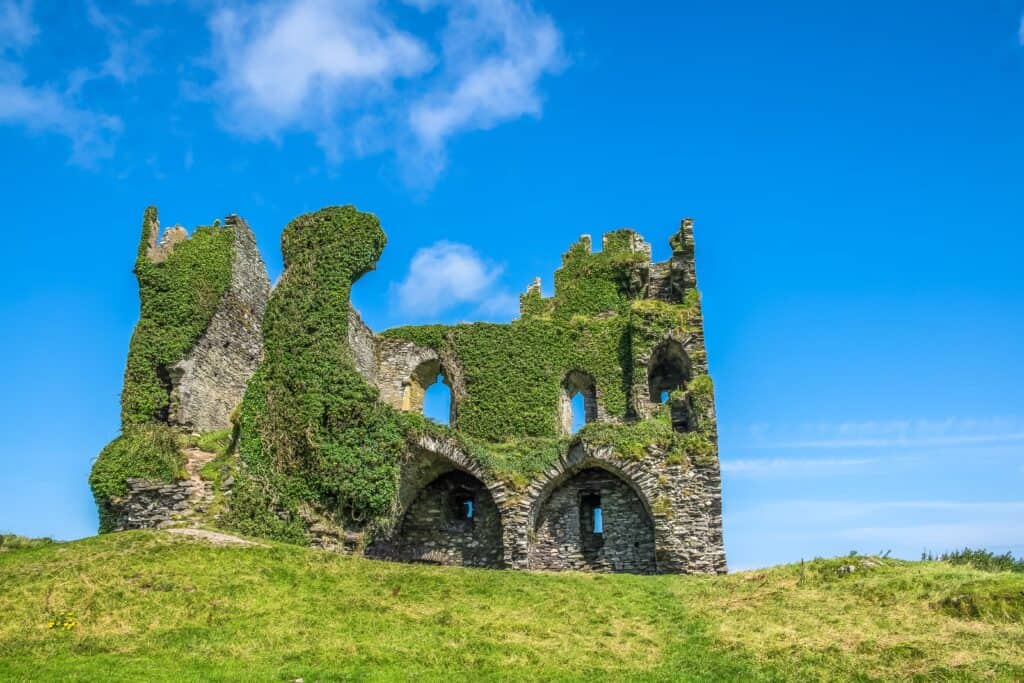
The biggest trap with O’Connor history is assuming all bearers came from one medieval clan. They did not. Several distinct O’Connor septs existed across Ireland, and the most influential branch rose in Connacht.
The Connacht O’Connors are the line most people mean when they talk about the name’s royal status. They were tied to the kingship of Connacht and later split into major branches including O’Conor Don, O’Conor Roe, and O’Conor Sligo. Older records often use O’Conor rather than O’Connor for some of these noble lines.
The dynasty claimed descent from Conchobhar, King of Connacht, who died in 971. From that line came two of the most important rulers in medieval Irish history: Turlough O’Connor, who lived from 1088 to 1156, and Roderic O’Connor, who lived from 1116 to 1198. They are generally remembered as Ireland’s last two High Kings.
Roderic, or Ruaidrí Ó Conchobhair, sits at the turning point between Gaelic Ireland and the Anglo-Norman era. His reign belongs to the period just before English power began to take permanent hold after the invasion associated with Strongbow in the late 12th century. So when people say O’Connor is a royal Irish surname, this is the branch they mean.
That royal association is real, but it is only part of the picture. Other O’Connor families developed in different provinces, each with its own local story.
Connacht is the heartland most strongly linked with the name. If your ancestors were O’Connors from County Roscommon or County Sligo, there is a good chance your family history touches the wider Connacht branches in some form, even if the exact noble line is impossible to prove from surviving records.
The branch known as O’Conor Don became especially associated with Roscommon. O’Conor Sligo, as the name suggests, is tied to Sligo. These county links still matter because many modern family historians start with civil registration, parish books, and cemetery records organized by county rather than by clan legend.
There were also O’Connor septs in County Kerry and County Clare. These Munster branches are part of why the surname appears so widely in the southwest and west of Ireland. Family stories sometimes blur these lines together, but Kerry O’Connors and Connacht O’Connors do not automatically share the same immediate historical branch just because the surnames match.
For anyone planning a heritage trip, County Kerry and County Clare are both places where the name has old roots rather than later migration alone.
Another branch was based in Offaly, in Leinster. The O’Connors of Offaly, sometimes linked in history with the old kingdom of Uí Failghe, held territory in the midlands for centuries. If your family papers point to Birr, Tullamore, or nearby parishes, that Offaly connection is worth following.
A separate O’Connor sept existed in Derry. Medieval power struggles in Ulster changed that branch’s fortunes dramatically, and it did not remain as prominent as the Connacht lines. Even so, the surname remained in the region and appears in later records there.

Irish surnames often work differently from how Americans expect them to. A name can point to a respected dynasty, but it can also belong to several unrelated or only distantly related groups that adopted the same ancestral naming pattern in different places.
That is exactly what happened with O’Connor. It is not a single-family surname in the modern sense. It is a major Irish surname with several historic centers.
So if you’re tracing an O’Connor line from Boston, Chicago, New York, Sydney, or Toronto, the real question is usually not “Was my family royal?” but “Which county did my O’Connors come from?” Once you know that, the research gets much more practical.
O’Connor has long been widespread across the island, but some counties stand out more strongly than others in surname history.
If you’re using Irish records, start with the county named in census returns, gravestones, naturalization files, ship manifests, or family letters. The same surname in Roscommon and Kerry may lead you into very different local histories.
For broader surname context, readers often compare O’Connor with other major Irish names in county-based research. It sits comfortably among common Irish surnames and appears regularly on lists of popular Irish surnames, but county origin still tells you much more than surname popularity alone.
The two most historically important figures are Turlough O’Connor and Roderic O’Connor, the last two High Kings of Ireland. Their place in medieval history gives the surname its strongest royal association.
In culture and public life, the surname has traveled well. Well-known bearers include Sinéad O’Connor, the Irish singer-songwriter whose name made the surname instantly recognizable worldwide, and Flannery O’Connor, the American writer. In literature, music, film, and politics, O’Connor is one of those Irish surnames that turns up repeatedly and in very different places.
That broad visibility is useful for genealogy in a sideways way. It reminds you how old and mobile the name is. By the time many O’Connor families arrived in the United States, the surname was already established across several Irish provinces and in many English spellings, which is part of the bigger story of American Irish surnames.
If you’re searching records, be flexible. O’Connor is the standard modern spelling, but you may also encounter:
Some of these are simply spelling drift. Some reflect deliberate Anglicization. Some appear because clerks wrote names by sound. And some, like O’Conor, are preserved in particular historic family branches.
If you’re working through U.S. immigration records, church entries, or handwritten census pages, search every plausible version. Dropping the apostrophe is especially common, and Connor can be either a shortened surname form or a separate given name used later as a family surname.
This is where a lot of surname pages go off the rails. There is no single coat of arms for everyone named O’Connor. Arms were granted to specific lineages, not to every person who shares a surname.
That means an O’Connor crest sold on a mug, plaque, or T-shirt may reflect one historic branch, a commercial design tradition, or a simplified heraldic version, but not a blanket right for all O’Connors everywhere.
Some O’Connor heraldic traditions include mottos such as O Dhia gach an chabhair, often translated as From God, every help, and another Latin motto, Nec timeo, nec sperno. Those are real motto traditions associated with branches of the name, but they should not be treated as universal proof of direct descent.
If your goal is more than curiosity, a surname article only gets you to the starting gate. O’Connor is too widespread for blanket assumptions, so a practical research plan helps.
If you are planning a roots trip, county research should come first. A surname as broad as O’Connor makes much more sense on the ground once you know whether your people were from Roscommon, Sligo, Kerry, Clare, Offaly, or Derry. For a first visit built around family history, a 7-day Irish ancestry itinerary can help turn that county clue into a sensible route.
For many Americans, the O’Connor surname is the doorway into a first Ireland trip. That usually works best when the surname story is tied to place. County Roscommon and County Sligo suit people chasing the great Connacht dynasties. County Kerry and County Clare make sense for Munster roots. County Offaly is the useful lead for Leinster lines.
The practical point is simple: surname history is most useful when it narrows geography. Once that happens, you can move from broad clan history to specific churches, graveyards, townlands, and archives.
For readers exploring Irish naming patterns more broadly, it also helps to compare O’Connor with other long-established Gaelic surnames that spread through multiple provinces over centuries, including many Celtic Irish surnames.
O’Connor means descendant of Conchobhar. It comes from the Irish Ó Conchobhair.
Yes, in part. The most famous Connacht branch produced Turlough O’Connor and Roderic O’Connor, widely recognized as Ireland’s last two High Kings. Not every modern O’Connor family can prove descent from that line, though.
The usual pronunciation is oh-CON-er.
Sometimes, but not always. Connor can be a shortened surname form, an Anglicized variation, or a separate family usage in records. Treat it as related, but verify each line carefully.
Several places. Major historic branches are linked with Connacht, especially Roscommon and Sligo, and with Kerry, Clare, Offaly, and Derry.
The standard Irish form is Ó Conchobhair. Older historical forms can also appear as Ua Conchobhair.
No. The surname developed in more than one historic branch, so shared surname does not automatically mean close family relationship.
Mainly spelling and family usage. O’Conor appears in some historic noble lines, especially in Connacht, while O’Connor is the more common modern spelling.
O’Connor is one of those Irish surnames that carries a lot of history without giving up all its secrets. The name means descendant of Conchobhar, its best-known dynasty ruled Connacht and produced the last two High Kings of Ireland, and its branches spread across several provinces rather than one tidy homeland.
For most families, the next useful step is not chasing a crest or a king. It is finding the county. Once you know that, the O’Connor story usually gets much more interesting, and much less generic.
The Irelandwide Editorial Team is a group of travel writers, researchers, and content creators dedicated to publishing accurate, up-to-date information about Ireland. Our content covers travel guides, castles, attractions, Irish culture, tourism news, and official data to help visitors and locals alike. We prioritize reliable research, clear writing, and trusted sources to create practical resources for exploring Ireland with confidence.
At Ireland Wide, our aim is to bring authentically Irish insights to you, wherever you are.
Whether you have some feedback or would like to offer some of your own insights for everyone else to explore, don't hesitate to get in touch with us!