
Mc vs Mac in Irish names has a short answer: in most cases, there is no difference in meaning. Both forms come from the Irish and Scottish Gaelic Mac, meaning “son of”, and the shorter Mc developed later as an abbreviation in English-language records.
That is the simple version. The longer version is where family history gets interesting. In Ireland, the spelling you see now often reflects centuries of handwriting habits, church registers, census forms, migration, and plain old family preference. In the 1901 and 1911 Irish census returns, it is easy to spot the same household turning up with small spelling shifts across forms, and that sort of wobble is completely normal.
This guide is part of our Irish Names collection. Browse our complete Irish Names directory for A–Z first names, surnames, Gaelic names, meanings, and themed collections.
If you are tracing ancestors, planning a heritage trip, or just trying to work out whether McCarthy and MacCarthy are connected, this guide will help. It covers the history, the spelling patterns, common myths, and the practical rules that actually hold up.
In Irish surnames, Mac means “son of”. It comes from Old Irish and appears in some of the oldest hereditary surnames in Ireland.
Mc is usually a shortened written form of Mac, not a separate word with a separate meaning. In other words, McCarthy and MacCarthy point back to the same basic naming structure.
That matters because many people assume the two prefixes signal different origins, classes, or even different ethnic identities. In most cases, they do not. The difference is usually orthographic, meaning it is about spelling and record-keeping, not a change in the surname’s original sense.
For readers who want the original language context, the modern Irish language still uses forms like Mac Cárthaigh, Mac Diarmada, and Mac Gabhann. If you want to compare more surname forms, browsing broader guides to Irish last names or common Irish surnames gives useful context for how these prefixes sit within the wider naming system.
Both Mc and Mac appear in Irish and Scottish surnames. That is one reason the subject gets messy fast.
The prefix itself is Gaelic, and Gaelic naming traditions existed on both sides of the North Channel. Families moved between Ulster and western Scotland for centuries, especially through the kingdom of Dál Riata and later migration between Antrim, Down, Argyll, and the Hebrides.
So if you see a surname like MacDonald, McDonnell, McBride, or MacMahon, you cannot identify it as Irish or Scottish from the prefix alone. You need the full surname, the family’s location, and ideally a paper trail. In Ulster in particular, crossover between Irish and Scottish Irish surnames can blur the picture even more.
For Irish genealogy research, the National Library of Ireland and the free parish register collection at National Library of Ireland Catholic Parish Registers are useful places to see how surname spellings shifted over time. The same family may appear as Mac, Mc, M’, or with no prefix spacing consistency at all.
The older form is Mac. Over time, scribes, clerks, and printers often shortened it to Mc in English-language documents.
You will also see the older abbreviation M’ in historical material. A name like M’Carthy or M’Mahon turns up in handwritten records, newspaper notices, and 18th- and 19th-century printed documents. That mark was another way of shortening Mac.
Once families migrated to the United States, Canada, Australia, and Britain, spellings often settled into whatever form was being used in civil records, ship manifests, church books, or land documents. The result is familiar to anyone who has looked through old records: one branch becomes McMahon, another MacMahon, and everyone insists their version is the original one. Passenger lists and naturalization papers are especially good at producing these little identity crises.
Sometimes they are both old. Sometimes one was standardized later. That is why it is risky to treat modern spelling as proof of ancient difference.
Yes. In Irish surnames, Mac and Mc mean the same thing.
The confusion usually comes from a few persistent myths:
If your interest is family history, the useful question is not “which one is more authentic?” but “which spellings appear in this family’s records, and when?”
Some Irish surnames are strongly associated with one spelling in modern usage, but many have appeared in more than one form. Here are real examples where the history is clearer if you stop treating the current spelling as fixed for all time.
Mac Cárthaigh is the Irish form. McCarthy is far more common in modern English usage, especially in Cork and Kerry family lines, but MacCarthy also survives, including in historically prominent branches such as the MacCarthy Mór tradition. In modern surname rankings for Ireland and the Irish diaspora, McCarthy is comfortably among the better-known names, while MacCarthy is much less frequent but still very much alive.
These come from Mac Diarmada. Both McDermott and MacDermot are established spellings. The name is strongly associated with Connacht, especially Roscommon.
Derived from Mac Donnchadha or related anglicized forms depending on the family line. You will find both spellings in Irish contexts, especially in the west.
Both forms are used in Ireland. The surname has major roots in County Clare and County Monaghan, with different sept histories behind them.
From Mac Conmara. McNamara is more common in modern records, but MacNamara remains well known and historically rooted in Clare. It also shows up regularly in overseas records, especially in the United States and Australia, where families often kept the version already fixed in baptism or land paperwork.
This surname is usually traced to Mac Suibhne. You will see McSweeney more often, but MacSweeney appears too, especially in formal or historical contexts.
Associated with Mac Aonghusa in Ulster naming history. Modern spelling patterns vary, and different branches can preserve different forms.
From Mac Cionaoith in anglicized tradition, though surnames in this area can have overlapping forms and related variants. McKenna is much more common now, but MacKenna exists.
Seen especially in Ulster records. As with many K-surnames, the anglicized forms are varied and can overlap with other related spellings.
From Mac Giolla Bhuidhe in Irish. The modern English surname often appears as McEvoy, but MacEvoy also turns up.
Usually from Mac Craith. Modern Irish families overwhelmingly use McGrath, but historical records can include MacGrath.
Another Irish surname where both forms occur. In records, you may also see shifts in spacing, abbreviations, and capitalization.
If you are comparing surname clusters, it helps to look across popular Irish surnames and regional variants together, because modern frequency can make one form look far more fixed than it really was.
There are a few common reasons.
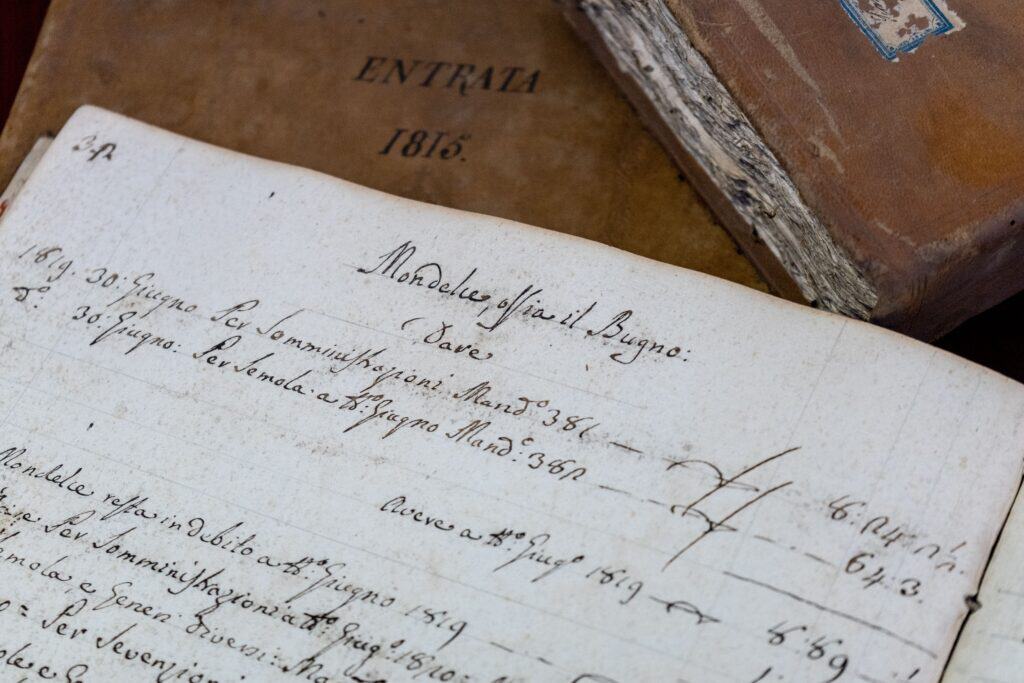
When Irish names were recorded in English, scribes often wrote what was easiest or most familiar to them. Mac could become Mc, especially in cramped handwritten records where abbreviations saved space and effort.
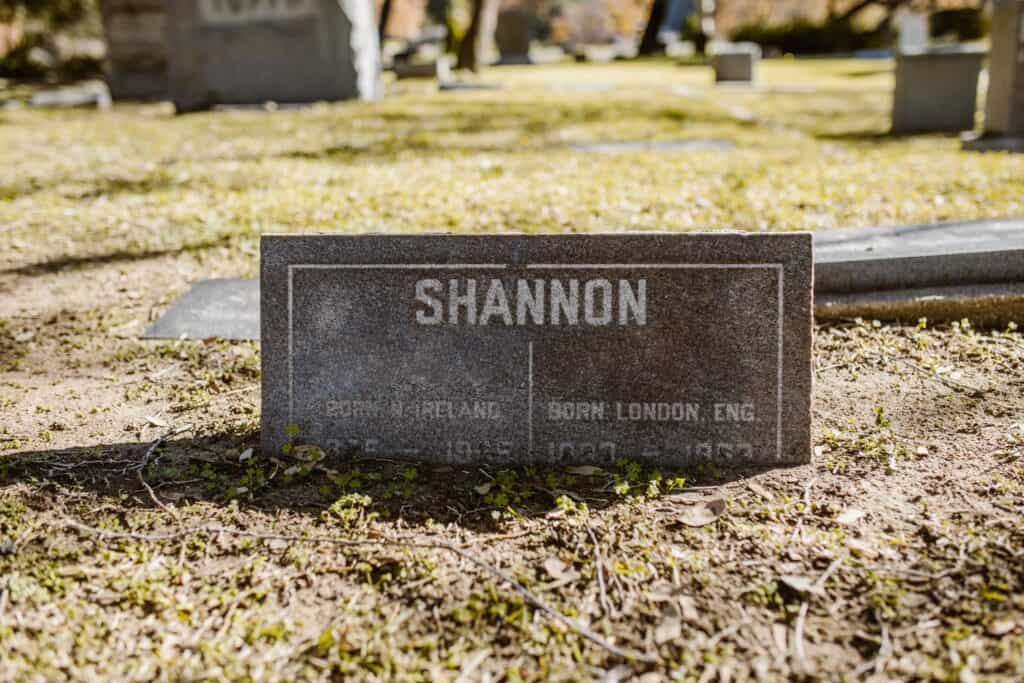
Some branches simply stuck with one form. Once a spelling became established in deeds, baptismal records, or gravestones, it tended to repeat itself. That does not mean it was the only earlier form.
Families who emigrated often ended up with the spelling used by local officials in Boston, New York, Philadelphia, Quebec, or Sydney. A branch that left from Cork might use McCarthy in Massachusetts while cousins in Ireland or London kept MacCarthy. The same pattern shows up across many American Irish surnames, where one spelling became the family default simply because it landed first in paperwork.
Some families deliberately restored Mac because it looked older or more Gaelic. Others preferred Mc because it was the spelling already established on passports, school records, military papers, or business documents.
This is where a real difference does exist. Mac/Mc and Ó are not the same prefix.
So Mac Cárthaigh and Ó Briain belong to different surname structures, even though both are deeply Irish.
You also see Ní and Nic in modern Irish-language forms used for women’s surnames. Those follow Irish grammar, not the simplified English surname system most Americans know from family trees and legal documents.
For readers exploring broader naming patterns, the Irish language resource at Teanglann is useful for spelling and pronunciation, and the state-backed heritage material at Logainm.ie helps with place-name Irish when surnames overlap with family locations.
Modern usage usually closes the name up as one word, such as McCabe, MacBride, or McMahon.
In Irish-language forms, however, the structure can remain visibly separate. For example:
In English records, spacing is inconsistent in older documents. You may see:
That kind of variation is normal. If you are searching archives, try every plausible form, including versions with and without apostrophes, spaces, and doubled consonants. Genealogy databases are better than they used to be, but not so good that they can outsmart a 19th-century clerk having a long day.
A lot of bad surname advice gets repeated online. Here are the claims worth dropping.
Not quite. Mc is older than many people think and appears in historical records long before modern American immigration waves. It is not simply a U.S. invention.
Sometimes a family chose to restore Mac for cultural reasons, but the spelling alone does not prove deeper Gaelic continuity. You need supporting records, not vibes.
As a broad historical principle, Mc derives from Mac. But in practical genealogy, you should avoid assuming there was one neat moment when every name changed. Many spellings coexisted for long periods.
Sometimes yes. Often no. McMahon and MacMahon might be the same extended line or separate branches that standardized differently. Only records can settle it.
If you are building a family tree, this is the part that saves time.
For official records, the most useful starting points are Citizens Information guidance on Irish family history and the IrishGenealogy.ie database. Both are practical starting points for U.S.-based researchers trying to connect a surname to a county. The civil records search is especially handy for testing spelling variants side by side without committing too early to one “correct” form.
No. The prefix tells you the surname began as a patronymic, but the core identity of the surname sits in the second element.
For example:
The spelling change from Mac to Mc does not alter that underlying origin. It changes the appearance of the surname, not its basic derivation.
This is where many American family researchers get a surprise. The Irish-language surname and the English-language surname may look related, but not identical.
Examples include:
You will notice that the change is often bigger than just Mc versus Mac. Consonants shift, vowels move around, and English spelling conventions do a lot of heavy lifting. That is why surname origin pages work best when they include Irish form, anglicized form, county links, and variant spellings together.
The correct spelling is usually the one your family uses, provided you are talking about a modern legal or personal name.
Historically, the answer is broader. Multiple spellings may be valid across time, especially when a surname moved between Irish and English, handwriting and print, Ireland and the diaspora.
If you are writing about surname origin in a general sense, it is often most accurate to mention the Irish-language form and then note the common English variants. If you are writing about one person or one family line, use the spelling that line actually used.
Usually no. Both come from Mac, meaning “son of.” Mc is generally a shortened written form of the same prefix.
No. Both prefixes appear in Irish and Scottish surnames. You cannot identify a surname’s nationality from Mc or Mac alone.
Mac is the full older Gaelic form. Mc developed as an abbreviation in English-language writing and records.
Yes. You should also try M’, spaced versions, and other anglicized variants. Record offices and clerks were not always consistent.
Yes. That is common in historical records and not unusual in different modern branches of the same extended family.
Yes in surname formation. It is the patronymic prefix meaning “son of.”
Yes, in surname history that is the usual explanation.
If you came here for the quick answer, here it is again: Mc and Mac in Irish names usually mean the same thing. The difference is mostly about spelling history, not a separate origin or status.
If you came here because your family tree has gone feral and now contains three spellings, two counties, and a census taker with creative penmanship, the answer is still the same. Keep the variants. Search all of them. Let the records decide.
That approach is less dramatic than a tidy myth about Mc versus Mac, but it is a lot more useful.
The Irelandwide Editorial Team is a group of travel writers, researchers, and content creators dedicated to publishing accurate, up-to-date information about Ireland. Our content covers travel guides, castles, attractions, Irish culture, tourism news, and official data to help visitors and locals alike. We prioritize reliable research, clear writing, and trusted sources to create practical resources for exploring Ireland with confidence.
At Ireland Wide, our aim is to bring authentically Irish insights to you, wherever you are.
Whether you have some feedback or would like to offer some of your own insights for everyone else to explore, don't hesitate to get in touch with us!