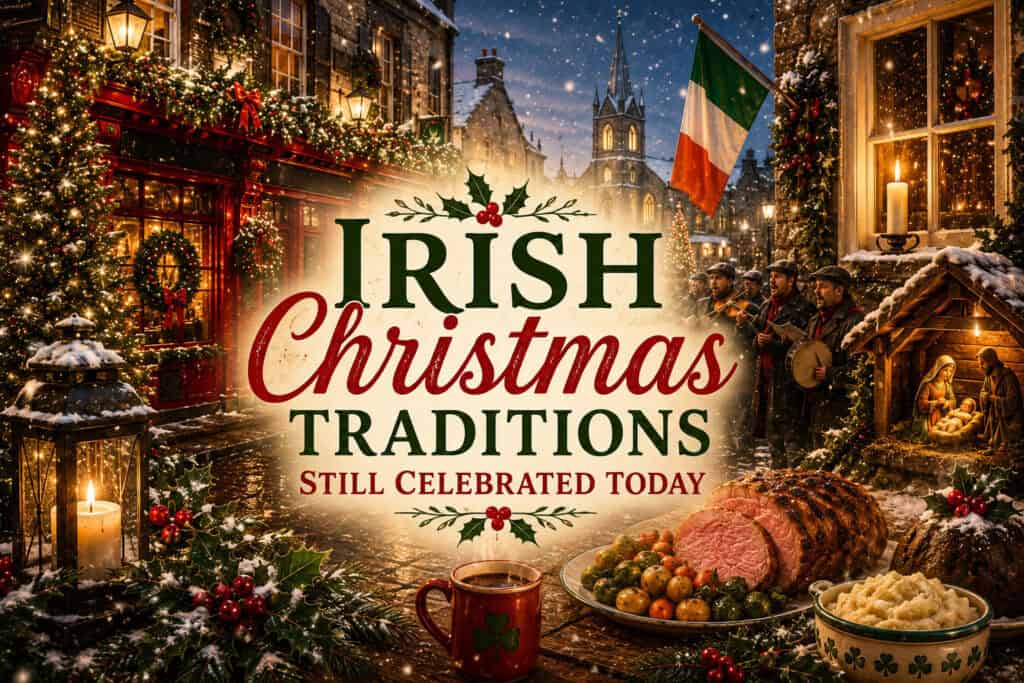
Irish Christmas traditions still celebrated today include lighting a candle in the window on Christmas Eve, decorating with holly, gathering for religious services and marking Nollaig na mBan on January 6. The details differ between households and counties, but these customs remain an important part of how many people in Ireland approach the festive season.
Christmas in Ireland has plenty in common with celebrations elsewhere: trees, presents, turkey, ham and a determined effort to finish the chocolates before the visitors arrive. Its older customs add layers of welcome, remembrance, faith and local character.
For people planning a winter trip or simply adding an Irish note to their own celebration, the best approach is to understand what each tradition represents. A candle or a sprig of holly carries more meaning when it is not treated as costume décor.
The Candle in the Window on Christmas Eve
A lighted candle in the window is among the most recognisable Irish Christmas customs. Traditionally, it offered a symbolic welcome to Mary and Joseph as they sought shelter on Christmas Eve. In some homes, the candle also represented hospitality for anyone who might need a safe place to stop.
The practice is quiet and personal, which may explain its staying power. A single candle in a front window is enough. If you are recreating it at home, use a stable holder, keep it clear of curtains and never leave a flame unattended. An LED candle gives the same visual effect in accommodation, around children or anywhere an open flame is unsuitable.
Use a simple white window candle rather than an elaborate display if the aim is to reflect the custom’s sense of welcome. It also makes a thoughtful setting for an Irish blessing shared with family before dinner or on Christmas Eve.

Homemory 12PCS Christmas LED Window Candles with 6h Timer, 2X Brighter Flameless Taper Candle with Suction Cups Battery Operated for Window, Flickering Candlesticks for Christmas Home Wedding Decor
Holly, Ivy and Winter Greenery
Before Christmas trees became widespread in Irish homes, people used holly, ivy and laurel to bring colour indoors during the darkest part of the year. The National Museum of Ireland notes that Christmas trees reached wealthy households in Britain and Ireland during the 1840s, then became broadly popular across Ireland from the middle of the 20th century.
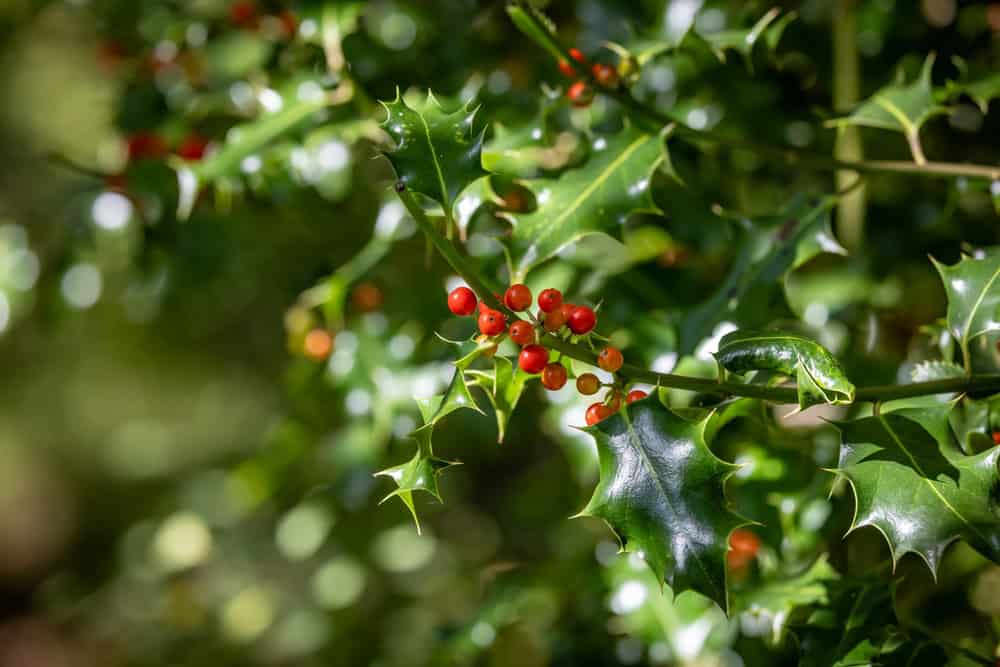
Natural greenery has not disappeared because of the tree. Holly still turns up on mantelpieces, doors and tables, often alongside modern lights and ornaments. Older folklore gave holly particular importance: children were told that angels stood on its sharp leaves, and Christmas Eve prayers would be answered.
If you are buying or gathering greenery, keep it modest and practical. Holly berries and leaves are not suitable for eating, and fresh arrangements should be placed where pets and small children cannot reach them. The point is the seasonal colour and the connection with a long-running household custom, not turning the sitting room into a hedge.
The Irish Christmas Crib
Nativity scenes, usually called cribs in Ireland, remain central to many family homes. In the past, children commonly collected moss to make the scene, and the figure of Baby Jesus was held back until Christmas morning. That small delay gave the crib a sense of occasion beyond being another decoration unpacked in early December.
Cribs are especially meaningful in homes where Christmas remains closely tied to church and family ritual. They also offer a simple way for children to take part in preparations. A reusable crib, greenery and a few figures can do the job without requiring a large display.
The tradition connects naturally with Christmas Eve and Christmas Day worship. The National Museum of Ireland records confession and midnight Mass as part of older Christmas Eve routines, followed in some homes by a late supper of white fish, potatoes and onion sauce. Midnight Mass remains a familiar fixture for many parishes, although service times vary, so check directly with the church before making plans.
Christmas Day Food, Family and Local Favourites
Christmas dinner in Ireland is usually a family event built around roast turkey or ham, potatoes and seasonal vegetables. The meal is familiar, but regional food traditions still make a difference. In Cork, spiced beef is a classic Christmas speciality, prepared with sugar and warming spices including cloves, allspice and peppercorns. It can be served hot for the main meal or sliced cold in the days after Christmas.
The English Market in Cork is strongly associated with local food shopping, and it is a sensible place to ask about spiced beef when planning festive meals. Opening arrangements change around the holiday period, so do not assume normal trading hours in late December.
Older accounts of Christmas Day also describe a clear division of labour, with women cooking while men played sports after services. That picture has changed in many homes, but the importance of a crowded kitchen, an overstocked fridge and a family meal has endured. Christmas dinner may be carefully planned, though the exact menu tends to be defended with more feeling than any international treaty.
St Stephen’s Day and the Wren Boys
December 26 is St Stephen’s Day in Ireland, and in some places it is closely associated with the Wren Boys tradition. Historically, groups went from house to house with a wren, music and costumes. Modern celebrations do not involve using a real bird, but the name, music and procession survive in community events.
Kerry is especially linked with Wren Day parades, while customs can vary dramatically between towns. If you hope to see one, look for a confirmed local programme in the relevant county rather than treating it as an event held everywhere. The appeal lies in its local nature: this is a tradition that belongs to particular communities, not a standardised national performance. The music can include familiar tunes and Irish drinking songs, depending on the community and the event.
For many others, St Stephen’s Day is reserved for family calls, a brisk walk, sport or the practical work of making room for leftovers. That flexibility is part of the rhythm of an Irish Christmas. The major feast is over, but the season has not finished.
Nollaig na mBan, or Women’s Christmas
Nollaig na mBan, often translated as Women’s Christmas or Little Christmas, falls on January 6. It marks the Feast of the Epiphany, associated in Christian tradition with the visit of the Wise Men to the infant Jesus.
The custom traditionally gave women a break after the work of Christmas, while men took on cooking, cleaning and household duties. Modern celebrations are often more social than formal: lunches, evenings out and community gatherings bring friends together after the intensity of December. Ireland’s national tourism information describes it as a day when women may gather socially while men handle the domestic jobs.
Not every household follows Nollaig na mBan, and modern family arrangements vary widely. Still, it remains one of the clearest examples of an Irish festive custom that has adapted without losing its name or its purpose.
When Does Christmas End in Ireland?
For many people, January 6 is the traditional endpoint of Christmas. The date is also called Twelfth Night, and old custom regards taking down decorations before then as unlucky. In practice, plenty of homes remove trees earlier or later, but the association remains strong.
This longer festive arc helps explain why Irish Christmas traditions do not begin and end with December 25. Christmas Eve, St Stephen’s Day and Nollaig na mBan each have their own character, giving the season a fuller shape than a single day of eating, gifts and assembling something with missing screws.
How To Experience These Traditions Respectfully
- Attend a church service only if it suits your plans and beliefs. Christmas Eve and Christmas Day services can be busy, so confirm times with the individual parish.
- Choose local food with a clear regional connection. In Cork, ask specifically for Christmas spiced beef rather than assuming it will be available everywhere in Ireland.
- Seek out Wren Boys events through local listings. Kerry is a useful starting point, but each community runs its own version.
- Keep the candle custom safe. A flame belongs in a secure holder, away from fabrics, or use an LED alternative.
- Leave decorations up through January 6 if you want to follow the traditional calendar. It is an easy custom to adopt, and it gives the tree a little more value for its effort.
Frequently Asked Questions
What Is the Most Traditional Irish Christmas Decoration?
A candle in the window on Christmas Eve is one of the best-known traditional Irish Christmas decorations. Holly, ivy and a nativity crib are also long-established features of many Irish homes.
What Is Nollaig na mBan?
Nollaig na mBan is Women’s Christmas, observed on January 6. It traditionally recognised women’s work over Christmas and gave them a day to relax or socialise while others handled household tasks.
Do People Still Celebrate Wren Day in Ireland?
Yes, Wren Day traditions continue in some communities, particularly in County Kerry. Modern events focus on costumes, music and local processions, not the historical use of a real wren.
What Food Is Traditional at Christmas in Cork?
Spiced beef is a well-known Cork Christmas food. It is seasoned with sugar and spices such as cloves, allspice and peppercorns, and may be eaten hot or served cold after Christmas Day.
When Are Christmas Decorations Traditionally Taken Down in Ireland?
January 6, the Feast of the Epiphany or Twelfth Night, is the traditional date for taking down Christmas decorations in Ireland. Some families still observe the custom, though household routines vary.