Duckett’s Grove is worth visiting if you want a dramatic ruined house, restored walled gardens, and an easy County Carlow stop that suits day-trippers, families, and photographers. It is less suitable if you want furnished interiors or a full castle tour, because the interior was destroyed by fire and is not open.
For a wider overview before narrowing down your route, see our guide to things to do in Ireland. Duckett’s Grove sits in the more romantic ruin camp than the fully furnished-house camp, and that is exactly its appeal.
The site combines a 19th-century Gothic-revival shell with two interconnecting walled gardens and pleasure grounds. Admission is free, with guided tours of the grounds offered seasonally, so it works well as a flexible stop rather than a rigid ticketed outing. In practice, that makes it easy to fold into a broader route such as a 7 day Ireland itinerary without having to plan your whole day around one booking.
Search by castle, county or nearby town, then click a marker to open the complete IrelandWide visitor guide.
County: Carlow
Jurisdiction: Republic of Ireland
Castle Type: Ruined great house / country house in a Gothic revival, castellated style
Century / Built Dates: Original house c.1745; major Gothic revival rebuilding from the mid-1820s; completed through the later phases of 19th-century expansion. Dates vary slightly across heritage listings, so treat them as approximate.
Builder / Associated Families: The Duckett family, with the Gothic remodelling associated with John Dawson Duckett; the redesign is widely attributed to Thomas Cobden.
Current Status: Roofless ruin with restored gardens and pleasure grounds under public management
Interior Access: No general interior access. The interior was destroyed by fire in 1933 and is regarded as inaccessible.
Typical Visit Time: 45 to 90 minutes for the ruin exterior, gardens, and a short walk. Allow longer if you join a guided tour.
Coordinates: 52.8575, -6.8128
Parking: On-site parking is available
Public Transport: Best reached by car. The site lies roughly 10 km from Carlow and 9 km from Tullow, so public transport usually involves a taxi for the final stretch.
Accessibility: The grounds are more accessible than the ruin itself. Paths and gardens are the easiest parts to enjoy. Surface conditions can vary outdoors.
Toilets: Visitor facilities are available on site. Check the official operator for the latest details.
Food: A café is associated with the site area, but opening details should be checked directly before setting out.
Family Suitability: Good for families, especially because there is a playground within the pleasure grounds
Official URL: Carlow County Council Duckett’s Grove page
Changing details checked July 2026: Use Carlow County Council and Discover Ireland for the latest tour and seasonal access information.
Despite the turrets and theatrical silhouette, Duckett’s Grove is not a medieval fortress. It is a country house transformed into a Gothic revival showpiece, built to impress as much as to function.
That matters when you arrive. If you are expecting battlements with furnished rooms and roped-off drawing rooms, you will be disappointed. If you like ruins with strong outlines, odd corners, garden walls, and a slightly eccentric profile, it lands very well.
The estate once dominated a huge local holding. Historical accounts describe it as the centre of a large Duckett estate in County Carlow, and the surviving towers and turrets still read as a statement of wealth first, domestic practicality second.
The documented story is stronger than the ghost-story version, so it is worth keeping the two separate.
The house began as an 18th-century Georgian residence, usually dated to around 1745. In the mid-1820s, it was remodelled in a castellated Gothic revival style for John Dawson Duckett. The architect most commonly associated with that phase is Thomas Cobden.
Historical accounts describe the wider estate as extensive, with the house acting as its focal point for generations. By the 19th century, the place had acquired the towers, turrets, niches, and ornamental flourishes that make it so recognizable now.
The turning point came in 1933, when a major fire destroyed the interior. What survives is the exterior shell and surrounding designed landscape. The site was acquired in 2005, and the restored gardens opened to the public after that restoration work, giving the place a much more usable second life than many Irish ruins ever get.
Duckett’s Grove is often mentioned in Irish ghost-story roundups, but those tales sit in the folklore category, not the documented history category. The ruin looks dramatic enough to attract a legend without much help.
If you enjoy local lore, fine. Just do not let it overshadow the actual story, which is already interesting: a Georgian house turned Gothic fantasy, then burned out and left as one of the most visually distinctive ruins in County Carlow. People who like atmospheric Irish heritage stops in the same broad vein often also end up comparing places like Ross Castle, though Duckett’s Grove is much more about exterior drama than room-by-room access.
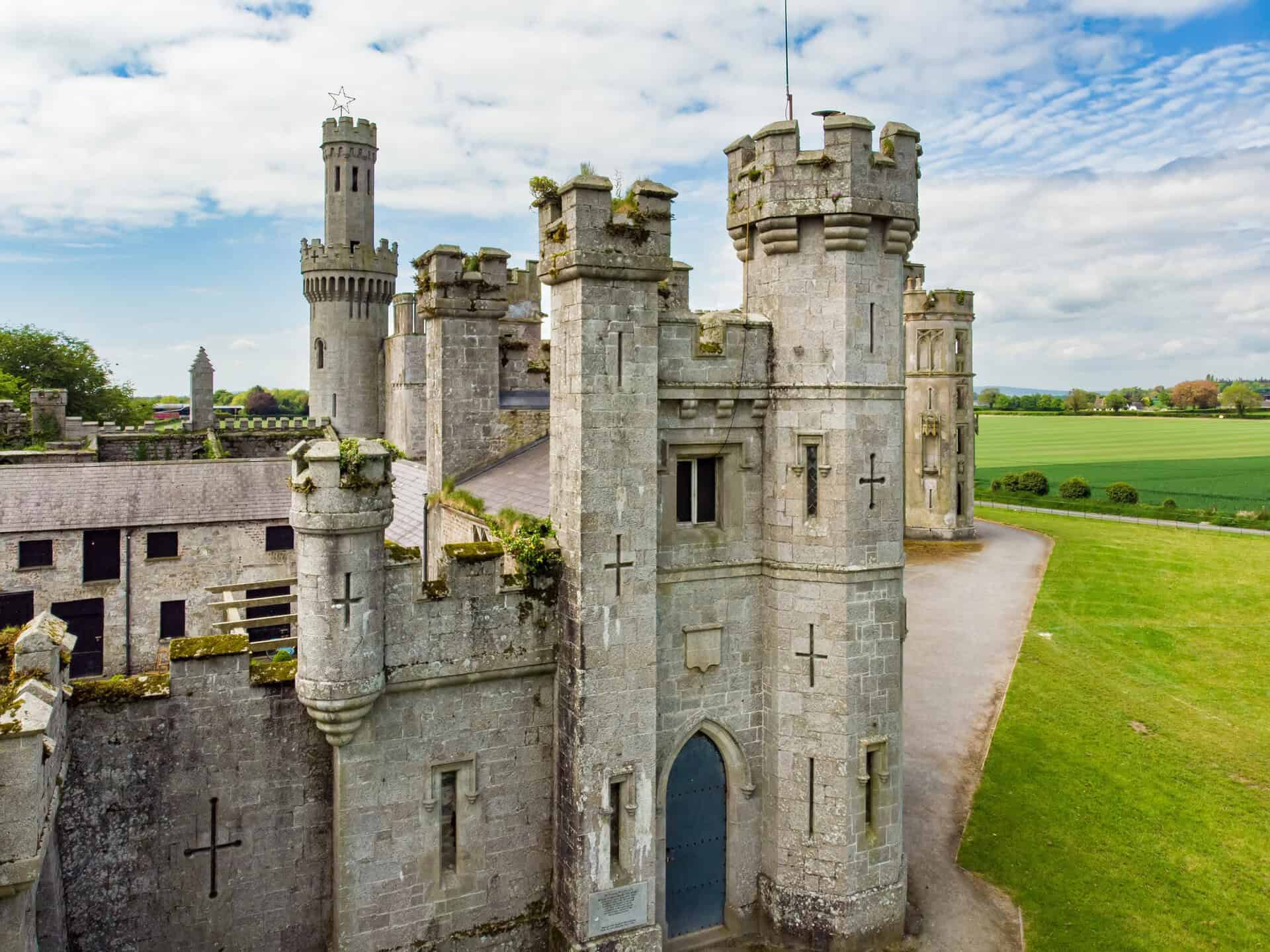
The headline feature is the roofless Gothic exterior. You are coming for the profile: towers, turrets, and decorative details that still read clearly even with the interior gone.
The second reason to visit is the pair of interconnecting walled gardens. They make the stop feel fuller than a quick pull-in for photos. The upper garden has formal beds and ornamental planting, while the lower garden reflects the old orchard function with fruit varieties and historical planting references.
The pleasure grounds add more space to wander, and local tourism material highlights native tree planting, restored paths, and a repaired sunken bridge. There is also a playground within the grounds, which makes the site much easier to recommend to families than many ruin-only stops.
Allow about an hour if you want the standard version of the visit: exterior views, a loop through the walled gardens, and a short wander through the grounds. Add extra time if you join a guided tour or want to spend longer photographing the ruin.
Families using the playground may easily turn that into a longer stop. Garden-focused visitors will also move more slowly than people who only want the main façade and a few photos. If you are trying to fit several counties into one trip, this is the kind of stop that works nicely in a 10 day Ireland itinerary because it feels rewarding without eating half the day.
Admission is free, which is one of the site’s big advantages. You can fold it into a County Carlow day without needing to build around timed entry.
Seasonal opening patterns published by Carlow tourism sources have indicated daily access from 10:00 to 17:30 from April to October and shorter hours in the rest of the year, often to 16:00. Those details can shift, so treat them as a planning guide, not a promise.
Guided tours of the grounds are also seasonal. Published notices have stated that individual guided tours pause in winter, with group tours available by arrangement during some off-season periods. The free entry helps offset that a bit if tours are not running on the day you go.
Duckett’s Grove is one of the easier ruined-house visits to recommend if your group has mixed interests. Some people can focus on the architecture. Others can spend more time in the gardens or playground.
On-site parking removes a lot of hassle. The grounds are more manageable than the ruin itself for anyone avoiding uneven surfaces or stairs, though this is still an outdoor heritage site rather than a fully controlled indoor attraction.
Parents should still keep a close eye on children around the ruin. A photogenic shell is still a ruin, not a climbing frame, even if small people may briefly disagree.
The building’s strength is its outline. You will get the most useful shots by stepping back enough to include the full turreted silhouette, rather than trying to crop too tightly into details.
The gardens give you a second angle on the site. Use them for contrast shots: formal planting in the foreground, the jagged house beyond. Overcast weather can actually work well here, because the grey light suits the stone and keeps glare down.
If you only have a short visit, prioritize the broad exterior view first. Garden details can wait. The ruin’s profile is the image people remember.
If you are building a Carlow day out, this stop works best as part of a short circuit rather than a full-day destination on its own.
For broader planning, see our Ireland castles guide, our Carlow guide, our Huntington Castle guide, and our Altamont Gardens guide.
Yes, if you like atmospheric ruins and gardens. The site gives you a lot for a free stop: a memorable exterior, a real sense of estate scale, and enough garden interest to justify more than a quick photo halt.
No, if your priority is interior access. The house interior is gone, and that is the main limitation. You are visiting a shell and landscape, not a restored stately home.
Yes. Published visitor information lists free admission to the grounds.
Not as a normal interior house visit. The interior was destroyed by fire in 1933 and is generally described as inaccessible.
Forty-five to ninety minutes is enough for most people. Stay longer if you want a guided tour, extra garden time, or a family stop with the playground.
Yes. The grounds are spacious, and a playground in the pleasure grounds makes it more family-friendly than many castle ruins.
A car is the simplest option. The site is in the countryside near Carlow and Tullow, so public transport usually needs a taxi connection.
The standout feature is the Gothic exterior with towers and turrets. The walled gardens are the bonus that turns a quick stop into a fuller visit.

Dan is the founder and editor of Ireland Wide. Born and raised in Ireland, he researches the country’s history, mythology and cultural traditions using museum collections, heritage authorities and historical sources. He leads the site’s editorial team, with a particular focus on distinguishing documented history from later folklore and modern interpretations.
At Ireland Wide, our aim is to bring authentically Irish insights to you, wherever you are.
Whether you have some feedback or would like to offer some of your own insights for everyone else to explore, don't hesitate to get in touch with us!