
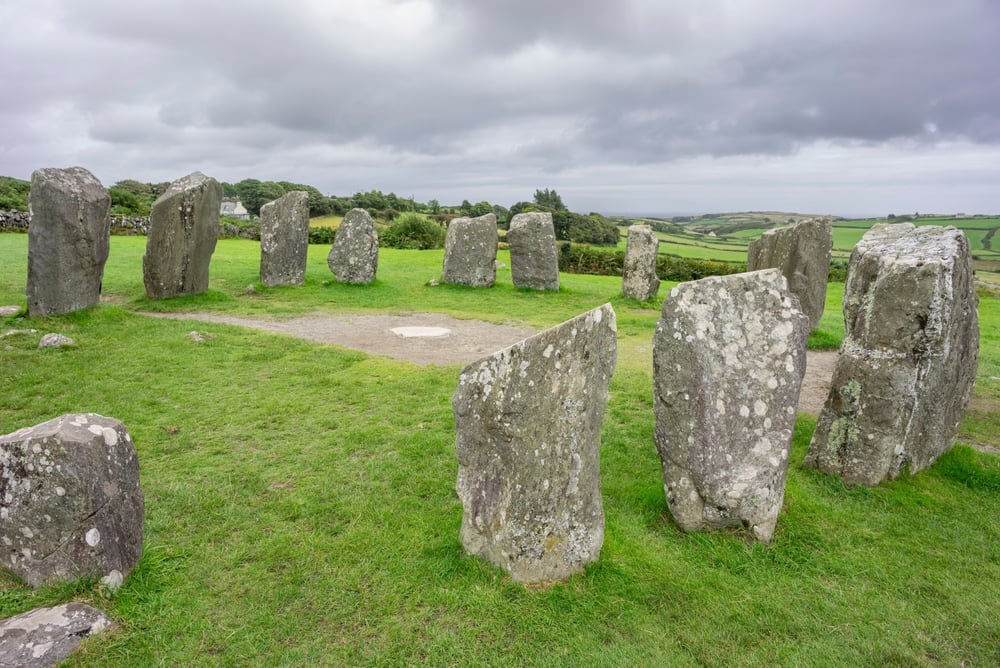
Drombeg Stone Circle is a free, open-air archaeological site near Glandore in West Cork, known for its 17-stone circle, winter-solstice alignment and a large recumbent stone often called the Druid’s Altar. It is an easy stop on a West Cork drive, though the approach is along narrow rural roads and the site has only limited facilities.
The circle is small enough to see in under an hour, but its setting and nearby Bronze Age cooking site make it more than a quick photograph. Add it to a wider West Cork route with these day trips in Cork, particularly if you are staying around Clonakilty, Rosscarbery, Skibbereen or Glandore.
Drombeg Stone Circle stands in the townland of Drombeg, a rural area near the village of Glandore in County Cork. It lies on a low rise with views over the surrounding countryside, roughly between the coastal communities of Glandore and Rosscarbery.
Use “Drombeg Stone Circle” as the destination in your navigation app. The final approach is on local lanes that can be narrow, winding and busy during the main visitor season. Drive slowly, particularly around bends, gateways and passing places.
There is a small car park close to the monument, followed by a short walk over uneven ground to the stone circle. The site is managed by the Office of Public Works, which lists Drombeg as open year-round with free admission on its official Drombeg Stone Circle visitor page.
There is no visitor center, café or formal ticket desk. Public toilets should not be assumed to be available at the monument, so it is sensible to use facilities in a nearby village before arriving. Conditions and access arrangements can change after severe weather, so check the official listing before making a special journey.
Drombeg is an axial stone circle, a type found mainly in Cork and Kerry. The surviving monument has 17 stones arranged in a circle about 9.3 meters across, with 13 stones still standing. Its most conspicuous feature is the large flat recumbent stone on the southwest side.
The recumbent stone has long been known as the Druid’s Altar. The name is evocative, but it is not evidence that Druids used the stone as an altar. “Druid’s altar” is a later popular label applied to several prehistoric monuments in Ireland and Britain.
Archaeological excavation at Drombeg in 1957 found cremated human bone and pottery fragments near the center of the circle. These discoveries point to ceremonial or funerary activity, although archaeologists cannot reconstruct every event that took place there thousands of years ago.
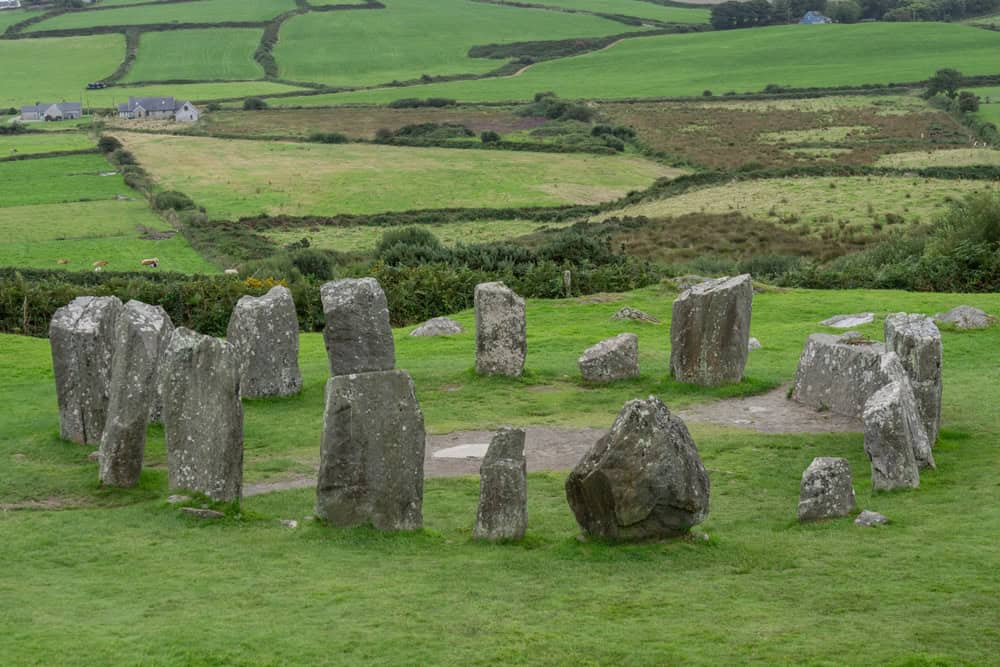
Drombeg dates to the Bronze Age, with the circle generally placed around 1100 to 800 BC. That makes the monument roughly 2,800 to 3,100 years old, long before medieval Ireland, Christianity or the historical Druids described in later classical writing.
The monument is valuable partly because it preserves evidence of a prehistoric landscape rather than a single isolated object. A short distance from the circle are the remains of a fulacht fiadh, a common Bronze Age cooking and working site built around a water-filled trough and heated stones.
Drombeg is particularly associated with the winter solstice. The line through the circle’s axial stone and its opposite side aligns broadly with the setting sun around the winter solstice, linking the monument to the shortest days of the year.
That alignment does not prove a single fixed ritual or calendar system, and the exact view can be affected by cloud, vegetation and the horizon. It does show that the builders paid close attention to the movement of the sun, which was no small achievement without modern surveying equipment.
The solstice falls around December 21 or 22. Visitors hoping to see the sunset alignment should treat it as an outdoor weather-dependent experience, arrive early, and avoid blocking local roads or access points. The circle is a protected archaeological monument, not an event venue.
The nearby fulacht fiadh is one of the most useful features for understanding daily Bronze Age life at Drombeg. Archaeologists uncovered a stone-lined trough, hearth area and remains associated with a wooden shelter. Heated stones were likely dropped into water in the trough to bring it to temperature.
Fulachtaí fia are often described as ancient cooking places, and boiling water with hot stones could certainly have been used to prepare food. Archaeologists have also proposed other uses, including washing, textile processing and bathing. The site offers a reminder that prehistoric places were practical as well as ceremonial.
Allow 30 to 45 minutes for the stone circle, the fulacht fiadh and a slow look at the information provided on site. Add time if you want to take photographs, walk carefully around the monument or visit as part of a relaxed Glandore and Union Hall outing.
Drombeg works well as a stop between larger attractions, not as a full-day destination by itself. West Cork weather can turn a short outdoor visit into a wet one, so bring a waterproof layer and shoes that handle mud and uneven grass. Our guide to packing for rain, walking and daily touring in Ireland covers the useful basics.
A car is the practical choice for most visitors. Drombeg is not served by a direct public transport stop, and the final stretch from nearby villages is along country roads without the kind of pedestrian infrastructure most visitors would want for a casual walk.
Taxi transport from a nearby town may be possible, but arrange both outward and return journeys in advance. If you are relying on public transport, build your itinerary around places with regular services and save Drombeg for a guided tour or a day with a hired car.
Glandore and Union Hall make natural nearby stops for a coastal walk, lunch or a quiet look around the harbor. Rosscarbery is another useful base, with access to the wider West Cork coast. Drombeg’s location also makes it easy to fit into a route between Clonakilty and Skibbereen.
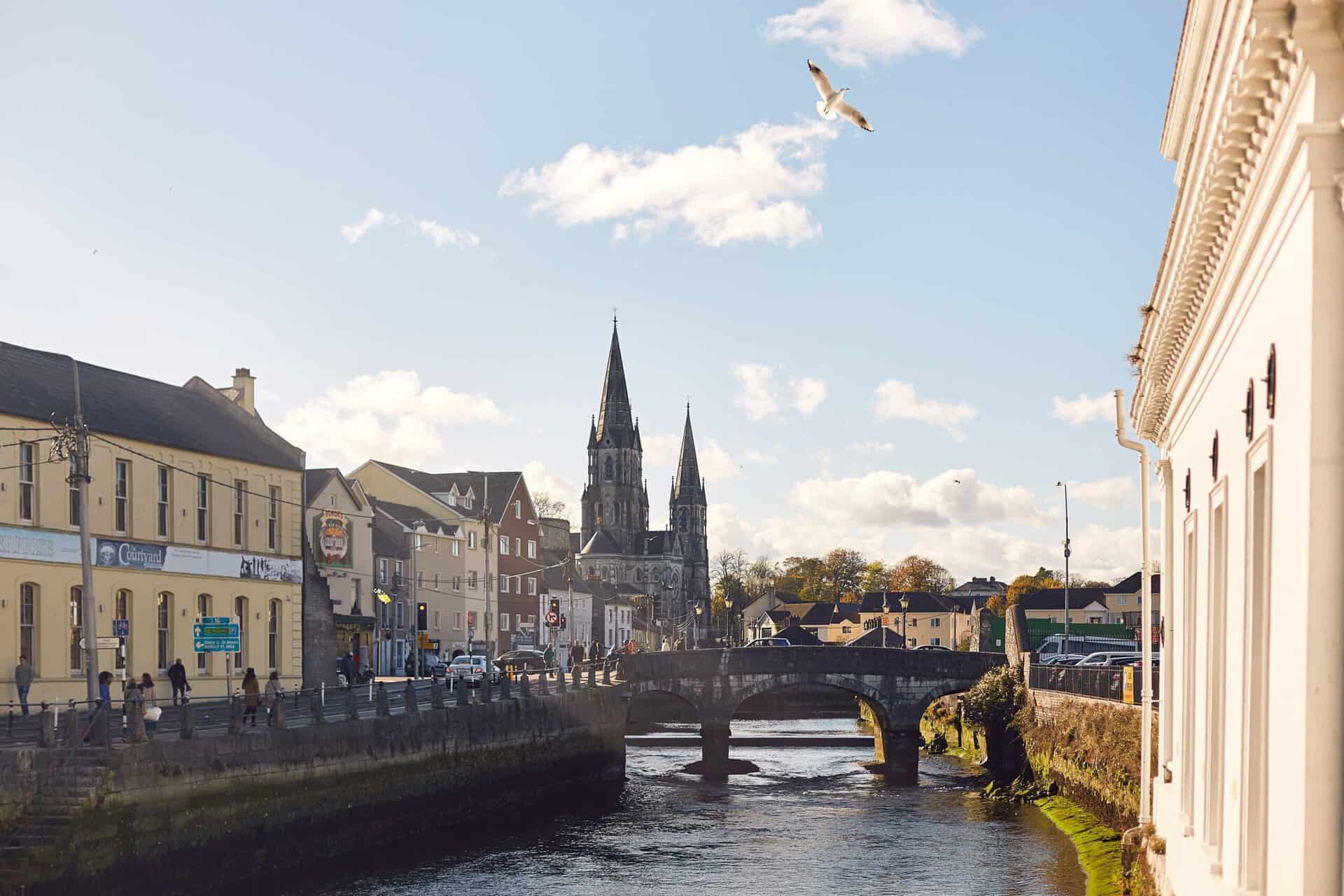
Visitors continuing east toward Cork City can also explore the county’s urban history, including the River Lee, which runs through the city center. Our explanation of what river flows through Cork City is a useful primer before a city stop.
Drombeg has survived for millennia because it remained part of a working rural landscape. Treat it with the same care you would give any fragile historic site: leave no litter, avoid drones unless you have checked the relevant rules and permissions, and do not move stones, leave offerings or make marks on the monument.
The official National Monuments Service protects Ireland’s archaeological heritage. Many monuments have no fences, staff or entrance gate, which places a fair bit of responsibility on everyone who visits.
Yes. Heritage Ireland lists Drombeg Stone Circle as open year-round with free admission. It is an outdoor site, so check the official visitor information for any weather-related access changes before traveling.
The name refers to the large recumbent stone at the edge of the circle. It is a popular later name, not an archaeological finding that proves Druids used the stone as an altar.
Late afternoon can give the stones and surrounding landscape softer light, while early morning is often quieter. Winter solstice interest is understandable because of the alignment, but December weather and limited daylight make a flexible plan essential.
The site involves a short approach across natural, uneven ground, which may be difficult for wheelchair users and anyone with limited mobility. Contact Heritage Ireland directly for the latest accessibility information before traveling.
No direct evidence links historical Druids to Drombeg Stone Circle. The monument is Bronze Age, while most written references to Druids come from much later periods, so the site should be understood through archaeology rather than modern folklore alone.

Matt Hook is a Canadian writer of Scottish and Irish heritage. He built his writing career creating detailed gaming guides, turning complex mechanics, history and lore into useful information for readers. Matt brings that same research-focused approach to Ireland Wide, where he writes about Irish travel, heritage, history and culture. He also holds CMA and CPA designations as a professional accountant, giving him a strong background in research, accuracy and attention to detail.
At Ireland Wide, our aim is to bring authentically Irish insights to you, wherever you are.
Whether you have some feedback or would like to offer some of your own insights for everyone else to explore, don't hesitate to get in touch with us!