

The Forty Foot is a rocky sea-swimming spot at Sandycove, beside the James Joyce Tower on Dublin Bay. It is free to visit, reachable by DART and worth a stop even if your swimming costume stays firmly in the bag.
The important catch: the Forty Foot has no lifeguards. Cold water, waves and slippery steps make it a place for swimmers with suitable open-water experience. A coastal walk is a perfectly good alternative.
| Question | Answer |
|---|---|
| Where is it? | Sandycove, southeast of Dún Laoghaire, on the southern shore of Dublin Bay |
| Nearest DART station | Sandycove and Glasthule, approximately 1 km from the bathing area |
| Admission | No admission ticket for ordinary public access; obey temporary closures |
| Water entry | Steps and handrails in an exposed rocky area; not step-free swimming access |
| Lifeguards | None at the Forty Foot |
| Swimming checks | Local water-quality notices, weather, tides, entry and exit conditions |
| Coastal emergency | Call 112 or 999 and ask for the Coast Guard |
The council’s Forty Foot visitor information confirms the station distance, lack of lifeguards and nearby facilities. Allow roughly 15–20 minutes for the 1 km walk as a planning estimate, with more time for your pace and access needs.

Take a southbound DART serving Sandycove and Glasthule, then walk towards the seafront. The council describes the approach from Scotsman’s Bay to Sandycove Harbour and up the hill to the bathing place. The James Joyce Tower is your handy landmark near the headland.
Use Irish Rail’s Sandycove and Glasthule station page for station details and the journey planner for your travel date. If you start at Connolly, our Dublin Connolly Station guide helps with the city end of the trip.
Walking from Dún Laoghaire also makes a pleasant coastal outing when conditions suit. Cyclists can use the nearby cycle stands. Driving is possible, but parking is limited on the narrow local roads. Follow the signs at your chosen space and keep entrances and emergency access clear.
No. Sandycove Beach and the Forty Foot are neighbouring but separate bathing locations. The small beach has a sandy shoreline; the Forty Foot uses rocky, stepped access. Check notices for the place where you actually intend to enter the water.
The swimming steps have handrails, but seaweed, wet concrete and waves can make them difficult to use. The tide changes the water level against the steps. A nearby coastal path does not make the water entry accessible to everyone.
The council lists public toilets around 200 m away, including facilities near Sandycove Point and Sandycove Avenue East, and a superloo on Sandycove Avenue West. Opening arrangements vary seasonally; check the council page if these are essential to your visit. Plan to change outdoors rather than relying on an enclosed changing room.
Keep bags away from entry points. Our Irish beach-day packing checklist helps with layers and wet belongings. Equipment can help you prepare, but it cannot make unsuitable conditions safe.
Water quality and swimming conditions are separate decisions. A favourable sample does not tell you that the waves, cold water or exit are manageable.
The council advises avoiding contact with bathing water for at least 48 hours after heavy rainfall because of pollution risk. Follow any longer local prohibition too. Water-quality results are samples from a particular time, not a live guarantee.
The RNLI’s open-water swimming guidance recommends going with a buddy, checking conditions and entering gradually. Tell someone ashore your plan. Being confident in a pool does not establish readiness for an exposed sea swim.
Enter slowly; do not jump or dive in. Cold-water shock can affect breathing and movement. Keep the swim within your ability and leave the water before becoming exhausted or too cold. There is no universally safe tide, season or number of minutes for every swimmer.
A bright cap and tow float improve visibility, but a tow float is not a substitute for a lifejacket or swimming ability. If you are new to open-water swimming, arrange a supervised introduction at a suitable location. If a health condition could affect immersion, seek advice from your clinician first.
Call 112 or 999 and ask for the Coast Guard. Give the location as the Forty Foot, Sandycove, and describe the person’s position relative to the steps or headland.
If you unexpectedly enter the water, follow the RNLI’s Float to Live advice: tilt your head back with ears submerged, relax your breathing and gently move your arms and legs if needed to stay afloat. Once your breathing is under control, call for help or move to safety if able.
If someone else is in trouble, raise the alarm and throw available buoyant rescue equipment from a safe position. The RNLI advises against entering the water yourself, which could turn one emergency into two.
Walk from the station to Sandycove, see the bathing place from secure ground, then visit the James Joyce Tower and Museum if it is open. The tower is the setting for the opening of Ulysses, so it gives the stop a little literary context as well as a sea view.
Allow about an hour for a relaxed look around the coast, excluding the station walk and any museum visit. This is a suggested allowance, not an opening schedule. The historic tower has stairs; confirm access directly if you need a step-free visit.
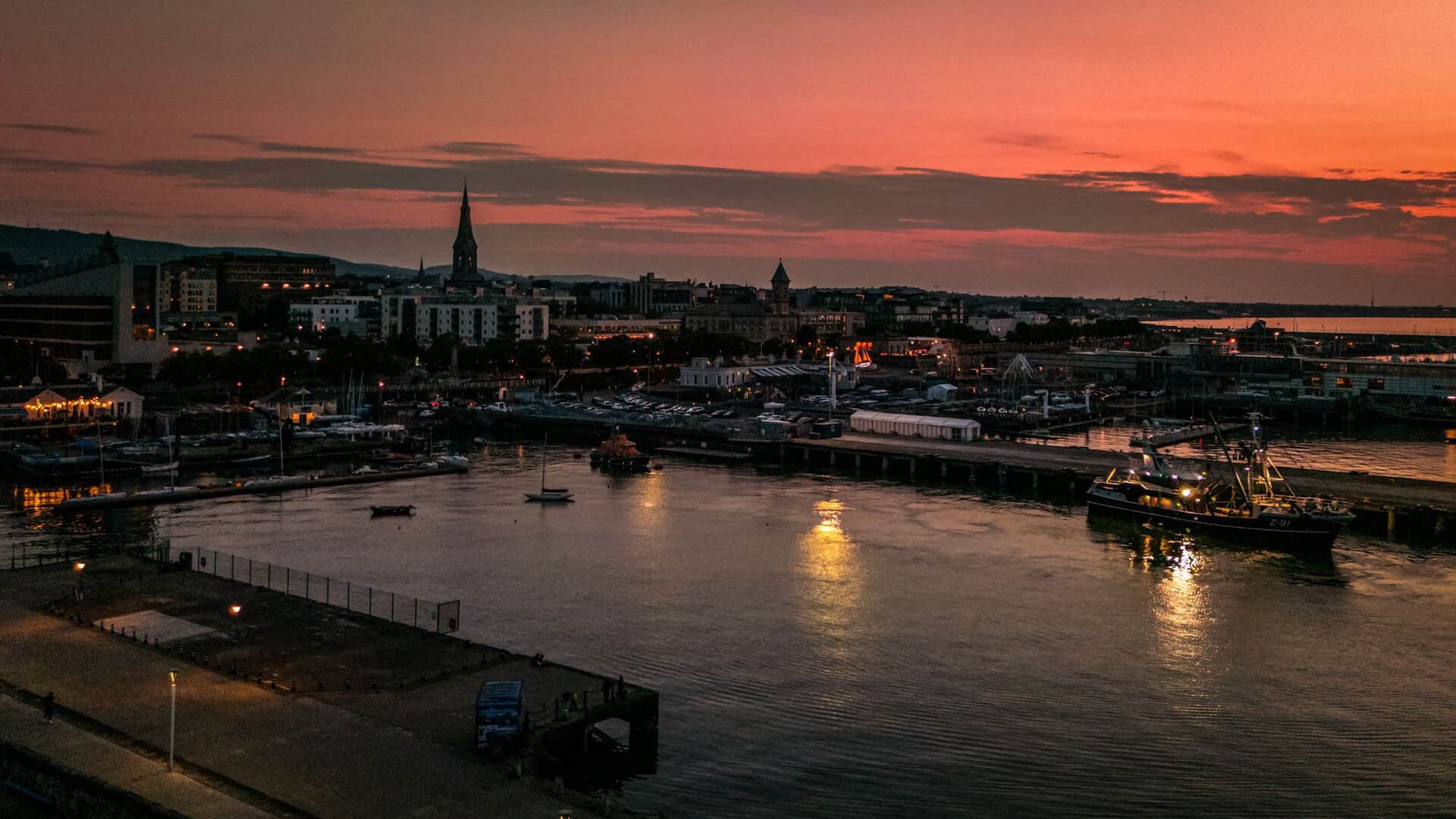
For a longer outing, continue towards Dún Laoghaire for lunch and more seafront walking, then return by rail from whichever station suits your route. Keep exposed pier walks conditional on the weather. Our three-day Dublin itinerary can help you fit the coast into a city break.
Keep steps and rescue equipment clear, take litter home and give swimmers privacy around changing areas. Ask before photographing identifiable people. In rough weather, stay back from wave-washed edges even if swimming was never on the agenda.
The Forty Foot has no lifeguards and uses rocky, stepped sea access. Beginners should seek a supervised introduction elsewhere rather than treating it as an easy first swim. Conditions and a usable exit matter even for experienced swimmers.
A child’s pool ability does not establish readiness for cold, exposed sea conditions. Adults must assess access, conditions and close supervision. If any are uncertain, choose a shore visit or a suitable lifeguarded beach when lifeguards are on duty.
No. Although historically a men-only bathing place, the Forty Foot is now used by men and women.
Do not use the name as a depth measurement or permission to dive. Depth changes with the tide and entry point, and submerged hazards may not be visible.

Matt Hook is a Canadian writer of Scottish and Irish heritage. He built his writing career creating detailed gaming guides, turning complex mechanics, history and lore into useful information for readers. Matt brings that same research-focused approach to Ireland Wide, where he writes about Irish travel, heritage, history and culture. He also holds CMA and CPA designations as a professional accountant, giving him a strong background in research, accuracy and attention to detail.
At Ireland Wide, our aim is to bring authentically Irish insights to you, wherever you are.
Whether you have some feedback or would like to offer some of your own insights for everyone else to explore, don't hesitate to get in touch with us!