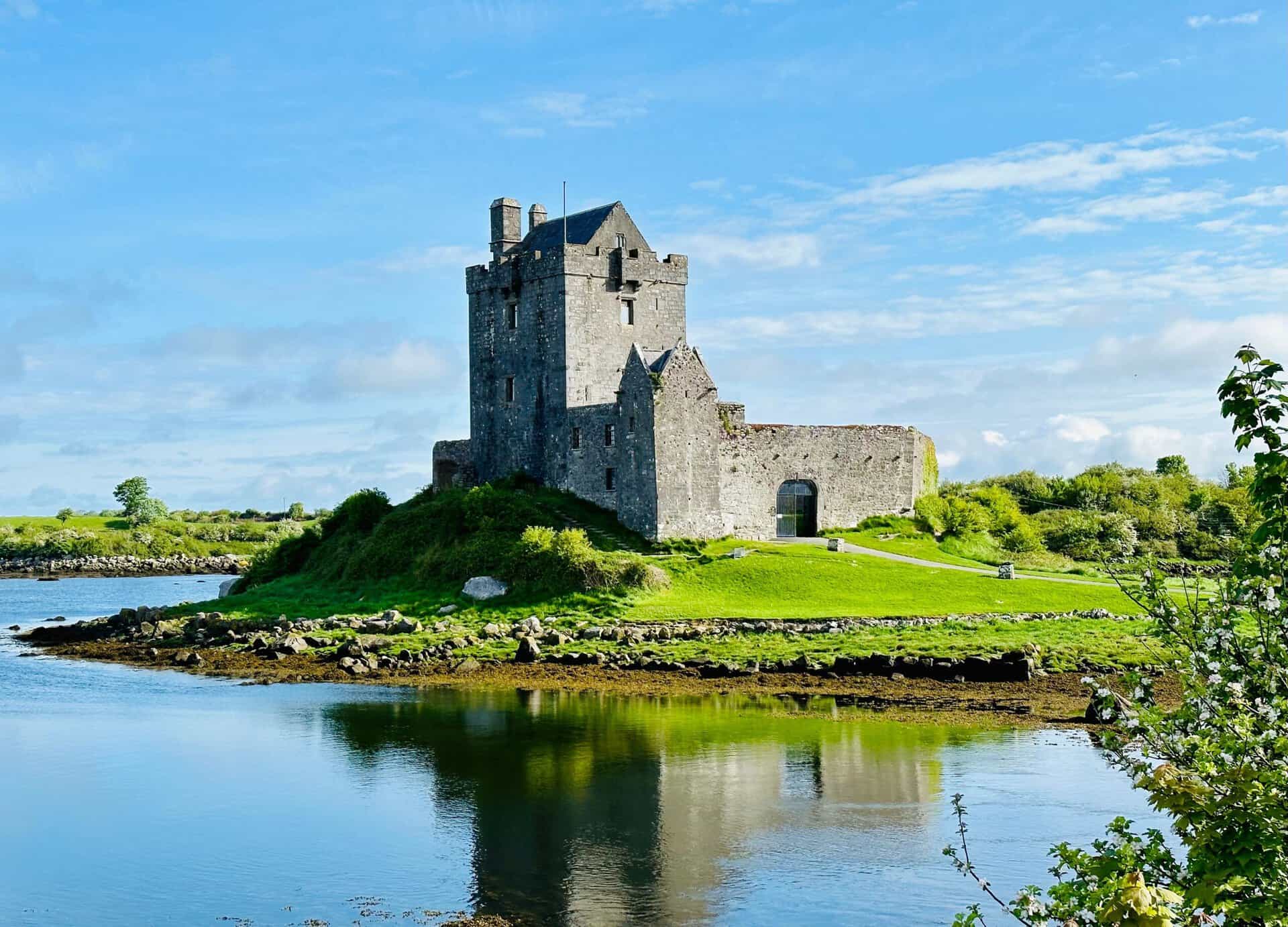

Drimnagh Castle is worth visiting if you want a compact, practical Dublin heritage stop with real medieval fabric, a restored interior, and the rare bonus of a moat. It suits history-minded day trippers, families with older children, and anyone building a castle-focused Dublin itinerary better than people looking for a large all-day estate.
For a wider shortlist before you commit, see our guide to the best castles in Ireland. Drimnagh stands out there for one simple reason: it is widely described as Ireland’s only remaining moated castle, which gives it a very different feel from the better-known tower houses and manor estates around the country.
This Drimnagh Castle Visitor Guide focuses on the practical details that matter most on the day, including guided tour hours, cash-only admission, transport, and what survives inside. Because access arrangements can change around school use and private events, the official operator’s information should always be your final check before setting out.
Search by castle, county or nearby town, then click a marker to open the complete IrelandWide visitor guide.
The headline practical point is simple: Drimnagh Castle is open on weekdays only, with guided tours and self-guided visits listed between 10 am and 4 pm Monday to Thursday, last entry 3 pm, and 10 am to 12 pm on Friday, last entry 11:30 am. The official operator also lists weekends closed.
Admission listed by the castle is €9 for adults, €7 for students, €7 for OAPs, and €5 for children. The same official information says payment is cash only in euro, with no credit card or digital payments accepted.
If you want the smoother option, book ahead by phone. The official number listed is 00 353 1 4502530. That matters here more than at some larger attractions, because access can be affected by school visits or private events.
Drimnagh’s big draw is not scale. It is character. This is the castle people go to when they want to see a real moated medieval site inside Dublin without turning the day into a long cross-county excursion.
The official tours highlight the undercroft, spiral staircase, upper floors, defensive features, and restored parterre garden. Other widely noted features include the great hall, battlement tower, and lookout posts. That mix gives you both sides of castle life: military architecture downstairs and overhead, domestic comfort in the restored rooms.
If you have seen grander Irish castles, Drimnagh can feel more intimate than spectacular. That is part of the appeal. You get a site that is easier to absorb in one visit, and the guided format helps fill in the missing centuries. If you usually gravitate toward larger estate-style stops such as Ross Castle or Glenveagh Castle, this one feels more compact and urban, but no less distinctive.
The documented story starts in the early 13th century, when the lands of Drimnagh were granted to the de Bernival family, later associated with the Barnewall name. Several published summaries connect this grant to King John in 1215, and that date is widely used in descriptions of the castle’s origins.
Like many Norman sites near Dublin, the castle changed over time. A simple early structure developed into a more substantial residence with later medieval and post-medieval additions. The architecture shows that evolution, with fortified features sitting alongside more comfortable living spaces and formal garden elements.
The castle also went through decline before restoration returned key areas to public view. What you see now is therefore a mix of surviving medieval fabric and careful restoration, presented as a heritage site rather than a ruin.
With a place this old, folklore tends to gather quickly. For Drimnagh, the strongest, most useful material is the documented ownership history, the moat, and the surviving architecture. If you come across dramatic local legends, treat them as stories unless the castle or a recognized heritage body presents them as sourced history.
That line matters more than usual at medieval sites, where a good ghost tale can spread faster than an excavation report. Drimnagh does not need invented drama anyway. A moated castle in suburban Dublin is unusual enough on its own.
A standard visit focuses on the rooms and features the site is best known for. Based on the official operator’s tour outline and other consistent descriptions, the highlights are:
The garden is also where the site briefly loosens its collar. After stairs, chambers, and masonry, the parterre changes the rhythm of the visit and gives you the clearest exterior sense of the castle as a lived-in place rather than just a defensive shell.
The moat and exterior stonework do a lot of the heavy lifting for photos, so give yourself time outside as well as in. Wide exterior shots tend to work best when you can include both the walls and water, while the undercroft and stair areas are better for detail and texture.
Inside, be ready for lower light and tighter spaces. A phone camera is fine for most people, but the stair and tower areas are more about atmosphere than clean, bright coverage. If a private event or school activity is under way, be extra careful about where and what you photograph.
Drimnagh Castle is in Drimnagh, Dublin 12, on Long Mile Road according to widely repeated visitor details. That makes it practical for anyone already spending time in Dublin city, especially if you are building a day around southwest Dublin heritage sites.
For route planning, use the official castle site and Dublin transport tools rather than relying on old blog directions. Public transport access is regularly mentioned, but the simplest approach is still to map the exact stop and walking route on the day. If Drimnagh is part of a short city break, our 3 day itinerary for visiting Dublin helps slot it into a sensible wider plan.
Historic castles are rarely simple for step-free access, and Drimnagh is no exception. The published highlights include spiral stairs and upper floors, so anyone with reduced mobility should contact the castle directly to ask what parts of the experience are manageable.
The same applies to parents with very small children. The site is family-friendly in the broad sense, but it is still a castle with stone steps, enclosed spaces, and the attention span demands that come with guided heritage visits.
Yes, if you want a short, distinctive castle visit in Dublin with a real sense of medieval structure and a feature you do not see every day. The moat gives Drimnagh its identity, while the undercroft, hall, and tower details make the visit feel complete rather than gimmicky.
It is a better fit for history fans, architecture nerds, and families doing a half-day cultural outing than for anyone chasing sweeping gardens, lavish collections, or a full estate experience. Go in with the right expectations and it lands well.
Drimnagh is easiest to enjoy when paired with other Dublin heritage stops. If you are building that broader plan, start with our Dublin travel guide for area context and logistics.
For more castle-focused planning, these are the most natural next reads on the site: our Dublin Castle guide and our Malahide Castle guide. Dublin Castle gives you the state and administrative side of the city’s history, while Malahide Castle is the larger estate-day option if you want grounds as well as interiors.
If you are mapping a wider theme, our best castles in Ireland roundup helps place Drimnagh in the national picture. It is not the biggest castle in that list, but it may be the one with the easiest elevator pitch. Moat. Dublin. Done. If you are stretching that castle theme into a longer trip, our 7 day Ireland itinerary is a useful next step.
The official listed rates are €9 for adults, €7 for students, €7 for OAPs, and €5 for children. The operator also states that payment is cash only in euro.
Booking ahead is sensible, especially because access can be limited by school visits or private events. The official visitor information lists a phone number for reservations and queries.
Yes. Guided tours and self-guided visits are both offered during the castle’s published opening hours, subject to availability and event use.
Drimnagh is best known as Ireland’s only remaining moated castle. The moat, undercroft, spiral staircase, tower features, and restored parterre garden are the site’s standout elements.
About 1 to 2 hours is enough for most people. That gives you time for the tour or self-guided visit, a look around the grounds, and some photographs.
No. The official published hours show opening from Monday to Friday only, with weekends closed.

Dan is the founder and editor of Ireland Wide. Born and raised in Ireland, he researches the country’s history, mythology and cultural traditions using museum collections, heritage authorities and historical sources. He leads the site’s editorial team, with a particular focus on distinguishing documented history from later folklore and modern interpretations.
At Ireland Wide, our aim is to bring authentically Irish insights to you, wherever you are.
Whether you have some feedback or would like to offer some of your own insights for everyone else to explore, don't hesitate to get in touch with us!