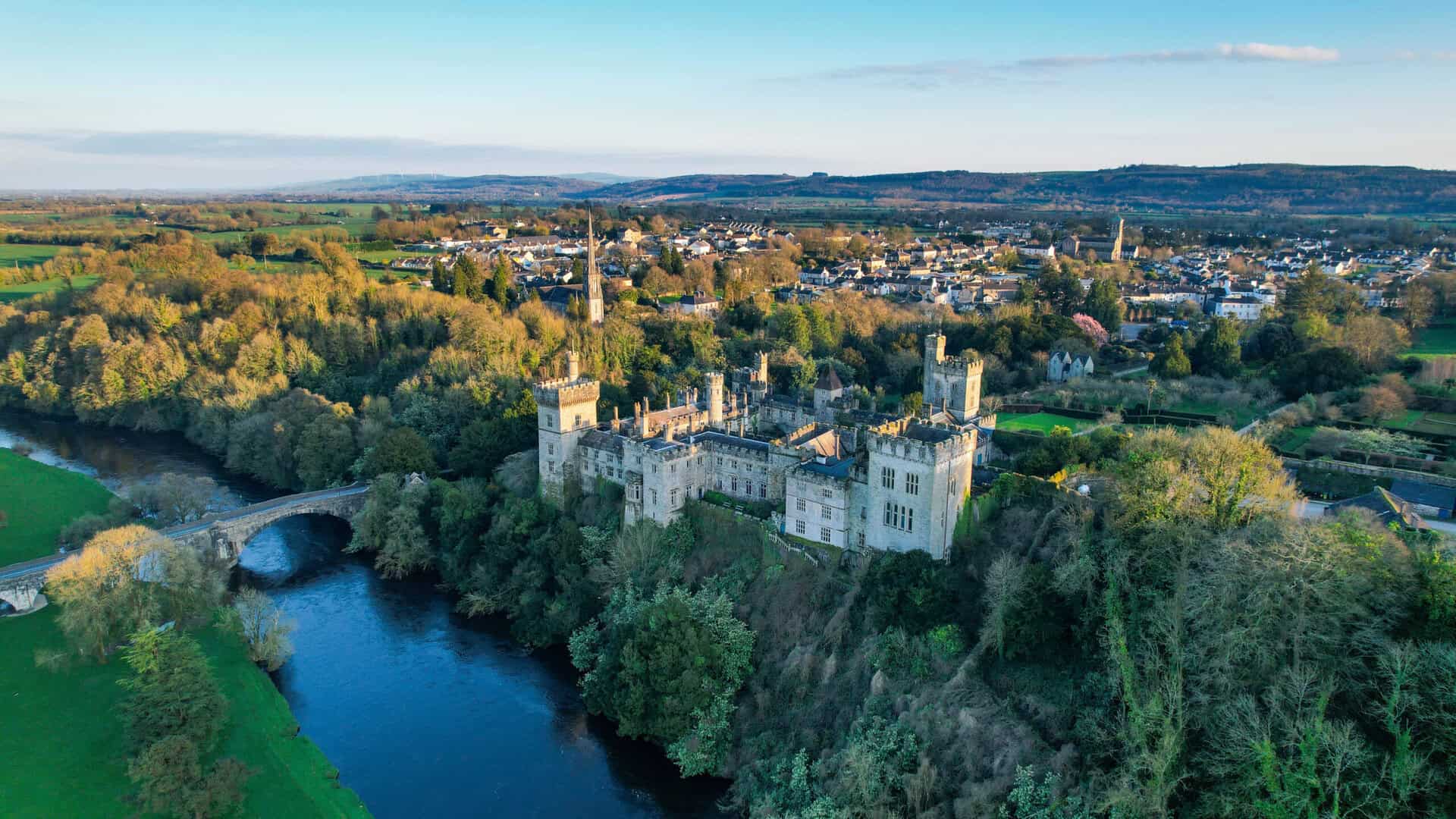
Lismore Castle and Gardens is worth visiting if you want a castle day out with real history, strong garden design, and an easy-to-walk heritage town around it. It suits couples, families, garden fans, and anyone building a County Waterford itinerary, with one important catch: the castle itself is a private residence and is not open inside to the public.
The main draw is the gardens within the castle walls, plus the setting above the River Blackwater. If you are comparing sites, this is best treated as a gardens-first castle visit, not a full interiors tour. For a wider shortlist, see our guide to the best castles in Ireland or compare it with places such as Ross Castle if you want a more traditional castle-focused stop.
Search by castle, county or nearby town, then click a marker to open the complete IrelandWide visitor guide.
Lismore Castle is not a walk-through stately home visit. That is the key thing to know before you plan around it. The castle remains private, while the public experience focuses on the gardens and, when open, the art gallery in the West Wing.
The gardens cover about seven acres within the castle walls and are split into two distinct sections. Discover Ireland describes the upper garden as preserving the layout of a 17th-century walled garden, while the lower garden developed more fully in the 19th century.
If you like formal structure, terraces, kitchen-garden planting, and long-established trees, this place lands well. If you mainly want furnished rooms, battlements, or guided castle interiors, look elsewhere on your trip and pair Lismore with another stop from our best castles in Ireland guide or something like Dunguaire Castle for a different sort of castle stop.
The most widely published garden hours are 10:30am to 5:30pm, with last entry at 4:30pm, during the main opening season from mid-March to mid-October. Official gallery listings also show a broader arts season, so it is smart to verify both the gardens and Lismore Castle Arts before you travel.
Published garden admission is €11 for adults, with concession and family options also listed during the main season. Prices do change, and occasional event programming can affect access, so check the official booking page on the day you plan.
Best practical move: check three things before leaving home.
The castle site is generally dated to 1185 and associated with Prince John, later King John. Over the centuries the property passed through several notable hands, including the Cistercian monks, Sir Walter Raleigh, and Richard Boyle, 1st Earl of Cork.
The part of the experience most people see clearly today is tied to two big phases. First came the upper walled garden around 1605, laid out for Richard Boyle. Later, in the 19th century, the lower garden was developed with the influence of Sir Joseph Paxton, better known for the Crystal Palace and for his work with the Dukes of Devonshire.
The castle building itself was substantially rebuilt in Gothic style in the 1800s. You can see that immediately from the outside, because the skyline, towers, and romantic profile people associate with Lismore are as much 19th-century reinvention as medieval survival.
The most repeated literary claim is that Edmund Spenser is said to have written part of “The Faerie Queene” in the yew walk. That is best treated as a tradition attached to the site rather than a firmly documented visitor fact. It adds atmosphere, but it is not the sort of thing to build your whole day around.
Lismore does not need much polishing. The documented layers of Norman, Boyle, Devonshire, and garden history are already enough to keep it interesting.
The highlight is the contrast between the two garden halves. The upper garden keeps its long-established walls, terraces, and formal structure. Planting changes over time, but the bones of the layout remain the point.
The lower garden is looser and greener, with lawns, shrubs, mature trees, and the old yew avenue at its heart. Planting commonly noted in the gardens includes magnolias, camellias, rhododendrons, herbaceous borders, fruit and vegetables, plus contemporary sculpture placed through the grounds.
Entry to the upper garden is through the Riding House, another element linked to later redesign. The whole visit shifts nicely from enclosed formality to broader, softer planting without turning into an all-day march.
Use the town as your base, not the castle gates. Free parking is typically available in Lismore, and the walk to the gardens is short. This also makes the day feel less like a one-stop errand and more like a proper half-day out.
Ninety minutes is the minimum if you want to see both gardens without rushing. Two to three hours is better if you plan to pause for photographs, browse the gallery, or combine the visit with the Heritage Centre.
The lower section is easier to take in first, especially if you want the broadest views and a gentler introduction. Save the upper garden for later when you can slow down and notice details in the borders, productive planting, and terracing.
Your garden ticket generally includes access to Lismore Castle Arts in the West Wing. If an exhibition changeover is underway, access may be limited, so this is the one part of the day that benefits from a last-minute check.
Lismore works best unhurried. Pair the gardens with Lismore Heritage Centre or a walk through town, then move on. Trying to cram in too much tends to turn a calm visit into a car-park relay.
The main warning is straightforward: the terrain is naturally steep in places, and this is a historic garden site rather than a fully leveled modern attraction. Paths and gradients may be awkward for some wheelchairs, buggies, and anyone unsteady on gravel or inclines.
Published visitor information says dogs are welcome on a lead. Families with children should find the site manageable if little legs can handle walking and occasional slopes, though buggy-heavy days are not where Lismore is at its easiest.
If accessibility is the deciding factor, contact the gardens directly before you go. That will give you better planning information than turning up and hoping the hill has changed its mind.
Morning light is usually kinder on the castle exterior, especially if you want a clear shape of the building rather than flat midday contrast. The formal lines of the upper garden also photograph better before the busiest part of the day.
For wider context shots, include the walls and terraces rather than isolating flower beds. Lismore’s appeal comes from the relationship between planted space, old masonry, and the Blackwater Valley setting. Close-up flower photos are lovely, but they could have been taken in plenty of other gardens.
If you want a classic exterior view of the castle, also spend a few minutes around the town and bridge area. The private-residence status means you are piecing together your own viewpoints rather than following a grand interior route.
Lismore Heritage Centre is the most obvious add-on. It helps fill in the town’s earlier story, including its religious and educational significance, and it turns the castle visit into a broader look at Lismore rather than a single paid attraction.
St Carthage’s Cathedral is another sensible nearby stop in town. Even if castles are your main focus, Lismore’s ecclesiastical history is too central to ignore.
If you are building a broader county route, pair this stop with a wider Ireland plan such as our 7 day Ireland itinerary, then compare it with stronger defensive ruins and tower houses elsewhere. Lismore also makes a gentler counterpoint to grander estate experiences like Ashford Castle.
Yes, if you want a graceful, historically layered garden visit with a castle setting. No, if your ideal castle day means climbing towers, touring state rooms, or getting a deep medieval military experience.
Lismore works best for people who enjoy garden history, estate landscapes, and heritage towns. It is one of those places where the setting does a lot of the work, and in this case there is enough substance to back it up.
No. Lismore Castle is a private residence, and there is no general public access to the castle interior. The public visit is focused on the gardens and, when open, the art gallery.
Allow 1.5 to 3 hours. That is enough for both garden sections and the gallery, with time left to walk through Lismore town.
No. The usual pattern is seasonal opening from mid-March to mid-October, so check the official site before you travel.
Adult tickets are currently listed at €11, with reduced rates for children, students, seniors, and families. Check the official operator site for the live price on your date.
Yes, with realistic expectations. It is good for a family walk, open space, and garden exploration, but the slopes and paths are better for children happy to walk than for very buggy-heavy visits.
Yes, dogs are generally allowed on a lead. Owners are expected to keep them under control and clean up after them.
If Lismore is one stop on a wider route, start with our best castles in Ireland guide for the bigger castle picture. Then use practical planning help like advice for first time visitors to Ireland if you are stitching it into a longer trip.

Dan is the founder and editor of Ireland Wide. Born and raised in Ireland, he researches the country’s history, mythology and cultural traditions using museum collections, heritage authorities and historical sources. He leads the site’s editorial team, with a particular focus on distinguishing documented history from later folklore and modern interpretations.
At Ireland Wide, our aim is to bring authentically Irish insights to you, wherever you are.
Whether you have some feedback or would like to offer some of your own insights for everyone else to explore, don't hesitate to get in touch with us!