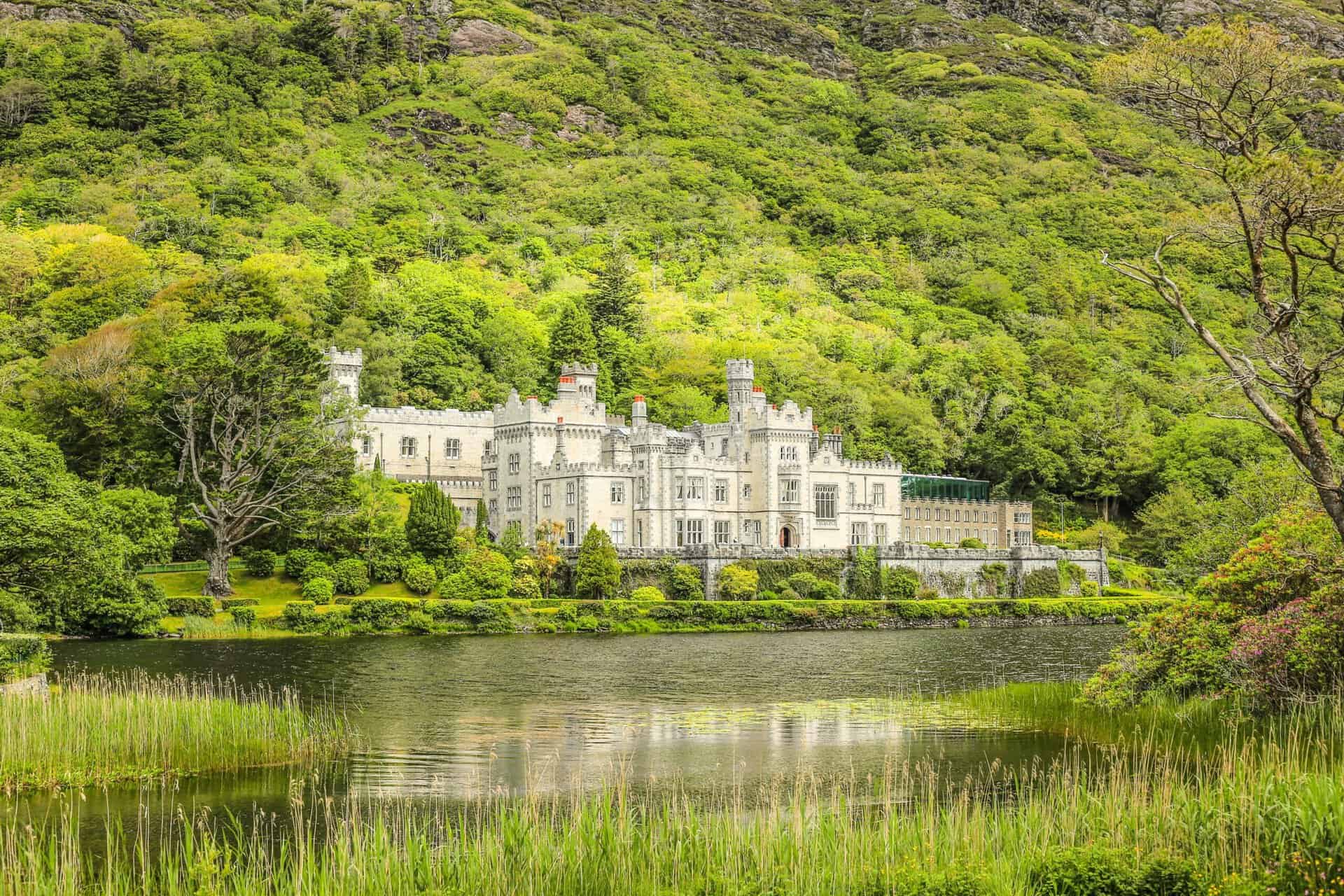
Kylemore Abbey is worth visiting if you want one of Ireland’s most complete estate experiences in a single stop: a lakeside castle-like abbey, a neo-Gothic church, woodland and lakeshore walks, and a restored Victorian Walled Garden. It suits day-trippers from Galway, families, and anyone touring Connemara who wants more than a quick photo stop.
The catch is simple. This is a big estate, not a ten-minute roadside attraction, so give it at least half a day if you want to see the abbey rooms, church, and garden properly. If you are mapping out a wider castle trip, start with our broader guide to things to do in Ireland.
For route planning, Kylemore sits in Connemara in County Galway, a little over an hour by car from Galway City. It works well on a larger west-of-Ireland loop, especially alongside a broader Connemara itinerary and other scenic stops on the west coast of Ireland.
Search by castle, county or nearby town, then click a marker to open the complete IrelandWide visitor guide.
Kylemore confuses people for a reason. The building most people come to see began life as Kylemore Castle, a 19th-century private home built for Mitchell Henry, and only later became an abbey after the Benedictine community moved in. You are visiting both a historic house and a living religious estate.
That layered history is part of the appeal. You get the dramatic exterior that looks every inch like a romantic Connemara castle, but also restored period rooms, interpretation on the estate’s past, and spaces shaped by the Benedictine nuns who have lived here since 1920.
The broad timeline is well established. Mitchell Henry, a wealthy doctor and politician, built the house in the 1860s, with 1868 commonly given as the completion date. The estate later passed to the Duke and Duchess of Manchester, then was sold to the Benedictine nuns in 1920.
Estate history also points to bigger themes than a single family story: engineering ambition, model farming, education, and the abbey’s later role as a girls’ boarding school. If you like your castle visits with context rather than just empty rooms, Kylemore does that well.
There is also a strong romantic narrative around the estate and the Henry family, but that is still part of the documented history rather than local folklore. For this site specifically, the value is in the surviving buildings and landscape, not in ghost stories that may or may not have grown in the retelling.
The headline sights are the abbey itself, the neo-Gothic church, and the Victorian Walled Garden. The estate also includes lakeside and woodland walks, food outlets, a craft and design shop, and family-focused extras such as animals and children’s activity areas.
The garden matters more than the usual add-on wording suggests. The restored Victorian garden covers about six acres and is often described as Ireland’s largest walled garden. Even if you are not normally a garden person, this is not just a few tidy flowerbeds beside a café.
The church is another easy win. It is separate enough from the main building to feel like its own stop, and it breaks up the visit nicely if you are pacing the day with children or anyone whose interest in Victorian interiors has limits.
Allow at least 3 to 4 hours. That gives you time for the abbey rooms, the church, the Victorian Walled Garden, and one or two short walks without turning the day into a sprint.
If you want lunch at Kylemore Kitchen Café, a slower garden visit, and time for the shop or family extras, half a day is better. People who rush through in under two hours usually end up seeing the façade, grabbing photos, and missing the estate’s best parts.
Kylemore Abbey is generally open daily, and the main estate hours are often listed as 10am to 6pm. Hours can vary by season and individual facilities, so check the official opening hours page before you travel.
Estate admission covers the main experience, including access to the abbey rooms, church, and gardens. Prices change, so I am not listing a live ticket figure here. Book ahead if your dates are fixed, since advance booking is available and popular days can feel busy, especially in summer and on coach-tour-heavy afternoons.
Kylemore Kitchen Café is the main food stop and is known for home cooking, baking, and a broad menu that usually includes soups, stews, salads, and vegetarian options. The practical detail many people miss is that it does not require an estate ticket.
The Garden Tea House is the lighter option near the Victorian Walled Garden and is usually the better call if you want tea, scones, or a short break without backtracking. It tends to open seasonally, typically from March to mid-November, so confirm before relying on it.
The Kylemore Abbey Craft & Design Shop sells estate-linked products including pottery, soaps, and chocolates associated with the Benedictine community. If you want a souvenir that is more specific than another fridge magnet, this is where to look.
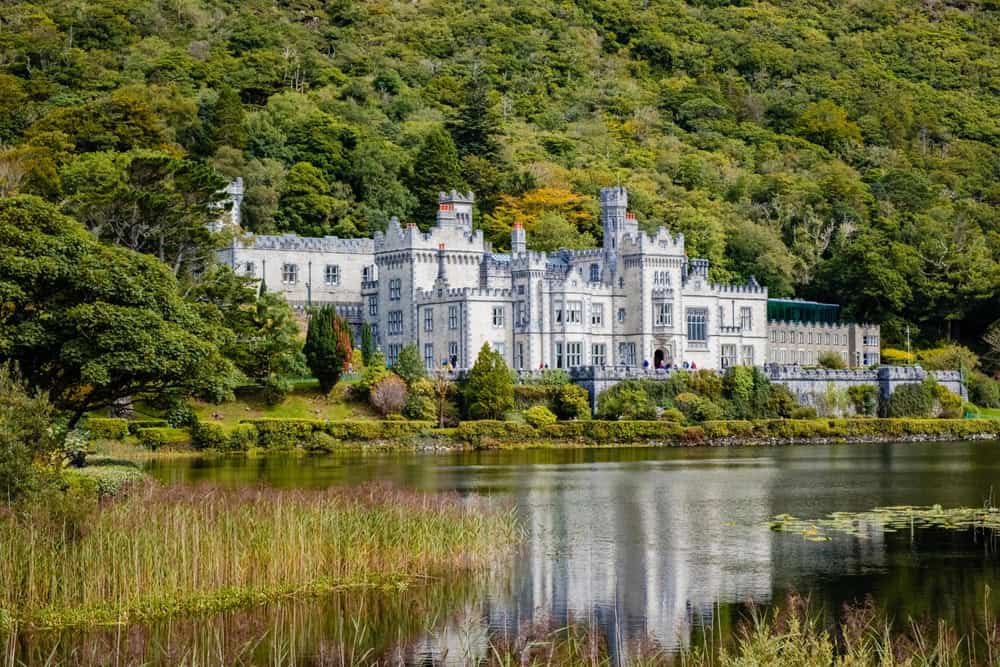
The classic shot is the abbey reflected in the lake, with the mountains behind. For that view, give yourself time on arrival and do not rush straight indoors.
Soft light and calm weather help most, but Kylemore’s moody Connemara setting can also work well in cloud. The church and the walled garden reward a different approach: tighter framing, architectural detail, and seasonal planting rather than just wide scenic shots.
If you are visiting on a coach tour, take the main exterior photos early. Group schedules tend to compress around the same obvious viewpoints, and the quiet moment disappears fast.
Kylemore works well for families because the estate mixes heritage with enough variety to stop the day feeling like a forced history lesson. Families get more than a house tour here, with trails, garden space, food stops, and child-friendly features such as the Giant’s wishing stone.
Accessibility is more nuanced. There are facilities and visitor services on site, but the estate is large and spread across different areas, with walks and garden sections that may take more planning. Check ahead if step-free access is essential, especially if anyone in your group needs mobility support or easy transport between stops.
Kylemore Abbey stands at Pollacappul in Connemara, County Galway. It is just over one hour’s drive from Galway City, which makes it realistic as a day trip if you are based in Galway.
Many people visit by car, and organised Connemara day tours from Galway also include Kylemore. Those tours often bundle other scenic stops, which is efficient, though you lose some freedom inside the estate.
If you are building a wider trip around the region, pair it with practical planning reads like things not to do when visiting Ireland for a smoother trip. In Connemara, the roads are scenic, sometimes narrow, and often slower than the map first suggests.
Clifden is the obvious nearby base if you want to turn the visit into a full Connemara day. It gives you food, services, and an easy jumping-off point for the rest of the region.
Galway City is the common overnight base for day-trippers, especially if Kylemore is one stop in a broader west coast trip. The drive is manageable, but build in extra time if you dislike narrow roads or want plenty of photo stops.
For a same-region heritage pairing, nearby scenic drives, beaches, and walking stops make more sense than trying to force too many formal attractions into one day. Kylemore already takes longer than many people expect.
Yes, especially if you want a heritage stop with range. Kylemore is stronger than many single-building attractions because the estate combines architecture, landscape, garden restoration, food, and a documented history that is easy to follow.
If you only want a fast ruin to poke around for free, this is probably not your place. If you want a well-run paid attraction where you can spend several hours without getting bored, it is one of the best choices in Connemara.
Three hours is the minimum for most people. Half a day is better if you want the abbey rooms, church, Victorian Walled Garden, food, and a short walk.
Yes. Estate admission includes access to the restored rooms and visitor experience inside the abbey.
Yes, with estate admission. Check the ticket page before booking in case access arrangements change.
Yes. Families get more than a house tour here, with trails, garden space, food stops, and child-friendly features on the estate.
Yes, but it takes more planning. Many people reach Kylemore on organised tours from Galway, while independent public transport options should always be checked in advance.
Both, in effect. The main building started as Kylemore Castle in the 19th century and later became Kylemore Abbey after the Benedictine nuns took over the estate in 1920.

Dan is the founder and editor of Ireland Wide. Born and raised in Ireland, he researches the country’s history, mythology and cultural traditions using museum collections, heritage authorities and historical sources. He leads the site’s editorial team, with a particular focus on distinguishing documented history from later folklore and modern interpretations.
At Ireland Wide, our aim is to bring authentically Irish insights to you, wherever you are.
Whether you have some feedback or would like to offer some of your own insights for everyone else to explore, don't hesitate to get in touch with us!