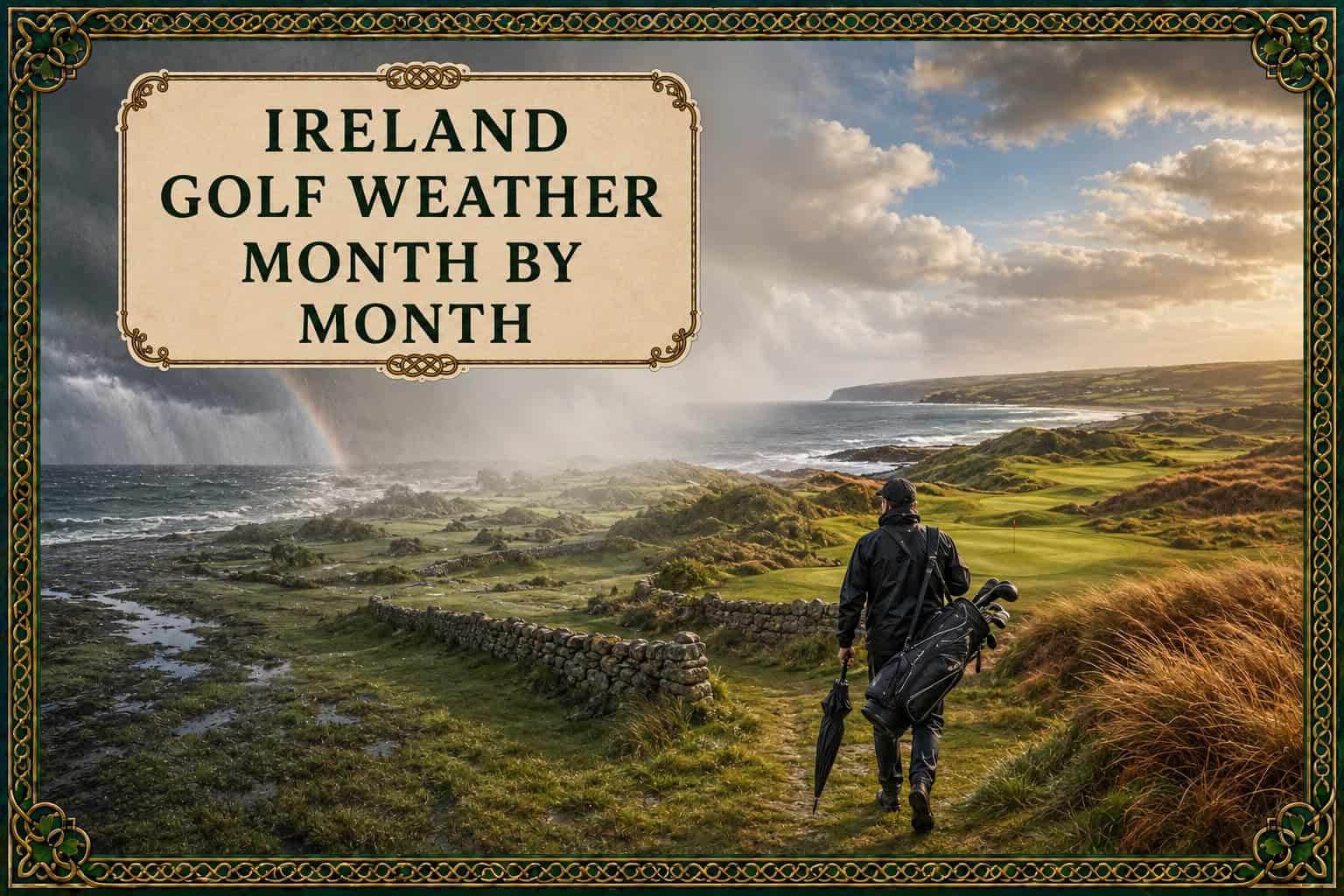
May through September usually offers the most comfortable Ireland golf weather, with milder temperatures and the longest playing days. April and October can also be excellent for golfers who prefer quieter tee sheets and accept a greater chance of a cool, wet spell.
Ireland has a temperate maritime climate, so a bright morning can turn breezy or showery by the back nine. The smart approach is to plan for changing conditions, not to wait for a flawless forecast; this broader guide to weather in Ireland is useful when building the rest of your itinerary.
This month-by-month guide uses broad long-term climate patterns published by Met Éireann, Ireland’s national meteorological service. Conditions vary across the island, particularly between exposed Atlantic links in Donegal and the more sheltered east around Dublin.
See our Golfing in Ireland Complete Guide here.
The figures below are practical national planning ranges rather than a forecast for a particular course. Daylight varies by location, with northern areas such as Malin Head getting slightly longer summer days than Cork or Dublin.
| Month | Typical Daytime Temperature | Rainfall Pattern | Approximate Daylight | Expected Playing Conditions |
|---|---|---|---|---|
| January | 5-9°C / 41-48°F | High | 8-9 hours | Cool, wet and often windy; short golf days |
| February | 5-10°C / 41-50°F | High | 9-10.5 hours | Cold starts, soft ground and occasional useful dry windows |
| March | 7-11°C / 45-52°F | Moderate to high | 11-12.5 hours | Changeable, with firmer days beginning to appear |
| April | 8-13°C / 46-55°F | Moderate | 13.5-15 hours | Good shoulder-season option; showers and wind remain possible |
| May | 10-15°C / 50-59°F | Moderate | 15.5-16.5 hours | Mild, green and highly playable, with long evenings |
| June | 12-17°C / 54-63°F | Moderate | 16.5-17.5 hours | Long golf days and generally comfortable conditions |
| July | 14-19°C / 57-66°F | Moderate | 16-17 hours | Warmest typical period, though rain and wind still matter |
| August | 14-19°C / 57-66°F | Moderate | 14.5-16 hours | Warm, busy and green; pack for passing showers |
| September | 12-17°C / 54-63°F | Moderate | 12.5-14.5 hours | Comfortable early-autumn golf and softer evening light |
| October | 10-14°C / 50-57°F | Moderate to high | 10.5-12.5 hours | Cooler, quieter and changeable; earlier tee times help |
| November | 7-11°C / 45-52°F | High | 8.5-10 hours | Wet spells, wind and short days; check visitor access |
| December | 5-9°C / 41-48°F | High | 7.5-8 hours | Limited daylight, soft conditions and possible maintenance |
Winter golf in Ireland is possible, but it requires flexibility. Temperatures are generally mild by northern European standards, while rain, wind and reduced daylight can make a full itinerary harder to protect. November through February is traditionally the wetter part of the year, and frost or saturated ground can occasionally delay play.
Many Irish courses operate year-round, but some links restrict visitor play or schedule maintenance during winter. Confirm tee-time availability directly with every course before arranging flights or a multi-course route. A 10 a.m. tee time can be more sensible than an early start when frost, standing water or a delayed opening is possible. If snow is part of your concern, see whether it snows in Ireland before planning a midwinter trip.

March brings longer days, but it is still a month for gloves, layers and a realistic attitude to the forecast. April is often one of the better value windows for a golf trip: daylight improves sharply, courses are less crowded than summer, and green fees may be lower than peak-season rates.
Spring also rewards golfers who play early in the day. Wind can build across exposed coastal land, so a morning round may feel materially calmer than an afternoon start. On the Atlantic-facing coast near Malin Head in County Donegal, wind can be as decisive as temperature when choosing clothing and clubs.
May and June are among the strongest months for an Ireland golf trip. Temperatures are usually mild, daylight is generous and the country is fully in its main golf season. The long evenings are especially useful if a delayed flight, slow drive or weather interruption pushes a round later than planned.
These months are not rain-free. Ireland’s landscape stays green for a reason, and showers can arrive even during a settled week. Still, a shower that lasts 20 minutes is much easier to manage with 16 or more hours of daylight than it is in December.
Peak demand begins in May and runs through September, so iconic courses should be booked well ahead. Build some breathing room into a driving itinerary, especially when moving between Dublin, Shannon and Cork, where weather conditions can differ on the same day. A 7-day Ireland itinerary for first-time visitors can help keep long driving days from swallowing your tee times.
July and August are typically Ireland’s warmest months. Common summer daytime temperatures fall within the comfortable range for walking 18 holes, though a breezy round can still feel cool enough for an extra layer.
Summer is also the most popular period for golf groups and family holidays. Expect peak green fees and tighter tee-time availability, particularly at high-profile courses. A late-afternoon tee time can work well in June or July because daylight remains abundant, but do not rely on that strategy once August evenings begin to shorten. For a closer look at late-summer conditions, check the guide to weather in Ireland in August.
Do not leave waterproofs in the car simply because the forecast says warm. A damp polo shirt and an exposed fairway are a remarkably efficient way to spoil a good score.

September often delivers some of the most enjoyable conditions of the year: courses remain in season, temperatures are still mild and summer crowds begin to ease. It is a particularly good month for golfers who value a calmer pace without committing to winter weather.
October is more variable, with shorter days and a higher likelihood of wet, windy rounds. It can still be a strong choice for a flexible itinerary, especially if you schedule only one main round per day and avoid long same-day transfers.
For weather context, the west and southwest can feel different from Dublin’s east-coast conditions. Shannon Airport in County Clare and Cork Airport in County Cork are useful reference points when checking regional forecasts, while Dublin Airport offers a practical guide for courses near the capital.
Late autumn and early winter can offer lower costs and quieter clubs, but these months work best for golfers willing to adapt. Rainfall is traditionally higher, daylight is limited and some links courses may not accept visiting players during their maintenance period.
Book fewer fixed rounds, keep driving distances modest and make indoor alternatives part of the plan. The best winter golf day can be crisp and memorable. It just should not be the only possible outcome your trip can tolerate.

Irish golf is usually more about managing wind and moisture than coping with extreme heat. Bring gear you can add or remove quickly, because a cool start, sunny middle and wet finish are all plausible within one round.
Check the forecast the evening before and again on the morning of your round. Look beyond the temperature: wind speed and direction, rainfall timing, and the hourly outlook can affect club selection more than a difference of a few degrees.
Met Éireann provides official forecasts and climate information for Ireland. For a coastal course, pay close attention to wind direction. A breeze that helps on an inland fairway can become a serious crosswind on a fully exposed links hole.
Pack for the forecast you have, but carry one layer for the forecast that may arrive without asking. That is not pessimism. It is simply Irish golf logistics.
May, June, July and September are the most dependable choices for mild temperatures, long daylight and broadly good course conditions. May and September can offer a better balance of availability and weather than the busiest summer weeks.
No. Rain is possible in every month, but it often arrives as showers rather than all-day rain. A waterproof layer and a flexible tee-time plan are more useful than trying to find a month with a guarantee of dry weather.
Yes, many courses remain open, but winter golf has short daylight, wetter ground and possible visitor restrictions at some links. Confirm course access and maintenance schedules before booking.
Wear normal golf clothing with a warm mid-layer and waterproof outer shell in your bag. Even in July or August, wind and showers can make an exposed course feel much cooler than the thermometer suggests.
Generally, yes. Links courses on the Atlantic coast have little shelter from prevailing winds, while parkland courses farther inland can feel less exposed. Wind direction on the day still matters more than the label alone.

Dan is the founder and editor of Ireland Wide. Born and raised in Ireland, he researches the country’s history, mythology and cultural traditions using museum collections, heritage authorities and historical sources. He leads the site’s editorial team, with a particular focus on distinguishing documented history from later folklore and modern interpretations.
At Ireland Wide, our aim is to bring authentically Irish insights to you, wherever you are.
Whether you have some feedback or would like to offer some of your own insights for everyone else to explore, don't hesitate to get in touch with us!