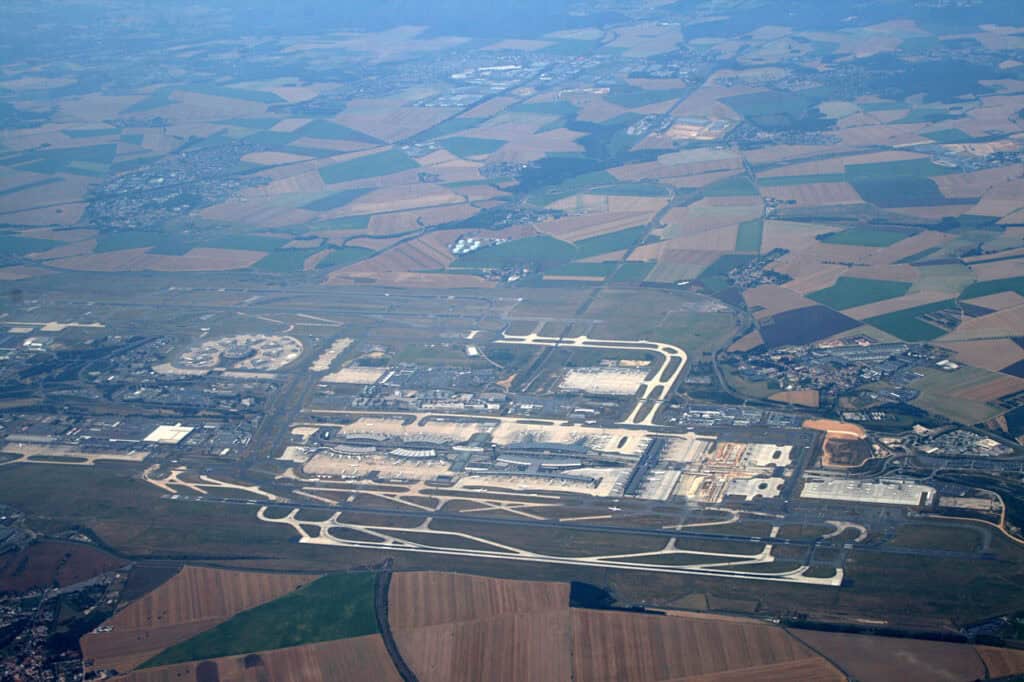
Flights at French airports are running as normal after a weekend of nationwide cost-of-living protests, with no significant impact at Charles de Gaulle or Orly. Only two cancellations were reported at Charles de Gaulle on Sunday, and the A16 motorway to Beauvais, blocked early on Saturday, has reopened.
The disruption has stayed in city centres and along march routes rather than at the terminals, though a planned rail strike could complicate ground travel to airports later this week.
Airports operating normally
Airlines have not issued widespread operational waivers, because airport infrastructure has not been targeted. Passengers flying through Paris Charles de Gaulle and Orly have so far faced the usual schedules, apart from the two cancelled services at Charles de Gaulle.
The motorway link matters for travellers using Beauvais, the airport north of Paris used by several low-cost carriers. The A16 was blocked early on Saturday but is now clear.
What happened on the streets
Authorities put the nationwide turnout on Saturday at 320,000 people, including 70,000 in Paris. A coalition of youth groups and unions gave a higher figure of nearly half a million. It was the third straight weekend of demonstrations, and the government estimate was lower than in previous weeks, when more than 500,000 were reported on 17 October.
The Paris march began peacefully but turned violent near its planned end point, where bins and street furniture were set alight. Police fired tear gas in Paris and Lyon, and masked individuals threw paving stones at officers on the edge of the capital. France’s Interior Ministry said at least 290 people were arrested nationwide, and later counts on Saturday night put the total above 560.
About 70,000 police and gendarmes were deployed. Interior Minister Laurent Nunez had warned of a “very high risk” of disorder, and the main Paris march was moved to the city’s eastern edge after a last-minute court case. Unaccompanied minors faced a 9pm curfew near the Champs-Elysees.
Why people are protesting
Demonstrators are angry about the cost of living, neglected school buildings, teacher shortages and a university admissions system they see as unfair to disadvantaged students. The movement was started in September by high school and university students, and labour unions have since joined. Prime Minister Sebastien Lecornu has met student unions several times this week and is considering measures to ease the cost of living.
Getting to the airport
Honestly, the bigger risk for passengers is getting to the airport. The RATP closed the Republique, Chatelet and Les Halles hubs from 10pm on Saturday at police request, and Metro and RER trains bypass those stations. Partial curfews and municipal restrictions remain in place in parts of Paris, Marseille and Lyon.
Rail strike next
A nationwide strike by French rail workers is scheduled for 5 November and is expected to cut TGV, Intercites and regional services significantly. If you’re catching a train to a flight that day, you might want a backup plan, and give yourself time.