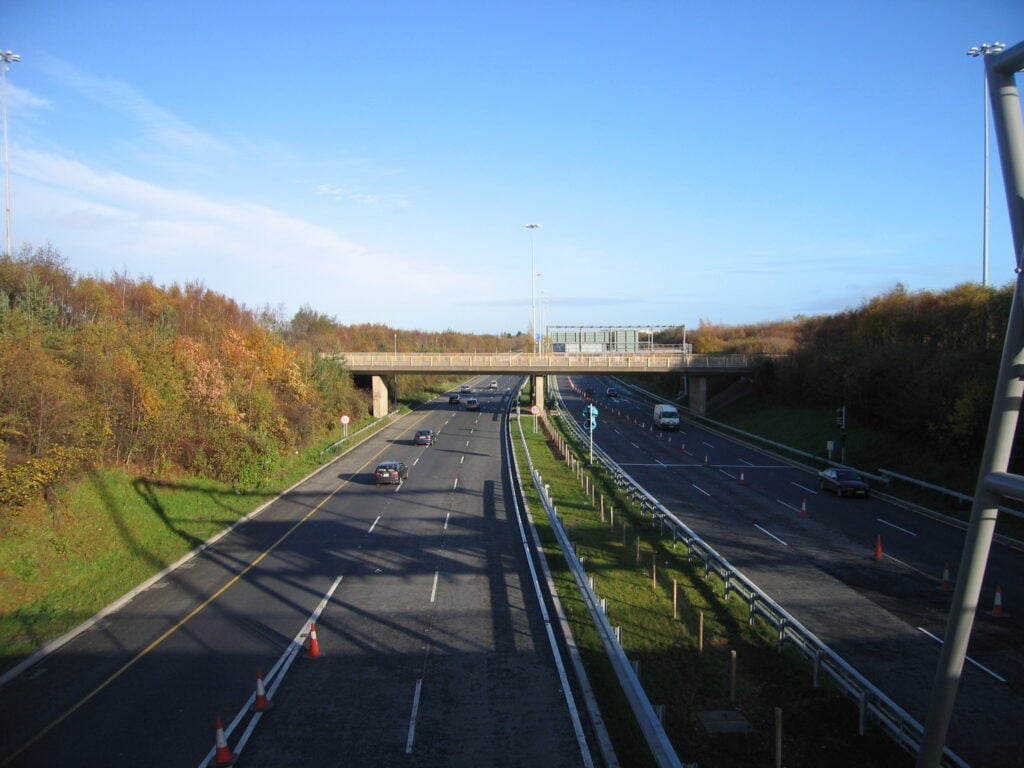
Tolls across Ireland‘s national road network are set to rise in January, and drivers on the M50 and the Dublin Port Tunnel will notice it first. Transport Infrastructure Ireland (TII) has approved higher charges from 1 January 2027 on its two roads and the eight public private partnership (PPP) toll roads.
Below: what each M50 driver will pay, the €1 jump at the Port Tunnel, what happens on the PPP roads and why the increase is happening.
M50 toll rises for every vehicle type

Cars and motorbikes with a tag pay 10 cent more per trip, taking the charge to €2.70. Video account users also pay 10 cent more, which brings the toll to €3.30. Drivers with no account take the largest rise for cars, 20 cent, to €4. They must pay by 8pm the day after the journey, online at eflow.ie, by phone or at a Payzone outlet, or a further €4 is added.
| M50 car or motorbike | Rise | New toll |
|---|---|---|
| Tag | 10 cent | €2.70 |
| Video account | 10 cent | €3.30 |
| No account | 20 cent | €4 |
Goods vehicles up to 2,000kg with a tag, or with no account, pay 10 cent more, while video account users in that class pay 20 cent more. Heavier HGVs face increases of 20 or 30 cent.
Dublin Port Tunnel peak charge goes to €15
The Port Tunnel sees the biggest cash increase of the lot. The southbound toll, towards Dublin, between 6am and 10am from Monday to Friday rises by €1, from €14 to €15. Every other Port Tunnel rate stays the same for 2027.
TII said the rise “reflects the increasing volumes of traffic being experienced in the southbound peak period” and is in line with the approach of recent years. It also pointed to the need to preserve capacity for heavy goods vehicles reaching Dublin Port.
PPP toll roads: 10 cent more, except on the M3
Car and motorbike tolls rise by 10 cent on the PPP roads, including the M1, N6, M7/M8, M8, N18-LT and N25WF. The M3 Clonee to Kells is the exception, with the toll for cars and motorbikes left unchanged.
HGVs on the PPP roads pay 20 cent more, and vehicles over 3,500kg with four axles pay 30 cent more. On the M3, heavier vehicles take a 10 cent rise.
Why tolls are going up
Toll levels are regulated through an inflation adjustment mechanism set out in the Toll Bye-Laws. The consumer price index figure applied this time is 3.6%, covering August 2025 to August 2026. TII says tolls fund the operation and maintenance of the national roads network.
The new rates apply from 1 January. Ireland has ten toll roads on the national network: the M50 and the Port Tunnel, which TII operates, and the eight PPP roads.