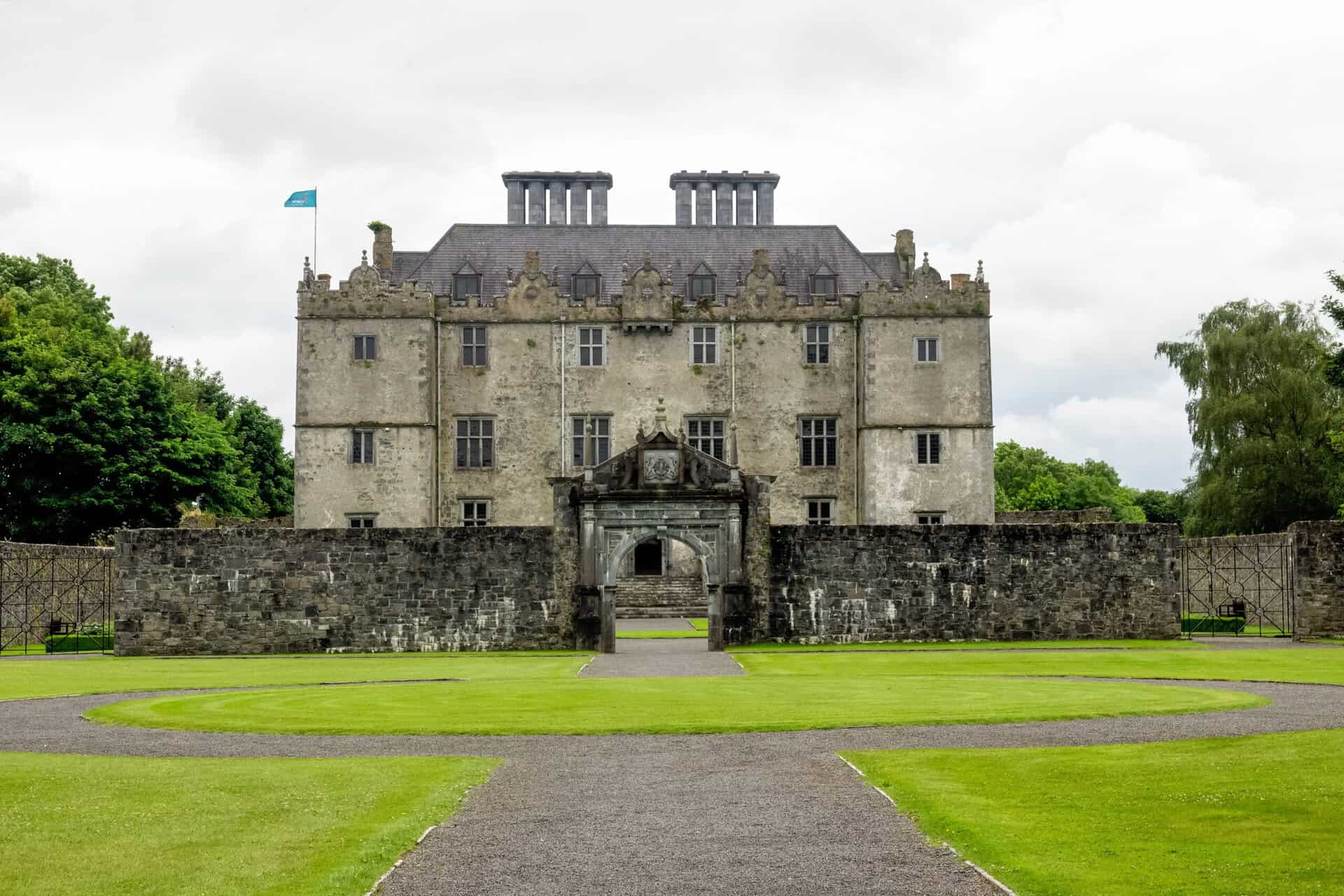

Bunratty Castle and Folk Park is worth visiting, especially if you want one stop that mixes a real late medieval tower house with a family-friendly open-air museum. It suits first-time Ireland trips, road-trippers passing Shannon Airport, and anyone who wants history without needing a full day or a strenuous walk.
The draw is simple: you get a 15th-century castle and a recreated 19th-century folk park on the same ticket. If your trip leans heavily toward ruined sites and remote abbeys, Bunratty can feel more polished than wild, but for clear interpretation and easy logistics it does the job very well. For a broader shortlist, see our guide to the best castles in Ireland.
Search by castle, county or nearby town, then click a marker to open the complete IrelandWide visitor guide.
Bunratty Castle stands in Bunratty village, County Clare, close to Shannon Airport and on the main route between Limerick and Ennis. That location explains almost everything about the site’s long history. The stronghold sits beside the river system leading to the Shannon Estuary, a strategic position for controlling movement toward Limerick.
That is why historians talk about multiple castles on this site, not just the one you see today. Fortifications rose here more than once, were attacked more than once, and were rebuilt because the crossing and river access mattered so much.
If you are building a wider itinerary, Bunratty works especially well for first-time trips that also include the west coast or a Shannon arrival, and our practical tips for planning your trip to Ireland help with the broader logistics. It also pairs neatly with other fortresses in our best castles in Ireland roundup.
The history here is layered, and it helps to separate the documented timeline from romantic castle storytelling. The commonly cited early history mentions a Norse settlement in the area in the 10th century. Later, in the mid-13th century, a defensive fortress was built here by Robert de Muscegros. That was not the end of the story. Over time, several castles occupied the same strategic ground.
The present stone castle is generally dated to around 1425. It is usually associated with the MacNamara family, one of the leading Gaelic families in the region. Bunratty later became strongly linked with the O’Brien family, especially the Earls of Thomond, who turned it into an important regional residence.
By the 17th century, Bunratty was drawn into wider conflict, including fighting during the Irish Confederate Wars. Like many Irish castles, its military usefulness faded over time. Later owners preferred more comfortable domestic houses, and the old stronghold declined.
The modern visitor experience owes a lot to the 20th-century restoration. The castle was rescued from ruin and restored in the 1950s, then furnished with a notable collection of medieval furniture, tapestries, and objects. That is a major reason people still rate it highly. You are not just climbing a shell.
The headline attraction is the 15th-century tower house itself. Inside, rooms are fitted with period-style and historic furnishings, including large halls, chambers, tapestries, and carved furniture. Bunratty is often described as one of the most complete restored castles in Ireland, and even people who are hard to impress by heritage sites usually admit the interior gives them more to look at than a bare ruin.
Outside, the second half of the visit is the Folk Park, a reconstructed 19th-century village landscape with houses, shops, farm buildings, and animals. This is where families usually slow down and stay longer. The site also includes Bunratty House and its walled garden, which some people rush past on the way back to the car and then regret later.
If you move briskly and focus on the castle, 90 minutes can work. If you want to see both the interiors and the folk park properly, a better target is about 2.5 hours. That is the sweet spot for most people.
Families with children can easily spend longer because the folk park breaks the visit into manageable pieces. People with a strong interest in medieval interiors will spend more time in the castle rooms. People who only want a quick look at a famous site can do it faster, but Bunratty rewards a slower pace more than a sprint.
Pack a small daypack if you are travelling onward after your visit, especially if you are balancing rain layers, water, and camera gear between the castle stairs and the wider grounds.
No products found.
The safest approach is simple: check the operator’s website on the day you plan. Bunratty Castle & Folk Park is an established attraction, but hours, admission categories, event schedules, and bundled experiences can change seasonally.
Adult general admission is currently €18.00 online, while children aged 5 to 17 are €13.00 online; family combinations and senior and student rates are also available. If you are travelling in summer or around school holidays, booking ahead is sensible because Bunratty is one of those places that attracts coach groups, families, and airport stopovers all at once.
Parking is one of Bunratty’s easier wins. On-site parking is available, which removes a lot of the friction that comes with historic sites in village centres.
Accessibility is more mixed. The folk park is the more manageable part of the site for many people, while the castle’s historic layout means stairs and uneven conditions are part of the experience. If step-free access is essential, contact the operator before booking and ask specifically about route conditions, toilets, and available support.
For families, Bunratty is one of the more straightforward castle visits in Ireland. The animals, village buildings, and open-air layout give children regular changes of scene. That helps on a day when another bare stone keep might produce mutiny by the second staircase.
For exterior shots, the best images usually come when you leave yourself time to walk the grounds rather than photographing the castle only from the entrance approach. The combination of grey stone walls, lawns, and village buildings gives you more variety than a single hero angle.
Inside the castle, expect lower light and tighter rooms. A phone can cope, but steady hands help. Wide-angle views work best in the hall spaces, while detail shots of furniture, tapestries, and carved features are often stronger than trying to capture an entire room.
In the folk park, the more interesting pictures usually come from doorways, shop fronts, and the texture of thatched buildings. If weather turns damp, the site can actually look better on camera. Very Irish, very inconvenient, and occasionally quite useful.
Bunratty does not need invented legends to hold your attention. The documented history already includes repeated rebuilding, Gaelic and Norman power struggles, the O’Brien connection, and 20th-century restoration after serious decline.
Folklore and dramatic storytelling often gather around Irish castles, but if you are trying to understand Bunratty properly, focus first on the verifiable points: its strategic river location, its 15th-century fabric, its links to the MacNamaras and O’Briens, and its restoration history. Treat ghost stories and embellished anecdotes as atmosphere, not evidence.
If Bunratty is one stop on a wider trip, the easiest add-ons are the places that fit naturally along the same transport corridor. Shannon Airport is very close, which is why Bunratty often works well as a first or last heritage stop in western Ireland.
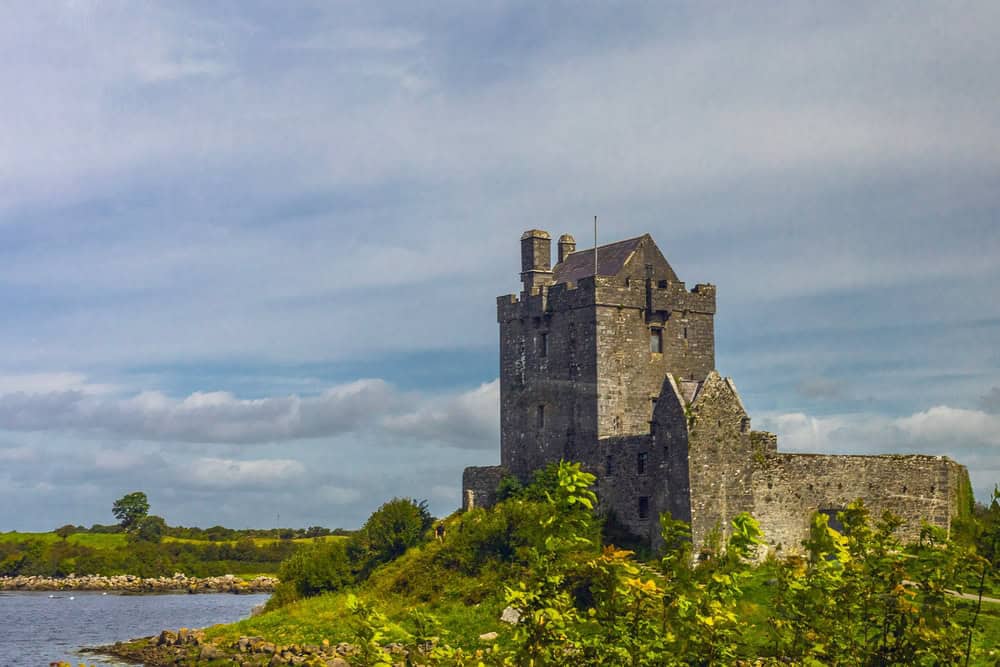
Limerick is the obvious city pairing if you want more urban history, food, and riverfront time afterward. If your route heads deeper into Clare, Bunratty can also slot into a broader county day with coast, abbeys, or another castle visit. Dunguaire is a good contrast if you want a second famous stop with a different setting, and our Dunguaire Castle visitor guide helps you compare the two.
Yes, for most people it is. It is one of the easiest Irish castle visits to recommend because the castle is substantial, the interiors are furnished, parking is simple, and the folk park broadens the appeal beyond pure medieval history.
If you prefer lonely ruins on dramatic headlands, Bunratty may feel more curated than atmospheric. Some people also find the site busy in peak season and a bit expensive for a short stop, especially if they are not very interested in the folk park. If you want a practical, rewarding stop near Shannon with a clear sense of place, it is a very solid choice.
Allow at least 90 minutes for a quick visit and closer to 2.5 hours if you want to see both the castle and the folk park at a relaxed pace.
Yes. Interior access is one of the main reasons to visit, and the rooms are furnished with medieval and later historic pieces.
Yes. The folk park, animals, open-air layout, and variety of buildings make it one of the more family-friendly castle visits in Ireland.
Partly. The folk park is generally more accessible than the medieval tower house, but the castle itself has stairs and historic limitations. Check with the operator before visiting.
Advance checking is wise, especially in busy periods or if you want to confirm opening times, admission prices, or special experiences before you travel. Booking ahead also helps if you are fitting Bunratty into a tight airport-day schedule.
The official website is Bunratty Castle & Folk Park at bunrattycastle.ie.

Dan is the founder and editor of Ireland Wide. Born and raised in Ireland, he researches the country’s history, mythology and cultural traditions using museum collections, heritage authorities and historical sources. He leads the site’s editorial team, with a particular focus on distinguishing documented history from later folklore and modern interpretations.
At Ireland Wide, our aim is to bring authentically Irish insights to you, wherever you are.
Whether you have some feedback or would like to offer some of your own insights for everyone else to explore, don't hesitate to get in touch with us!