Ardgillan Castle and Gardens is worth visiting if you want an easy North County Dublin day trip with a historic house, walled gardens, sea views, and enough open space to keep families, walkers, and casual sightseers happy. It suits people who like gentle exploring over grand castle drama, because Ardgillan is as much about the demesne and coastline setting as the building itself.
It also works well as a first stop on a wider north Dublin outing. If you are comparing options, our guide to the best castles in Ireland gives the bigger picture before you zoom in on Ardgillan.
Search by castle, county or nearby town, then click a marker to open the complete IrelandWide visitor guide.
Ardgillan Castle and Demesne sits between Balbriggan and Skerries, about 32km north of Dublin City. Fingal County Council describes the estate as overlooking the Irish Sea with views toward the Mourne Mountains and Lambay Island.
That setting is a big part of the appeal. People come for the house, but plenty of day-trippers are really here for the 194-acre parkland, the walled garden, the woodland, and the sort of walk that does not require hiking boots or a heroic attitude.
If you are building a broader trip, this also pairs neatly with a wider Dublin base, especially for anyone heading north out of the city as part of a 7 day Ireland itinerary.
The most solid, repeated historical detail is that the house was built in 1738 by Rev. Robert Taylor and was first known as Prospect House. That date appears consistently in local authority and tourism material.
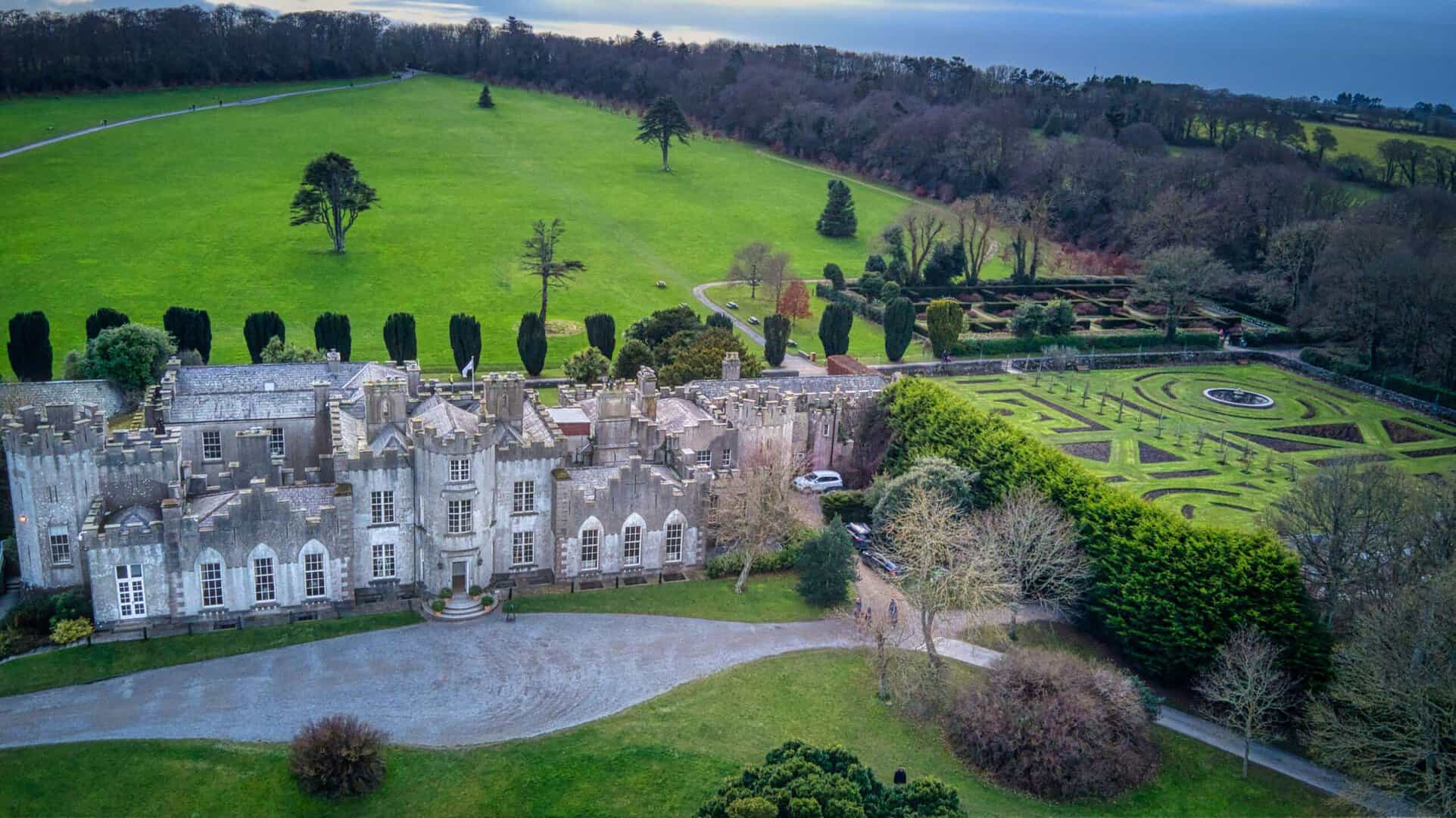
The building people call Ardgillan Castle is not a medieval stronghold. It began as an 18th-century country house and later acquired its castellated appearance. Some secondary accounts place that transformation in 1807 under Rev. Edward Taylor. That later phase helps explain why the place looks castle-like while functioning more like a large estate house.
The name Ardgillan is usually linked to the Irish meaning High Wood. That suits the landscape nicely, though the main story here is not siege warfare or ruined battlements. It is an estate story, shaped by land, gardens, and views over the coast.
The big draw is the combination of house plus demesne. Inside and around the estate, the main surviving highlights are the castellated house, the Victorian-style walled gardens, the rose garden, open lawns, mixed woodland, and broad sea-facing parkland.
Official visitor descriptions say the walled gardens were productive spaces that once supplied the house with fruit, vegetables, and herbs. Glasshouses are also part of the estate. Even if you are not especially interested in house interiors, the grounds alone justify the trip.
Families usually make a beeline for the children’s playground and the fairy trail. If you are after a quieter visit, head first for the gardens and the outer paths before circling back to the castle.
Strictly speaking, not in the medieval-fortress sense. Ardgillan is better understood as a country house that was later given castellated features. That is not a drawback unless you arrive expecting arrow slits, a keep, and three centuries of siege stories.
For many people, the softer mix actually works better. You get architecture, landscape, and a manageable visit without the hard sell of “must-see ruins.” It is an easy place to enjoy even if you are traveling with children or with someone whose interest in military history fades after five minutes.
The grounds are a major reason to visit. Fingal County Council describes the park as 194 acres of rolling grassland, woodland, and gardens, and that scale gives you room to stretch out without the place feeling remote.
The estate’s position on an elevated coastline makes the Irish Sea views a constant backdrop. On a clear day, the sightlines toward the Mourne Mountains and Lambay Island are the sort of detail that makes even a short stroll feel like a proper outing.
If you plan to walk more than the formal garden loop, a light waterproof jacket is one of the few genuinely useful extras in coastal Dublin weather. A dry start in the car park can turn into sea breeze and sideways drizzle not long after, which will surprise absolutely nobody familiar with weather in Ireland.
The park’s seasonal closing time changes through the year. Fingal County Council lists the park as opening at 9am, with closing times that vary by month: 5pm in January, November and December, 6pm in February and March, 8pm in April and September, 9pm from May to August, and 7pm in October.
Castle interior access, tours, tea rooms, and playground hours can run on separate schedules. Official visitor guidance also notes that these change by season, so it is sensible to check the operator site before you go, especially if your plan depends on a house tour or café stop. Those details were checked July 2026, but changing visitor operations should always be confirmed again before travel.
This is the easiest option for most people. Ardgillan is well signposted off the M1, and on-site information points to free parking with overflow capacity on busier days.
If the weather cooperates, park and take a moment before rushing straight to the house. Several people do the castle first and only then notice the coastal panorama behind them.
Visitor information commonly mentions Dublin Bus route 33 as the practical public transport option, with access via The Lady’s Stairs pedestrian approach. This is workable, but it is less simple than driving, so check the walking route and return times before you set out.
For broader trip planning, Ardgillan fits well into a first-timer route that mixes Dublin with a few easy side trips, especially if you are using practical tips for planning your trip before locking in transport.
Two hours is enough for a brisk visit covering the grounds and a quick look at the castle if access lines up well. Three to four hours is more realistic if you want the house, gardens, a proper walk, and food on site.
Families can easily stay longer, mostly because playground time has a habit of ignoring itineraries. That is not a complaint, just a warning from anyone who has ever tried to leave a good playground on schedule.
Ardgillan is set up for a comfortable half-day visit. Official tourism descriptions mention a café, afternoon tea, toilets, and family-friendly amenities. Those details make a difference if you are visiting with children or older relatives who are less interested in turning every outing into a forced march.
Because service times can change seasonally, the only reliable approach is to check the official opening page before you go, especially if you are making the trip mainly for tea rooms or a specific meal stop.
For families, Ardgillan is one of the easier heritage outings in the Dublin area. The playground, fairy trail, broad lawns, and open paths give you options beyond the house itself.
Accessibility is more mixed, which is normal for a historic estate. Outdoor paths, slopes, and interior heritage spaces are not all the same, so anyone needing step-free access or very even surfaces should contact the operator directly before visiting. That is better than gambling on a map and hoping for the best.
The best photographs here are usually not the obvious front-on castle shots. Try the sea-facing angles, the garden geometry inside the walled sections, and the wider estate views that show why this house was built where it was.
Morning light can be kinder for the grounds, while late-day visits in the longer-opening months often give you softer coastal light. If your goal is people-free garden photos, arrive early and make the formal gardens your first stop.
Skerries is the natural follow-up if you want food or a seaside town atmosphere after the estate. Balbriggan is also close and practical for onward travel.
If your trip is castle-themed, Ardgillan makes an interesting contrast with places that lean much harder into the traditional fortress feel, including the Ross Castle visitor guide and the more dramatic coastal setting in our Dunluce Castle visitor guide.
For people building a wider castle itinerary, the best castles in Ireland roundup helps place Ardgillan in context. It is not the most fortress-like stop in the country, but it is one of the easiest to enjoy as a relaxed day out.
No widely supported local legend stands out strongly enough here to treat as established fact, and that is fine. Ardgillan does not need invented ghost stories or dramatic lore to hold attention.
The documented appeal is already solid: an 18th-century house, later castellated architecture, productive and ornamental gardens, and a coastal demesne with broad views. When the evidence is this straightforward, it is better to leave the folklore folder closed.
Yes. It is especially good for families, walkers, and anyone looking for an easy day trip north of Dublin with gardens, sea views, and a historic interior option.
Park access and specific castle or tour charges can change, so check the official operator site before you go. This guide does not list a price because verified current pricing was not confirmed in the source material provided.
Two to four hours is the usual sweet spot. Allow longer if you are visiting with children, booking afternoon tea, or planning a full walk through the grounds.
Yes, public transport is possible, with visitor information pointing to bus route 33 and the pedestrian entrance near The Lady’s Stairs. It is less convenient than driving, so check the route carefully.
Sort of. It looks like a castle, but it began as an 18th-century country house and was later castellated, so it is not a medieval defensive castle in the usual sense.
For many people, it is the combination of the walled gardens, the sea views, and the wider demesne. The interior matters, but the landscape is what gives the place its character.

Dan is the founder and editor of Ireland Wide. Born and raised in Ireland, he researches the country’s history, mythology and cultural traditions using museum collections, heritage authorities and historical sources. He leads the site’s editorial team, with a particular focus on distinguishing documented history from later folklore and modern interpretations.
At Ireland Wide, our aim is to bring authentically Irish insights to you, wherever you are.
Whether you have some feedback or would like to offer some of your own insights for everyone else to explore, don't hesitate to get in touch with us!