O’Sullivan is an Irish surname from the Gaelic Ó Súilleabháin, usually understood as “descendant of Súilleabhán.” The tricky part is that the personal name Súilleabhán has no single agreed translation, though most explanations connect it to the Irish word súil, meaning “eye.”
If you are tracing Irish roots, the short version is this: the O’Sullivans are an old Munster family strongly associated with Counties Kerry, Cork, and Tipperary. The surname is also one of the most common in Ireland, and it spread widely through emigration.
That makes O’Sullivan a name with two stories running side by side: a deep Gaelic past in southwest Ireland, and a very modern global footprint in the United States, Britain, Australia, and beyond.
Quick Answer
Irish form: Ó Súilleabháin
Meaning: “Descendant of Súilleabhán.” The exact meaning of Súilleabhán is debated, but it is widely linked to súil, the Irish word for “eye.” Suggested interpretations include dark-eyed, one-eyed, and hawk-eyed.
Pronunciation: oh-SULL-ih-van
Traditional home: Munster, especially County Tipperary, County Kerry, and later County Cork
Why it matters: O’Sullivan is one of the most numerous surnames in Ireland, commonly ranked third when O’Sullivan and Sullivan are counted together.
Meaning And Etymology
The surname O’Sullivan comes from the Irish Ó Súilleabháin. In Irish naming tradition, Ó means “descendant of” or “grandson of.” So the surname does not directly mean “hawk-eyed” or “dark-eyed” on its own. More precisely, it means descendant of a man named Súilleabhán. If you want the wider background on the prefix itself, what the O means in Irish surnames explains the pattern neatly.
The debate starts with that personal name. Most scholars agree the first element comes from súil, the Irish word for eye. After that, the trail gets less tidy. Some older interpretations render the name as little dark-eyed one. Others have suggested one-eyed or hawk-eyed. Those ideas all appear in surname histories, clan material, and genealogical writing, but there is no single universally accepted translation.
That uncertainty is normal with very old Gaelic names. Spellings shifted across centuries, manuscripts were copied by hand, and later Anglicized forms often flattened distinctions that mattered more in Irish.
For family researchers, the safest wording is simple: O’Sullivan means descendant of Súilleabhán, a personal name associated with “eye” in Irish.

Surnames of Ireland
How To Pronounce O’Sullivan
In everyday English, O’Sullivan is usually pronounced oh-SULL-ih-van.
A simple audio-style guide is:
- O’ as in “oh”
- Sull rhymes with “dull”
- i is a light short vowel
- van sounds like “vən” or a soft “van” depending on regional accent
The Irish form Ó Súilleabháin is more difficult for non-Irish speakers. You will hear variations, especially outside Ireland, and that is normal. In American usage, the Anglicized pronunciation above is the one most people expect.
Origin And Early History
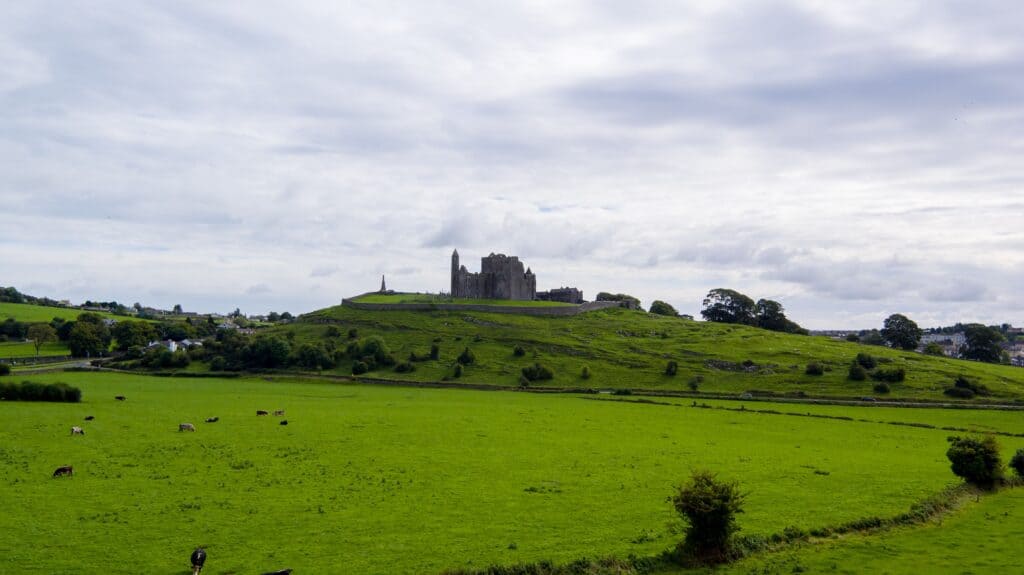
The O’Sullivans belong to the old Gaelic world of Munster in the south of Ireland. Traditional genealogy places the family among the Eóganacht, the powerful dynastic grouping long associated with the kingship of Cashel and large parts of south Munster.
Early tradition links the surname to an ancestor called Suilebhan mac Maolura, placed in the 9th century in medieval genealogical material. As with many early Irish pedigrees, that date sits in the borderland between record and tradition, so it is best read as part of the family’s ancient genealogical framework rather than as a modern civil record.
What is clearer is geography. The surname was originally associated with County Tipperary and County Kerry before the Anglo-Norman invasion. Several accounts place an early O’Sullivan homeland around Cahir and nearby territory in Tipperary. Over time, branches of the family became especially prominent farther southwest in Kerry and Cork.
This movement matters because it explains why many people now think of O’Sullivan first as a Kerry or Cork name, even though older roots point strongly to Tipperary as well.
The Main O’Sullivan Branches
Historical writing usually highlights three major branches:
- O’Sullivan Mór, centered in south Kerry, especially around Dunkerron near the Kenmare River
- O’Sullivan Beare, associated with the Beara Peninsula and territories in west Cork and nearby parts of Kerry
- O’Sullivan of Cnoc Raffon or Croc Raffan, linked to territory in Tipperary, in the area between Cashel and Cahir
For people building a family tree, those branch names can be useful clues, though surnames alone rarely prove descent from a specific chiefly line. Irish surname history is old, tangled, and full of cousins.
After The Anglo-Norman Invasion
The Anglo-Norman invasion reshaped power across Ireland, and the O’Sullivans were part of that story. As political control shifted, the family’s center of gravity moved more firmly into Kerry and Cork. That helps explain the strong southwestern identity the name still carries.
Later history also includes the better-known figure of Donal O’Sullivan Beare, the chieftain remembered for his resistance during the Nine Years’ War and the dramatic retreat from west Cork in the early 17th century. Even people with only a passing interest in Irish history often meet the surname first through that episode.
Where The O’Sullivan Name Is Found In Ireland
O’Sullivan is one of those Irish names that feels tied to a map. You can see its strongest roots in the southwest.
The surname is most closely associated with:
- County Kerry
- County Cork
- County Tipperary
Kerry and Cork are the counties most people connect with the name now, especially because of the historic importance of the O’Sullivan Mór and O’Sullivan Beare branches. Tipperary remains important in discussions of the name’s earlier homeland.
Across Ireland as a whole, O’Sullivan and Sullivan together are commonly described as the third most numerous surname. The name appears in every county, but the southwest is still its emotional center. In older surname ranking lists, Sullivan appears separately near the top as well, which tells you how much the apostrophe can hide in plain sight.
If your ancestry search points to O’Sullivan lines, County Cork and County Kerry are often good starting points for local records, graveyards, parish registers, and place-based family history. County Tipperary belongs on that list too, especially if the line is older than you first assumed.
For broader context, it also helps to compare the name with other major Irish family groups in Munster, where surnames often cluster by older lordships and dynastic territories rather than by modern county borders alone. O’Sullivan regularly appears in lists of common Irish surnames and among the better-known Irish surnames that start with O.
O’Sullivan Outside Ireland
Like many prominent Irish surnames, O’Sullivan spread far beyond Ireland through migration. Large numbers of bearers of the name are found in the United States, Britain, Canada, Australia, and New Zealand.
That pattern makes sense. Families from Cork and Kerry were heavily affected by emigration in the 19th and early 20th centuries, and common surnames traveled widely. In many American family trees, an O’Sullivan line leads back to ports, parish records, or townlands in the southwest of Ireland. In the United States, the surname also sits comfortably within the much bigger story of American Irish surnames and long-settled Irish communities.
A modern detail underlines how visible the name remains. In May 2026, a gathering in Castletownbere, County Cork of 1,848 people with the surnames O’Sullivan and Sullivan was certified by Guinness World Records as the largest recorded gathering of people sharing a surname. It sounds like exactly the sort of thing an old Irish family would take seriously and cheerfully at the same time.
Variants And Related Spellings
The standard Anglicized form is O’Sullivan. The shortened form Sullivan is also extremely common and, in many contexts, functionally part of the same surname story.
Less common historical variants include:
- Sullavan
- Sullivant
- Sillivant
- Silliphant
- Sillifant
Some families in the Irish midlands and south Ulster used or descended from forms related to Ó Súileacháin, sometimes Anglicized as (O) Sullahan, before shifting over time toward Sullivan. That does not mean every Sullivan family has the exact same origin. Irish surnames often converged in English spelling even when their older Irish forms were slightly different.
For women in Irish, the traditional modern form is Ní Shúileabháin. You will mostly see that in Irish-language contexts rather than in ordinary English-language records.
Famous Bearers Of The Name
Because O’Sullivan is such a common surname, there are many notable bearers across politics, sports, journalism, music, and public life. A few historically important examples stand out more than others.
Donal O’Sullivan Beare
Donal O’Sullivan Beare is the most famous historical bearer of the name. He was an Irish chieftain associated with the Beara branch and is remembered for his resistance to English rule during the closing phase of the Nine Years’ War.
Sir Arthur Sullivan
Sir Arthur Sullivan, the composer of Gilbert and Sullivan fame, carried the shorter form of the surname. He was born in London to an Irish father, a reminder of how Irish names often continued abroad while shifting into different local histories.
Modern Public Figures
The name appears frequently in Irish and international public life, but in a surname guide the main point is not celebrity trivia. It is that O’Sullivan is common enough to appear across many fields, yet regionally distinctive enough to keep its southwestern Irish identity.

16 Family Tree Charts to Fill In, with 50 Family Group Sheets, Blue-White
What O’Sullivan Can Tell You About Family History
A surname can point you in the right direction, but it cannot do the whole job on its own. With a name as common as O’Sullivan, you will need geography and records to narrow things down.
Good starting clues include:
- County associations, especially Cork, Kerry, and Tipperary
- Religious records, since parish registers are often central for pre-civil-registration ancestry
- Townland names, which matter a lot in Irish genealogy
- Migration patterns, especially if your family first appears in Boston, New York, Chicago, Liverpool, Melbourne, or Toronto
If you are building out an O’Sullivan tree from the United States, it is common to start with a family name in America and only later discover that there were several unrelated O’Sullivan households in the same Irish parish. Irish genealogy has a way of humbling people in useful ways. If you are planning a research trip, a 7 day Irish ancestry itinerary for first-time visitors can help turn scattered records into a route that actually makes sense on the ground.
Common Questions About The O’Sullivan Surname
Is O’Sullivan a common surname in Ireland?
Yes. O’Sullivan and Sullivan together are usually ranked among the most common surnames in Ireland, often listed in third place.
What does O’Sullivan mean?
The most accurate answer is descendant of Súilleabhán. The older personal name is linked to súil, meaning “eye,” but scholars do not fully agree on the second element, so translations like dark-eyed, one-eyed, and hawk-eyed should be treated as interpretations rather than fixed facts.
How do you pronounce O’Sullivan?
Most English speakers say oh-SULL-ih-van.
Is Sullivan the same surname as O’Sullivan?
In many cases, yes. Sullivan is a common Anglicized form connected to the same broader surname tradition. That said, spelling changes over time mean you should still verify each family line with records.
Where did the O’Sullivans come from in Ireland?
The surname has early roots in County Tipperary and County Kerry, and it became especially prominent in County Cork and County Kerry.
What is the Irish spelling of O’Sullivan?
The standard Irish spelling is Ó Súilleabháin.
Final Thoughts
O’Sullivan is one of the big Irish surnames, but it does not feel generic. It carries a strong sense of place, especially in Cork, Kerry, and Tipperary, and it keeps that old Munster identity even when it turns up in New York, Chicago, Sydney, or London.
If you are researching the name, keep the translation modest and the geography sharp. Ó Súilleabháin clearly means “descendant of Súilleabhán.” The rest takes patience, records, and a willingness to follow a family through parish books, county boundaries, and a few spelling surprises.
That is Irish surname history in general, really. The names look straightforward until you step inside them.