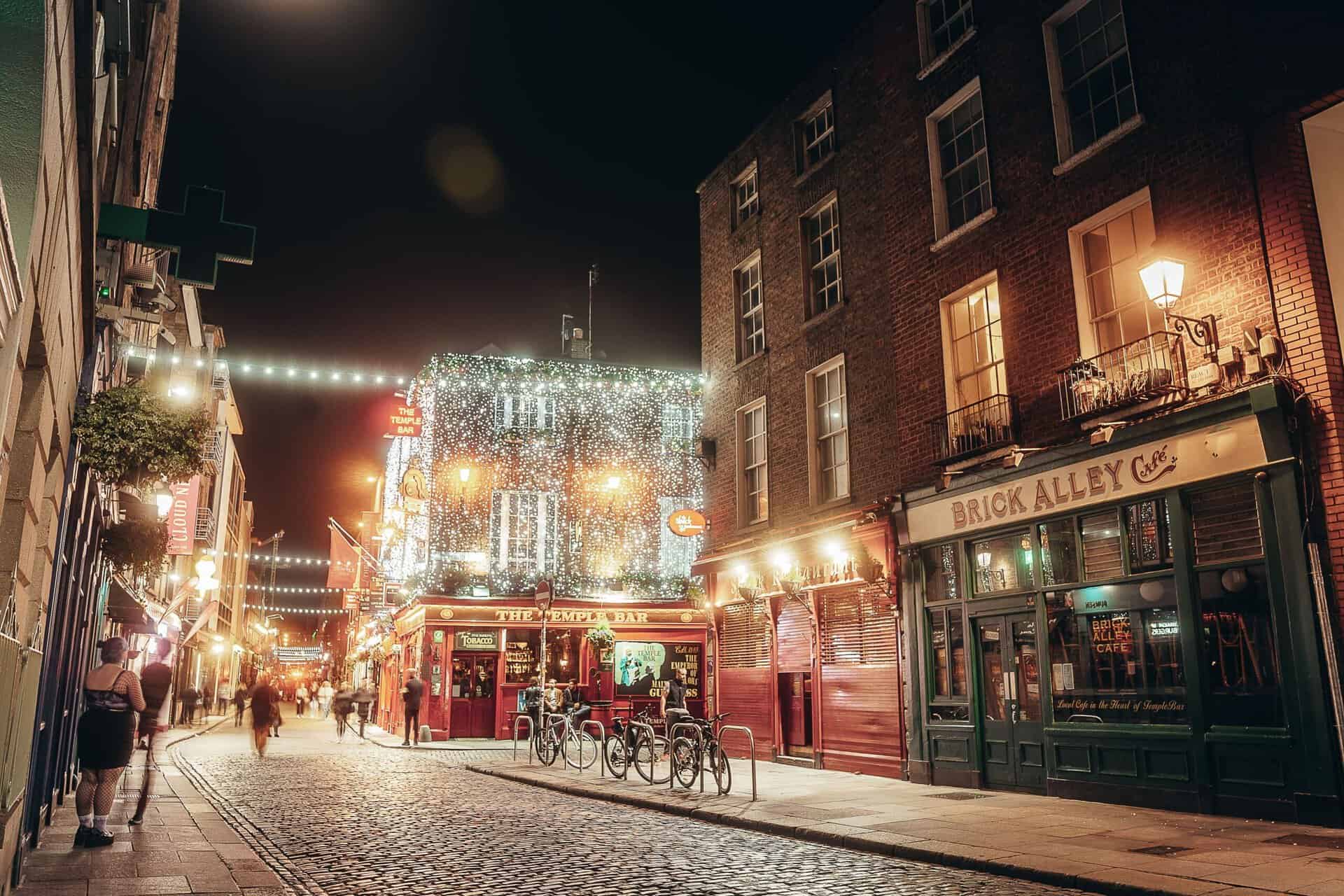

Ireland’s infrastructure backlog has finally been handed a stopwatch. The Accelerating Infrastructure Action Plan sets out 30 deadline-led fixes for the bureaucratic knots holding up housing, transport, water and energy projects, with a potential payoff for visitors who are tired of expensive beds and awkward connections.
For backpackers, better infrastructure is not thrilling in the same way as a cliff walk or a perfectly poured pint. It is, however, the unglamorous machinery behind cheaper places to stay, more reliable buses and stronger regional access. Useful, in other words.
The plan tackles 12 barriers identified across the project pipeline rather than pretending Ireland needs to invent a whole new system. The aim is to get approved essentials moving before another promising scheme disappears into committee limbo, where good intentions traditionally go to develop a moss coating.
The programme is focused on getting nationally important projects from proposal to construction with fewer repeat checks, crossed wires and legal stalls. It sits alongside a much larger capital push: the National Development Plan for 2026 to 2035 provides €275.4 billion for public investment.
Housing, public transport, roads, electricity and water are at the centre of the plan, and they are the sectors visitors feel without necessarily spotting them. A packed rental market pushes up hostel and hotel prices; an overstretched grid can slow development; patchy connections make a car feel less optional than it should be. Read these practical tips for planning a first Ireland trip before assuming every rural stop has a bus appearing on demand.
The framework is organised around four pillars:
Put less formally, Ireland wants fewer agencies asking the same questions in different fonts, clearer responsibility when decisions are needed and fewer projects stuck in procedural traffic before a shovel reaches the ground.
Legal reform is the plan’s most direct attempt to cut delay. The government proposes a staged overhaul of judicial review procedures and other processes affecting critical infrastructure, while retaining routes for legitimate challenges.
Measures include a proposed Critical Infrastructure Bill, emergency powers legislation, changes to environmental-assessment rules and civil-law reforms intended to reduce avoidable hold-ups. Judicial review is the court process used to test whether a public body followed the law, not a second vote on whether people like a project, and its timing has become a major pressure point.
The wider planning system is also in the firing line. An Bord Pleanála, local authorities, the Office of Public Works, National Transport Authority and delivery agencies are expected to work through clearer processes and better coordination, particularly where land, permits and utility connections overlap.
Visitors will not notice a streamlined consent procedure on arrival at Dublin Airport, thankfully. They may notice its eventual results: a route opening on schedule, fewer infrastructure constraints in growing towns and a little less pressure on the accommodation market. For longer trips beyond the capital, a west coast Ireland travel guide is a useful reminder that scenic does not always mean seamlessly connected.
This is not a neat one-ministry cleanup. Infrastructure delivery relies on departments and agencies lining up land, funding, environmental permissions, workforce capacity and local services, an arrangement with plenty of chances for a missing email to become a multi-year headache.
Work may require coordination among the Department of the Taoiseach, Revenue Commissioners, Health Service Executive, Workplace Relations Commission, Tailte Éireann, Environmental Protection Agency, Commission for Regulation of Utilities and Central Bank, depending on the project’s land, utilities, investment and regulatory needs.
Other government areas that must remain aligned include:
That sprawling list is not administrative decoration. A rail line, housing development or electricity upgrade can involve planning permission, land registration, environmental conditions, skills shortages and grid connections all at once. Infrastructure does not respect departmental boundaries, sadly, even when the filing cabinets do.
The action plan gives public acceptance a formal role, recognising that projects can slow when communities feel surprised, excluded or asked to absorb disruption without a clear benefit.
State bodies, utilities and local authorities are expected to improve engagement so residents understand why a project is proposed, what disruption it may bring and how concerns can be raised early. Faster delivery should not mean skipping meaningful consultation, because that shortcut has a habit of becoming a very long detour.
Accountability is another practical feature: each action has an identified responsible body and implementation timing. That matters because public works can otherwise fall into the familiar category of projects with many stakeholders and no obvious driver.
This is not a tourism policy, but tourism will feel the knock-on effects. Transport capacity, water supply and electricity connections influence where homes, hostels, restaurants and small travel businesses can operate, especially outside the biggest cities.
For budget-minded visitors, the potential benefits are straightforward:
None of this creates a cheap Ireland overnight. Construction takes years, and a new approval process does not magically produce a spare hostel bunk in Galway next Friday. But removing avoidable delays matters when demand for homes, energy and transport is rising at the same time.
The pressure is real. Ireland’s population reached an estimated 5.46 million in April 2025, while housing demand, electricity use and transport needs continue to grow. When one part of the system lags, the consequences spread quickly, rather like a badly packed rucksack that somehow prevents access to every item inside it.
The real measure of success is not the plan’s publication but its follow-through: whether legal changes pass, agencies coordinate and deadlines hold when projects encounter predictable complications. The action plan creates a benchmark, but benchmarks do not build railways, homes or water treatment plants.
For now, the government has treated infrastructure as a delivery problem as well as a planning problem. That distinction matters. Ireland has no shortage of ideas; getting them from document to construction site is the expensive bit.
What To Watch Next:
If implementation holds, Ireland could build a more useful route to the homes, roads, energy networks and water systems it needs, with better odds of affordable, practical travel beyond Dublin. If it stalls, the paperwork will at least remain extremely ambitious.

Matt Hook is a Canadian writer of Scottish and Irish heritage. He built his writing career creating detailed gaming guides, turning complex mechanics, history and lore into useful information for readers. Matt brings that same research-focused approach to Ireland Wide, where he writes about Irish travel, heritage, history and culture. He also holds CMA and CPA designations as a professional accountant, giving him a strong background in research, accuracy and attention to detail.
At Ireland Wide, our aim is to bring authentically Irish insights to you, wherever you are.
Whether you have some feedback or would like to offer some of your own insights for everyone else to explore, don't hesitate to get in touch with us!