The Irish language, called Gaeilge in Irish, is a living Celtic language with deep roots in Ireland’s history, literature, names and everyday public life. It has been written for well over a thousand years, with its earliest surviving forms appearing in ogham inscriptions from the fifth and sixth centuries.
For anyone tracing Irish family names, reading road signs or picking up a few words before a trip, Irish can feel familiar and unfamiliar at once. Its spelling, grammar and sound system follow their own patterns, so it is worth checking a name or phrase in a reliable Irish-language dictionary before copying, translating or saying it aloud.
Irish, Gaelic, and Celtic: What Is the Difference?
Irish is a Goidelic Celtic language, one branch of the Insular Celtic language family. Its closest living relatives are Scottish Gaelic, known as Gàidhlig, and Manx, known as Gaelg. Welsh, Cornish and Breton are Celtic languages too, but belong to the separate Brittonic branch.
In English, Irish is the clearest term for the language of Ireland. Gaelic can be used more broadly for the Goidelic languages, but it can also mean Scottish Gaelic, particularly in Scotland. Our guide to the difference between Celtic and Gaelic explains the wider terms; in everyday use, saying “Irish” or “the Irish language” avoids a fair bit of crossed-wire conversation.
Gaeilge is the Irish-language name for Irish. You may also come across older English labels such as “Irish Gaelic”, especially in family records and older books, but “Irish” is the usual modern English term.
A Short History of the Irish Language
Irish developed through several major stages. Linguists commonly use the labels Primitive Irish, Old Irish, Middle Irish, Early Modern Irish and Modern Irish. They are useful signposts rather than neat points when everyone suddenly began speaking differently.
Primitive Irish and Ogham
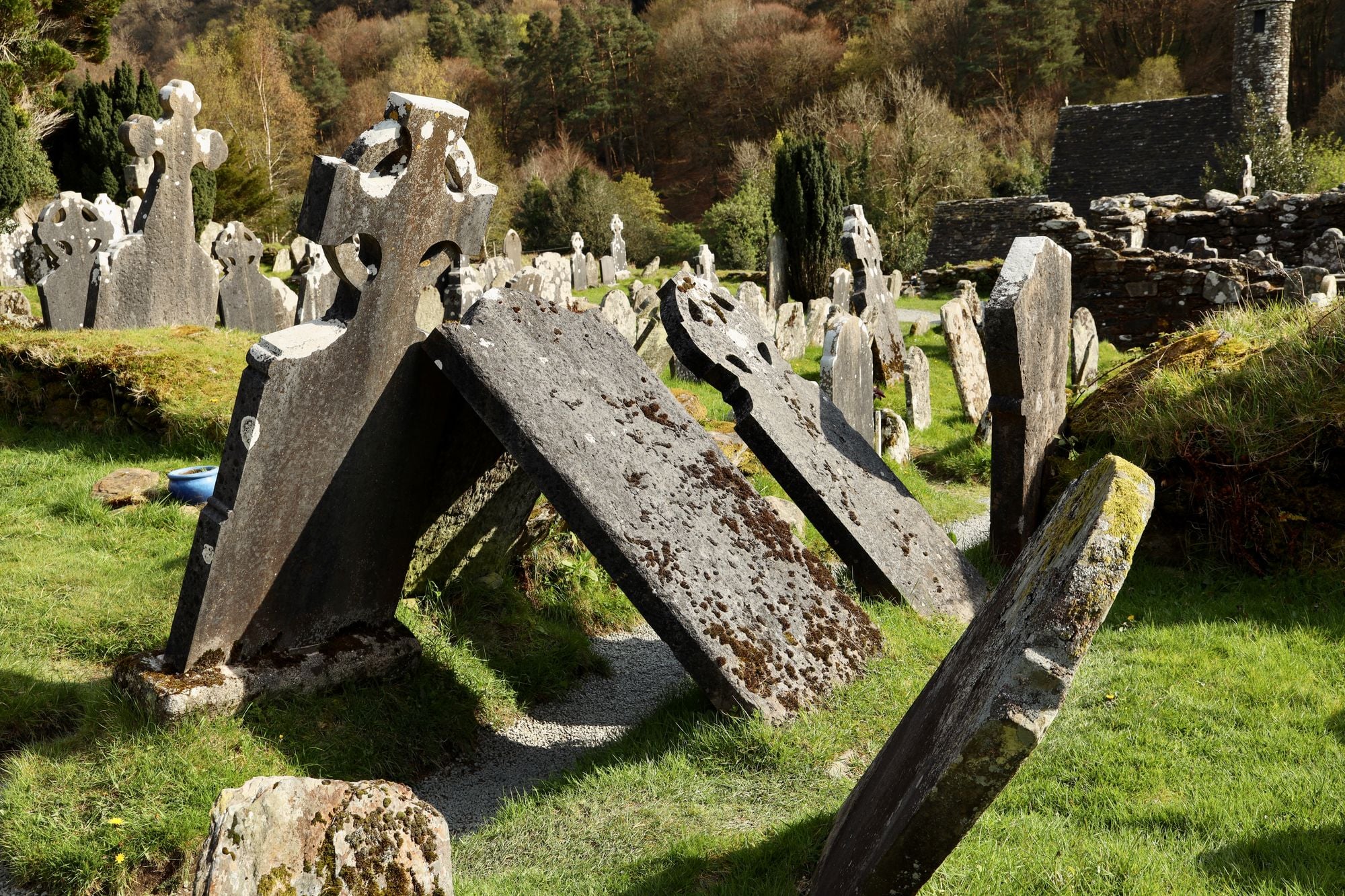
The oldest recorded stage is generally called Primitive Irish. It survives mainly in ogham inscriptions on stone, often recording personal names and family relationships. Ogham was used primarily for Primitive Irish from the fourth to the sixth centuries, and many surviving stones are found in Ireland and western Britain.
That connection between early writing and personal names still matters. A carved name may preserve an older linguistic form, but it does not automatically show that a modern surname has one simple meaning. Names changed through speech, spelling, migration and English-language record keeping over many generations.
Old Irish and Middle Irish
Old Irish is generally associated with material from about the sixth to the tenth century. Irish began to appear in the Roman alphabet, including notes written alongside Latin manuscripts. Irish written in the Roman alphabet before the seventh century has an important place in the history of European vernacular writing.
The Middle Irish period, broadly dated from 900 to 1200, left a substantial body of literature and manuscripts. Contact with Norse-speaking communities added some loanwords, including pingin for penny and margadh for market, while Irish remained a major language of the island.
Early Modern Irish and Literary Irish
From roughly 1200 to 1600, a cultivated literary standard served learned writers and poets in Ireland and Scotland. It is often called Classical Modern Irish. As living languages do, spoken Irish continued to change across regions while the written standard remained relatively conservative.
This shared literary culture helps explain the close historical connection between Irish and Scottish Gaelic. They are related languages, but each has its own modern standards, vocabulary and pronunciation patterns.
How English Became Dominant
The shift towards English came through long-running political, social and economic pressures. English was important in administration and legal affairs, while wider access to education, work, migration and public life made it increasingly necessary for many families.
The nineteenth century brought especially severe disruption. The Great Famine, emigration, an English-focused national school system and limited official space for Irish all accelerated language shift. In 1850, 4,500 national schools operated without Irish being officially taught in any of them.
Irish did not disappear. Language activists founded Conradh na Gaeilge, commonly known in English as the Gaelic League, in 1893. The organisation promoted classes, publications and spoken Irish, becoming a major part of the Irish-language revival.
Irish Today: A National and Community Language
Irish has constitutional status in the Republic of Ireland. Article 8 of the Constitution names Irish as the first official language and English as a second official language. Irish is also one of the official languages of the European Union.
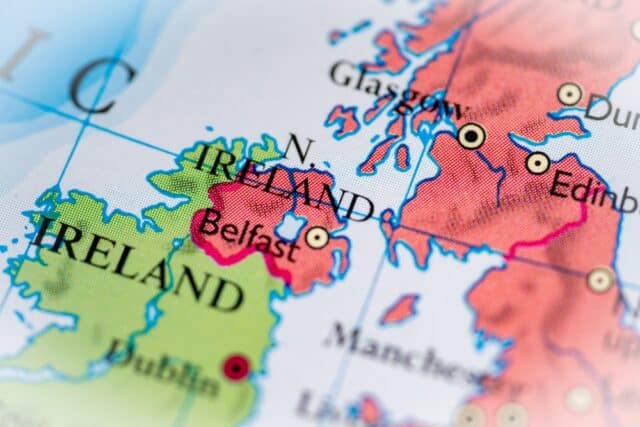
Irish remains a community language in designated Irish-speaking regions called the Gaeltacht. These areas are mainly on the west coast, including parts of Counties Donegal, Mayo, Galway, Kerry and Cork, with smaller areas in Counties Meath and Waterford. Irish is also learned, taught and used beyond the Gaeltacht in schools, families, workplaces, media and communities abroad.
The language has a presence in books, newspapers, radio, television and online publishing. Learning Irish does not require a family connection or a move to a Gaeltacht area, though regular contact with speakers and Irish-language media can make a real difference.
Where You Encounter Irish in Names, Places, and Daily Life
Irish is highly visible in personal names, surnames and place names. It appears on bilingual road signs, public buildings, official forms and maps, often alongside English. An Irish form may preserve a fada, an older spelling or a grammatical ending absent from its English version.
A fada is the accent mark over a vowel, as in á, é, í, ó and ú. It affects the written form and can affect pronunciation, so it should be retained where possible. Leaving it out may be handy on some systems, but it changes the spelling.
Surnames offer a clear example of how language history remains present. Prefixes such as Ó and Mac have Irish roots, while many family names acquired Anglicised forms in parish registers, civil records and migration documents. For family-history context, it is useful to understand why Irish families dropped the O’. Our guide to what O’ means in Irish surnames explains one of the most recognisable examples, while Mc and Mac in Irish names covers another.
Place names can also retain Irish-language forms and meanings, but direct translation is not always straightforward. A name may contain old grammar, an altered English spelling or an element whose original sense is debated. Check a place-name source before treating an appealing translation as settled fact.
How To Use Irish Words and Phrases Respectfully
Using Irish is welcome when it is done with care. A greeting, name or short expression can be a good starting point, but Irish has regional variation and grammar that may change a word’s form depending on the context.
- Keep fadas in names and words when you know they belong there.
- Use “Irish” for the language of Ireland, and reserve “Scottish Gaelic” for the related language spoken in Scotland.
- Do not rely on English spelling to predict Irish pronunciation.
- Check translations carefully before using Irish for a tattoo, ceremony, memorial, business name or family keepsake.
- Look for an audio pronunciation from a dictionary or language-learning resource, especially for names.
Irish sayings are often shared in English-language conversation, but their wording can vary by region and situation. If you are looking for familiar expressions and their everyday context, see our collection of Irish sayings and phrases.
How To Start Learning or Researching Irish
Your next step depends on what brought you to the language. Someone researching a surname needs a different approach from someone planning to hold a simple conversation.
- For a name: start with the Irish spelling, then check its historical form and pronunciation separately. Our Irish names guide is a useful place to begin.
- For pronunciation: use a dictionary with recorded audio and listen to more than one speaker where available. Irish pronunciation differs across regional varieties.
- For basic conversation: learn greetings and everyday phrases as complete expressions, then move on to listening practice and short dialogues.
- For cultural context: try Irish-language radio, television, music and writing alongside formal lessons. Hearing the language used naturally gives vocabulary a home.
Irish is more than a historic feature on a monument or an extra line on a road sign. It is a language with a long written record, living communities and a continuing role in how Ireland names places, records family history and expresses culture.
Frequently Asked Questions About the Irish Language
Is Irish the Same as Gaelic?
Irish is one of the Gaelic, or Goidelic, languages. “Gaelic” can also mean Scottish Gaelic, so “Irish” or “the Irish language” is the clearest English term for Gaeilge.
Is Irish the Same as Scottish Gaelic?
Irish and Scottish Gaelic are closely related Celtic languages, but they are distinct languages with different standard forms, vocabulary and pronunciation. Speakers may recognise similarities, yet mutual understanding is not automatic.
What Does Gaeilge Mean?
Gaeilge is the Irish-language word for the Irish language. It is commonly used in Ireland alongside the English word “Irish”.
Why Do Irish Words Have Accent Marks?
The accent mark is called a fada. It is part of standard Irish spelling and marks a long vowel, so retaining it helps preserve the correct written form.
Where Is Irish Spoken Today?
Irish is spoken throughout Ireland and internationally, with designated Gaeltacht areas remaining important Irish-speaking communities. It is also used in education, media, public services and cultural life.