
Cahergall and Leacanabuaile stone forts make a handy paired stop near Cahersiveen in County Kerry. Go to Cahergall for its reconstructed enclosing walls and Leacanabuaile for a closer look at the remains of buildings inside. Together, they bring early medieval settlement into a Kerry itinerary that can otherwise get a bit castle-heavy.
This guide explains what to look for at each fort, how to approach them and how much time to allow for one or both. There’s also practical advice on terrain, responsible access and pairing the forts with a nearby castle.

Choose Cahergall for the enclosing stonework; choose Leacanabuaile for its domestic remains. Seeing both gives you a more useful comparison than stopping at either for a quick photograph and heading off again.
| Fort | Distinctive Features | Reasons To Prioritize It | Terrain To Consider |
|---|---|---|---|
| Cahergall, also spelled Cahergal | Reconstructed walls and internal stone stairs, with a lintelled entrance | Understanding the scale and construction of a stone enclosure | Stone steps within the fort; wall climbing is unnecessary for appreciating the structure |
| Leacanabuaile | Hillside enclosure with surviving house remains, including circular and rectangular building phases | Looking closely at how the interior changed through occupation | Hillside setting, steep grassy slopes around three sides and irregular internal steps |
Short on time? Cahergall is a sensible first stop. If the building remains catch your interest, leave time for Leacanabuaile too. Its interior gives you a different set of details to work out, rather than more of the same.
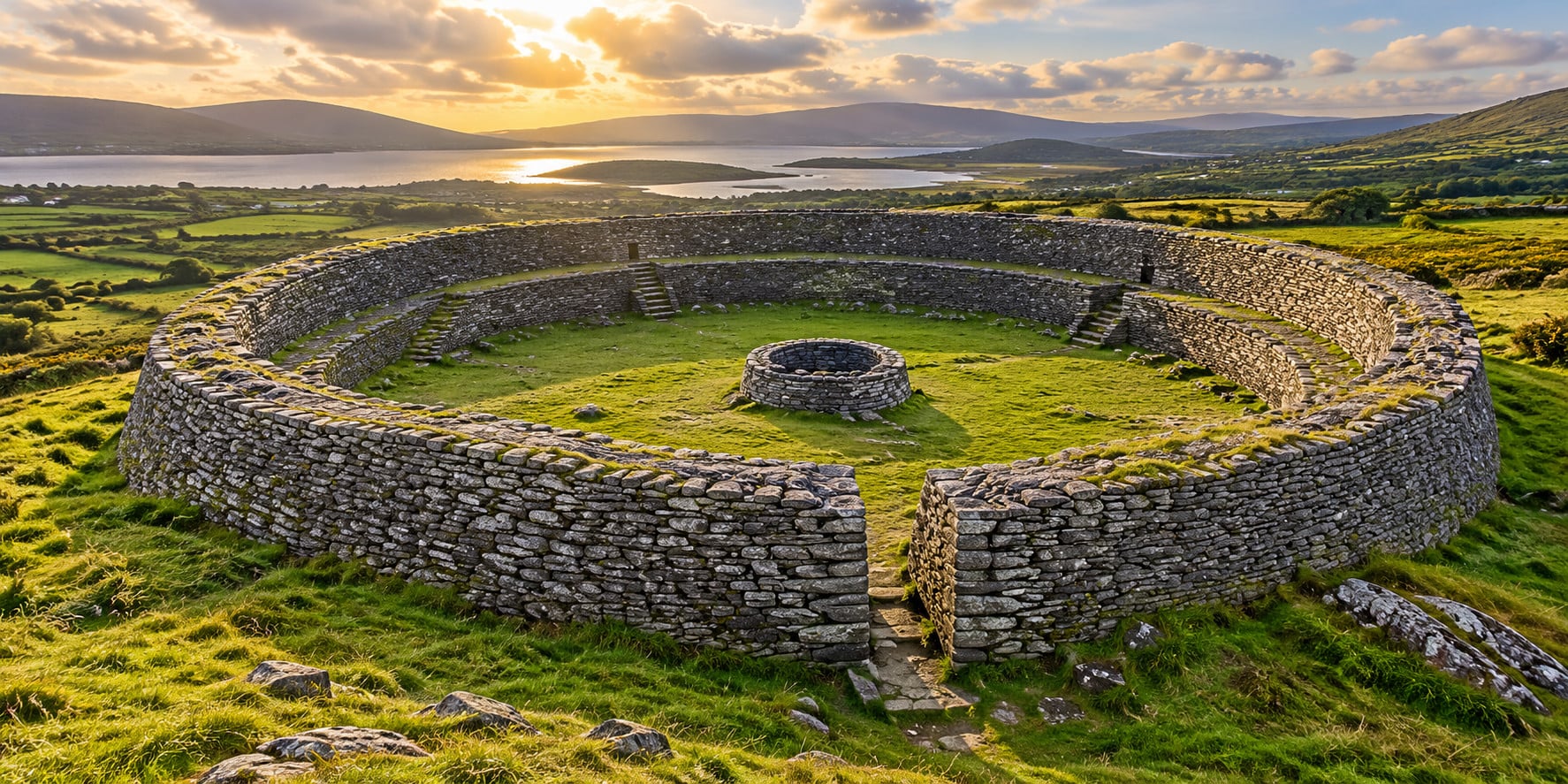
Cahergall is a dry-stone ringfort, meaning its enclosing walls were built by fitting stones together without mortar. There’s a stone lintel over the entrance, with stairs built into the inner face of the enclosure. Start at ground level and look at how the entrance, thick walls and stairs fit together.
The fort belongs to the early medieval tradition of enclosed settlements. Visitor descriptions commonly give a date around AD 600, but that’s an approximate attribution. It doesn’t date every part of the structure you can see today.
The walls have been reconstructed. What you see combines surviving fabric with later work, so this isn’t an untouched survival. The reconstruction makes the enclosure easier to understand, but it also shapes your impression of the place. Worth keeping in mind as you look around.
Once inside, give the building remains some attention before moving on. The enclosing wall naturally draws the eye, but the interior helps explain that a household occupied this place. A slow circuit tells you more than making straight for the highest stonework.
Leacanabuaile stands on a substantial rock foundation on the hillside. Its enclosure surrounds an almost circular interior, and the entrance is on the eastern side. Steep grassy slopes protect three sides of the site.
The main reason to visit is the sequence of house remains. A rectangular dwelling was built over earlier circular structures, so there’s visible evidence that the interior changed over time. Take a little time to trace the different wall outlines and see where one building meets another.
Leacanabuaile has also been partly reconstructed. As at Cahergall, focus on what the surviving layout tells you rather than assuming everything you see belongs to one original building phase.
A souterrain, or underground passage, is recorded in association with one of the structures. Treat it as an archaeological feature to understand from the surface, not an invitation to explore below. Do not enter confined openings or assume a visible passage forms part of the visitor route.
The approach in local visitor guidance starts at the Old Barracks beside the water in Cahersiveen. With the barracks on your right, continue across the bridge ahead. Turn left at the next crossroads, then follow the signs for the forts toward Ballycarbery Castle.
You’ll see both Cahergall and Cahergal in visitor information. When checking your navigation, make sure it’s pointing to the stone fort near Cahersiveen, especially if the spelling on your map differs from the road signs.
The visitor listing for Leacanabuaile describes walking from Cahergal’s car park and states that there is no car park at Leacanabuaile itself. The practical plan is to park at Cahergall and continue on foot to visit the pair.
Follow the indicated pedestrian approach and any access notices on site. Keep entrances clear, close gates behind you where required and don’t make shortcuts across surrounding land. A nearby field or farm entrance isn’t overflow parking, however convenient it might look.
Before heading uphill, check the route against your group’s mobility and the conditions underfoot. You can decide whether to continue to Leacanabuaile after the first stop. There’s no need to sign everyone up for both before you’ve seen the ground.
As a planning estimate, allow about 25–35 minutes at either fort to examine the stonework and interior remains. For a relaxed visit to both, set aside roughly 75–90 minutes, including getting between them and a little breathing room.
These are suggested itinerary allowances, not measured walking times. Add time for slower walking, photography or a group that needs frequent pauses. If conditions are poor, shortening the visit is a sensible decision, not a wasted opportunity.
If you’re fitting the forts into a longer drive, the one-day Ring of Kerry itinerary can help you work out how much room to leave for this stop.
Leacanabuaile’s hillside position and irregular steps need particular consideration if anyone has limited balance or finds slopes difficult. Cahergall has stone stairs too. Neither should be taken as a promise of a level, step-free visit.
Wear footwear with a secure grip and bring a waterproof layer. Wet stone and grass are good reasons to slow down, especially around steps and changes in level. Keep children close near raised stonework.
For conservation and safety, keep off wall tops and don’t scramble over the building remains. Follow on-site notices, leave stones where they are and stay clear of underground openings. There’s plenty to understand at both forts without turning the visit into a climbing exercise.
Use facilities in Cahersiveen before heading out, carry drinking water and take your litter away. Check access notices when you arrive, and respect any closed gate or temporary restriction. A planned stop still depends on the access available that day.

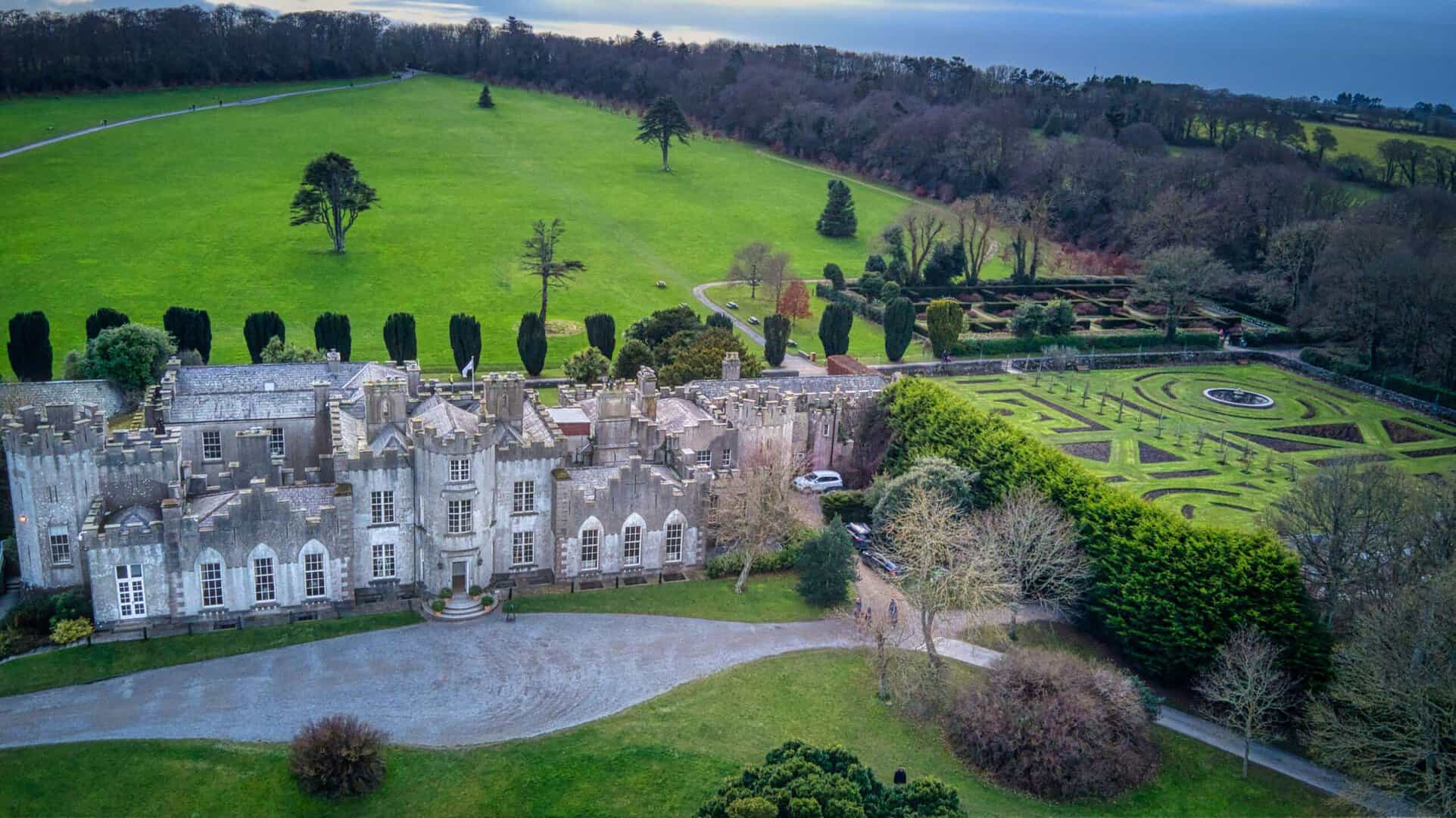
Ballycarbery Castle is close to the forts and lies in the same approach area. It’s a geographically sensible optional pairing if you’d like to compare an enclosed settlement with a later castle site.
Allow separate time for the castle and follow its own access notices. Being close by doesn’t establish permission to cross land or enter a ruin. If time is tight, give the two forts a proper look instead. They make a worthwhile stop on their own.
Yes. Cahergall and Cahergal are alternative spellings used for the stone fort near Cahersiveen in County Kerry.
Both forts give children a chance to look closely at stone construction and building remains. They’ll need close supervision around stairs, slopes, raised walls and openings, though. Keep that in mind when deciding how much of each site to explore.
Yes. There’s plenty to examine at ground level, including the entrances, enclosing stonework and interior building remains. You don’t need to climb the wall tops; doing so adds avoidable risk for visitors and the masonry alike.

Matt Hook is a Canadian writer of Scottish and Irish heritage. He built his writing career creating detailed gaming guides, turning complex mechanics, history and lore into useful information for readers. Matt brings that same research-focused approach to Ireland Wide, where he writes about Irish travel, heritage, history and culture. He also holds CMA and CPA designations as a professional accountant, giving him a strong background in research, accuracy and attention to detail.
At Ireland Wide, our aim is to bring authentically Irish insights to you, wherever you are.
Whether you have some feedback or would like to offer some of your own insights for everyone else to explore, don't hesitate to get in touch with us!