Dunguaire Castle is worth visiting if you want an easy, scenic castle stop near Kinvara with a strong sense of place and a real literary afterlife. It suits day-trippers, road-trippers on the Galway and Clare coast, photographers, and anyone who likes compact heritage sites more than full-day museum visits.
The catch is simple: access details can change, especially for interiors, events, and seasonal opening. Before you set off, check the official castle operator and pair this stop with broader planning from our guide to the best castles in Ireland.
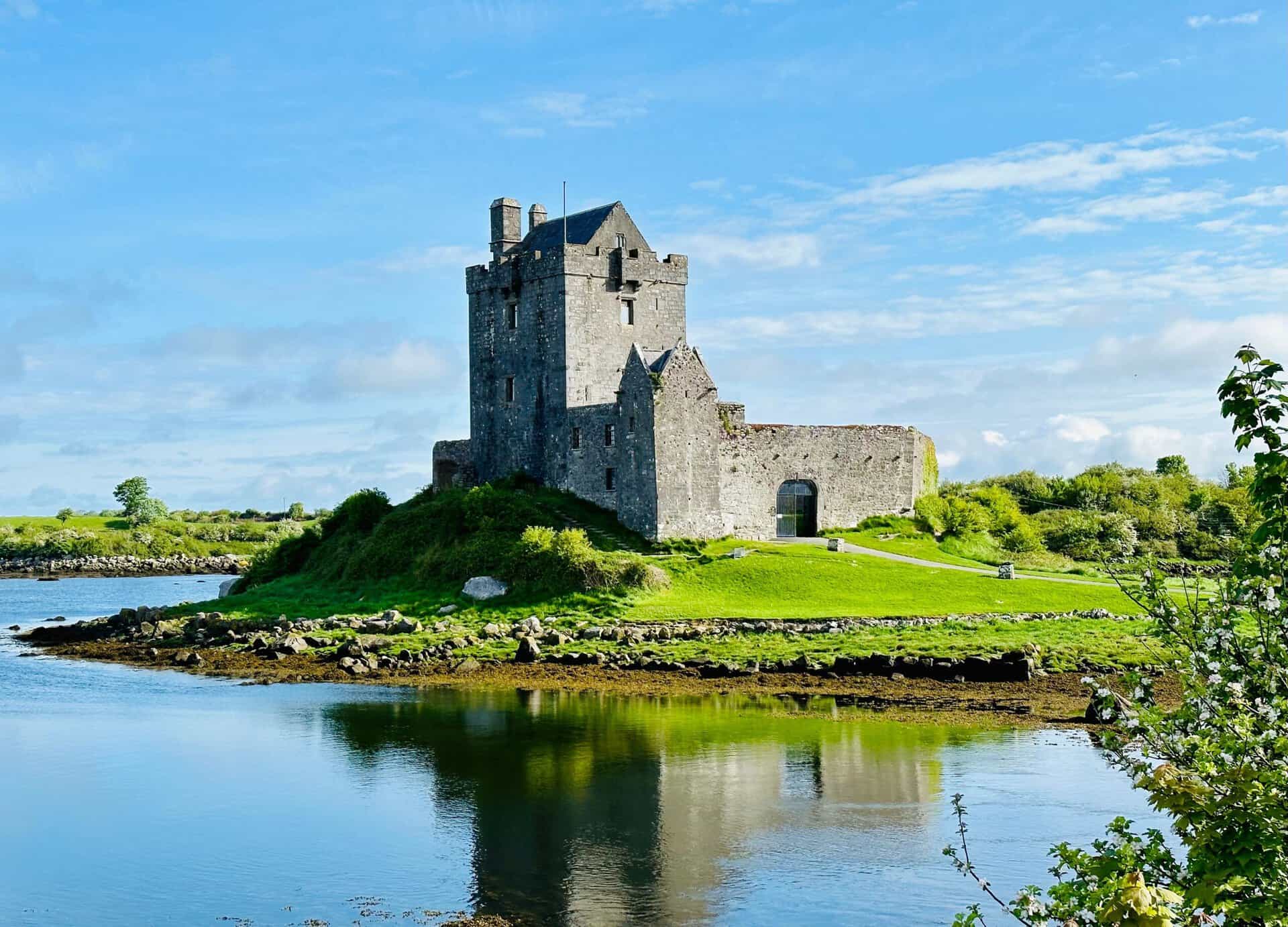
Dunguaire Castle stands just outside Kinvara on Galway Bay, and its fame is earned the old-fashioned way: location, silhouette, and story. The tower house dates to around 1520, is strongly associated with the Hynes and Martyn families, and later became linked with Oliver St. John Gogarty and the Irish Literary Revival.
Search by castle, county or nearby town, then click a marker to open the complete IrelandWide visitor guide.
Dunguaire Castle sits beside Kinvara on the southeastern edge of Galway Bay. Several travel and tourism references place it about 300 metres outside the village on the coast road toward Galway, which explains why it lands on so many Galway to Clare driving routes.
This is not a sprawling ruin where you need half a day and sturdy boots. It is a compact, highly legible site. You pull in, walk a short distance, and get one of the strongest castle views in the west of Ireland almost immediately.
If you are building a wider trip, pair this stop with our best castles in Ireland guide and broader planning ideas from this west coast of Ireland travel guide.

The castle seen today was built around 1520. Most accounts connect its construction to the Hynes clan, a prominent local family, while the wider site name points back to Guaire, an early medieval king associated with the area.
By the early 17th century, Dunguaire Castle had passed into the hands of the Martyn family, one of Galway’s notable merchant families. The building later fell into disrepair before being purchased and restored in 1924 by Oliver St. John Gogarty, the surgeon, writer, and public figure often linked to the literary life of early 20th-century Ireland.
That restoration shaped the castle’s modern identity. Gogarty used the building as a social and literary meeting place, and Dunguaire became connected with names such as W.B. Yeats, George Bernard Shaw, Lady Gregory, and J.M. Synge in popular retellings of its revival-era life, even if the exact guest lists tend to get polished a bit in the retelling.
One local tale says that if you stand at the front gate and ask a question, you will have your answer by the end of the day. It is a good story, and exactly the kind of thing a waterside castle should have, but treat it as folklore, not site history.
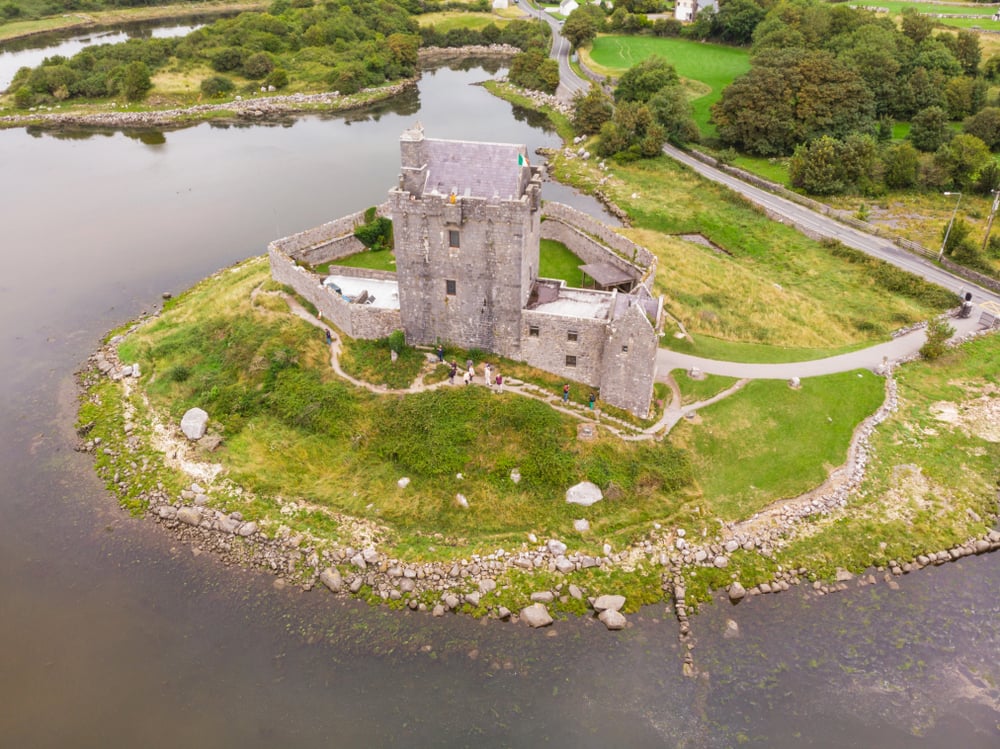
The castle’s best-known features are its 75-foot tower and enclosing wall in a waterside setting that does a lot of the visual heavy lifting. The structure sits on a slight rise with water around much of the site, giving it the sort of defensive logic that still reads clearly from ground level.
Even if the interior is closed when you arrive, the exterior still delivers. This is one of the few Irish castle stops where the approach, profile, and shoreline position are almost the whole point.
When interior access is running, rooftop and upper-level views are often part of the appeal. Because access arrangements can shift, do not assume tower entry without checking ahead.
Driving is the simplest way to visit Dunguaire Castle. Its position near Kinvara makes it an easy stop on routes between Galway, The Burren, and County Clare, especially if you are following a broader 7-day Ireland itinerary through the west.
Public transport takes more planning. If you are not driving, work outward from Galway city to Kinvara and then confirm the last part of the journey locally. For people who want a low-stress day, this is a classic better-by-car site.
Accessibility is the main practical caveat. Historic tower houses are rarely kind to wheels, buggies, or anyone who dislikes steep stairs. Exterior views may still make the stop worthwhile, but interior access should never be assumed.
Yes, especially if you want a high-reward stop with little walking. Dunguaire works best as a short scenic visit, not as a full heritage day with room after room of interpretation.
If you prefer castles with extensive interiors, large collections, or broad grounds, you may find it brief. If you like coastal settings, medieval architecture, and quick but memorable stops, it does the job very well.
Dunguaire Castle is often described as one of the most photographed castles in Ireland, and the reason is obvious the moment you see the waterline and tower together. The best photos usually come from stepping back enough to include the bay and defensive wall, not just the tower.
Soft light helps. Early morning and late afternoon tend to flatter the stone and water, and calmer weather can improve reflections. If you arrive in hard midday sun, the castle still photographs well, but the scene gets flatter and less moody.
For people shooting on phones, the easy win is simple: shoot both wide and vertical. The wide frame captures the setting. The vertical shot works better for the tower itself.
Kinvara is the obvious first stop. It is right beside the castle and gives you the village context that the photos do not. Harbour views and a short wander through town make this a better visit than just pulling in, snapping a picture, and leaving immediately.
If you are heading south or east, the wider limestone landscapes of The Burren make a natural next leg. If you are staying focused on castles, Dunguaire also fits neatly into a bigger look at the best castles in Ireland or a slower west-coast route.
People building a west of Ireland route can also use Dunguaire as a transition point between Galway city and County Clare. It is the sort of stop that breaks up a longer drive without turning the day into a logistics exercise.
The castle itself should not be your main food plan unless you have already confirmed a specific event or dining experience. Kinvara is the safer bet for coffee, lunch, or a proper meal.
That setup actually works in your favor. You can see the castle first, then decide whether you want a quick village stop or to continue along the bay. For a short coastal detour, that is about as painless as trip planning gets.
Sometimes, yes, but not always. Interior access depends on operating arrangements and season, so check the official site before you travel.
About 20 to 60 minutes is enough for most people. Stay longer if interior access or a special event is available.
Yes for a short stop, especially with children who like castles and open views. It is less suitable if you need a long indoor attraction, easy stroller access, or lots of hands-on exhibits.
Dunguaire Castle is in County Galway, near the village of Kinvara on Galway Bay.
Book ahead if a banquet, event, or timed interior visit is involved. For a quick exterior stop, advance booking may not be necessary, but verify before you go.
Its fame comes from its waterside setting, late medieval tower, and literary associations. It is also widely regarded as one of Ireland’s most photographed castles.
Dunguaire Castle is best treated as a short, high-impact heritage stop. Go for the setting, the outline of the tower against Galway Bay, and the mix of medieval history with 20th-century literary reputation.
If you want the smoothest visit, check access in advance, give yourself time for Kinvara, and keep expectations aligned with what this place does best. It is not huge, and that is part of the charm.

Dan is the founder and editor of Ireland Wide. Born and raised in Ireland, he researches the country’s history, mythology and cultural traditions using museum collections, heritage authorities and historical sources. He leads the site’s editorial team, with a particular focus on distinguishing documented history from later folklore and modern interpretations.
At Ireland Wide, our aim is to bring authentically Irish insights to you, wherever you are.
Whether you have some feedback or would like to offer some of your own insights for everyone else to explore, don't hesitate to get in touch with us!