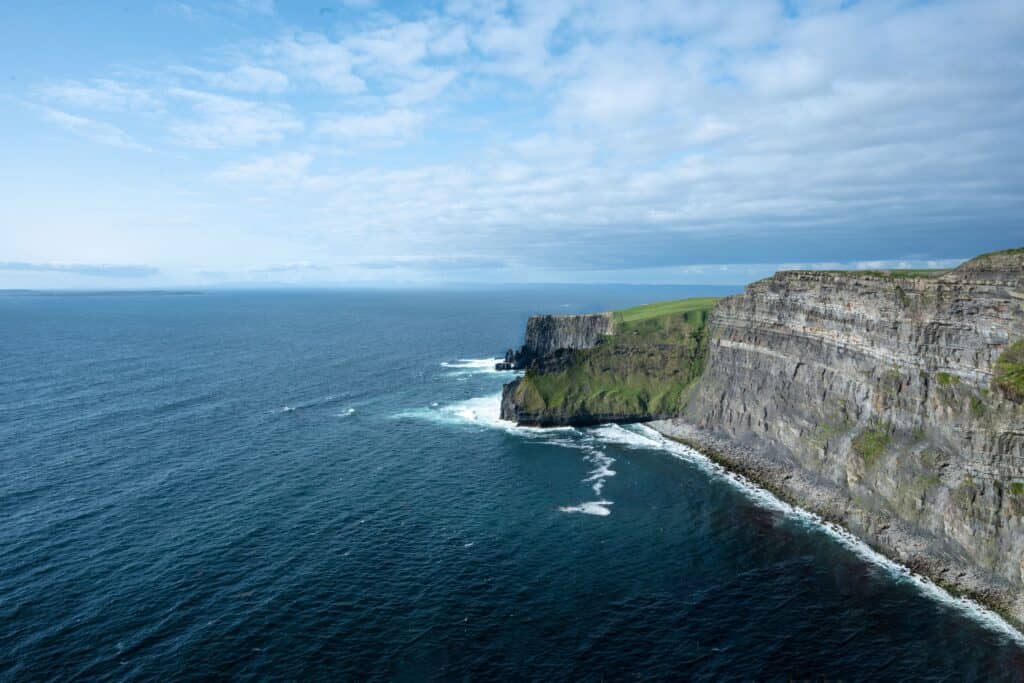
If you only have four days and want the west of Ireland to do what the west of Ireland does best, keep the plan tight. Galway, Connemara, and the Cliffs of Moher give you mountains, Atlantic coast, village stops, and one of Ireland’s most famous viewpoints without turning the trip into a long-distance driving contest.
This version of 4 Perfect Days In Ireland – Connemara and The Cliffs of Moher works best if you base yourself in Galway for at least part of the trip. Galway sits between Connemara and County Clare, so you can reach both without repacking every morning.
You can do this itinerary by rental car, or by joining organised day tours from Galway or Dublin. A lot of first-time visitors start in Dublin, but for these four days, the west is where the trip earns its keep.
Why This 4-Day Ireland Itinerary Works
Connemara and the Cliffs of Moher are different enough to feel like two separate trips. Connemara gives you mountains, lakes, bogland, and strong Irish-speaking heritage. The Cliffs of Moher bring the big Atlantic drama, with cliffs rising to about 214 metres and stretching for nearly 14 kilometres.
Galway ties the route together nicely. It is the natural stop between these areas, and it makes a sensible overnight base if you want pubs, restaurants, and less time spent changing hotels.
For people starting in Dublin, structured tours also exist that combine places such as Connemara, Galway, and the Cliffs of Moher over several days, sometimes continuing on to Killarney, Dingle, or Blarney Castle. If you would rather keep things focused, though, four days on the west side is more than enough to fill the schedule.
Day 1: Arrive In Galway And Set Up Your Base
Start in Galway. It is a practical launching point and also a good place to get your bearings before the scenic days. If you are driving from Dublin, expect a few hours on the road, so this first day is best kept simple.
Spend the afternoon walking the centre, then keep the evening free for a proper Galway pub session. The city is regularly used as the west-coast overnight stop on multi-day Ireland routes for a reason. It is lively without needing much planning.
If you are choosing where to stay, sleeping in Galway for the first two nights is the easiest option. That gives you one full day for Connemara without checking in and out of accommodation.
Galway Tips For A Short Stay
- Keep the car parked once you arrive. Galway is easier on foot than by trying to outsmart city traffic, and central parking rates can add up fast if you keep dipping in and out.
- Book accommodation early if your trip falls in summer. West-coast routes are popular, and availability tightens quickly, especially on festival weekends.
- Use Galway as your dinner night if you want choice. Smaller stops in Connemara are part of the charm, but Galway gives you more flexibility after a travel day.
Day 2: Connemara National Park And Kylemore Abbey
Day two belongs to Connemara. This is the part of the trip for wide roads, weather that changes its mind, and scenery that looks almost aggressively Irish.
A strong anchor stop is Connemara National Park. One of its best-known walks is Diamond Hill, a roughly 7-kilometre loop that usually takes 2.5 to 3 hours for most people and delivers broad views over the surrounding landscape, including Kylemore Abbey and the Twelve Bens on a clear day. Park status and access can change in poor weather, so it is worth checking Connemara National Park before you set off.
If you prefer a landmark with less hill work, continue to Kylemore Abbey. The estate is one of Connemara’s most recognizable sights, a neo-Gothic house built in the 1860s for Mitchell Henry and set beside water and woodland. It is the sort of stop that works for mixed groups, because keen photographers, history fans, and people who just want tea and a look around can all be happy at the same time. Admission is ticketed, and timed entry can matter in busier months.
Leave early for Connemara. The roads are part of the day, and they are not built for rushing. You want time for viewpoints, short stops, and the occasional sheep-related delay.

APEXUP Packable Rain Jacket Men Waterproof Lightweight Raincoat with Hood | 5000-8000mm Waterproof, Multiple Secure Pockets, Lightweight, Adjustable Hood & Hem, Reflective Details, Outdoor Sports Use
What To Prioritize In Connemara
- Diamond Hill if you want a proper walk and better panoramic views. If you are building a longer west-coast trip around walks, this pairs nicely with ideas in the best hiking holidays across Europe, the UK and Ireland.
- Kylemore Abbey if you want a classic landmark and a more relaxed stop.
- The drive itself, because Connemara is one of those places where the landscape between sights does a lot of the work.
Return to Galway for a second night if you want the simplest version of the itinerary. If you like slower mornings and less backtracking, you can also move south after dinner and overnight in County Clare.
Day 3: The Cliffs of Moher Without The Worst Crowds

The Cliffs of Moher deserve an early start. Most people arrive between 11:00 AM and 3:00 PM, and that is when the viewing areas feel busiest. Going early usually means calmer paths, easier parking, and fewer elbows in your photos.
The cliffs rise to around 214 metres above the Atlantic and run for nearly 14 kilometres. They are dramatic enough that even people who normally roll their eyes at famous viewpoints tend to stop complaining for a minute.
Make time for O’Brien’s Tower, the stone lookout built in 1835 by Cornelius O’Brien. It is one of the oldest purpose-built viewing points on the site and helps make sense of the scale. For planning, opening details, access notes, and visitor information, check the official Cliffs of Moher visitor information.
If you stayed in Galway, this is an easy day trip. If you moved to County Clare the night before, you will get a quieter morning and more time around the coast.
Best Way To See The Cliffs
Walk beyond the main arrival area if conditions are good and paths are open. The famous first view is great, but the longer edge-on perspective is usually better. Check the weather before committing to a long cliff walk. Atlantic wind is funny right up until it is not, and low cloud can wipe out the big view completely. Current weather patterns for the country are covered in this guide to weather in Ireland.
If you do not want to drive, organised departures from Galway are often the least stressful option. They handle timing, parking, and route planning, which is especially useful if this is your first Ireland trip.
Day 4: Choose A Final Day Based On Energy Levels
Your fourth day can go one of two ways. The smart choice depends on whether you want one more big scenic drive or a softer finish before heading back to Dublin or the airport.
Option 1: A Slow Galway Day
If your trip has already included a lot of road time, take the final day in Galway. Have breakfast, walk the city, and leave with enough energy to remember the good parts of the trip. Four days in Ireland can feel very short, and overloading the last day usually means spending more time in the car than you wanted.
Option 2: Add One More West-Coast Excursion
If you still want scenery, use day four for a shorter regional drive or an organised trip. Some multi-day west-of-Ireland routes combine Galway, Connemara, the Cliffs of Moher, Killarney, Dingle, and Blarney Castle, but cramming all of that into four independent days is too much unless you enjoy motorway service stations more than landscapes.
For most people, the better call is depth over mileage. Connemara plus the Cliffs of Moher is already a full itinerary, not a warm-up act.
Driving Vs Tours

Driving gives you more control in Connemara, where the joy is often in the route itself. You can stop for weather breaks, views, and small detours without negotiating with a coach timetable.
Organised tours make the Cliffs of Moher especially easy, and they also suit anyone arriving in Dublin without wanting to rent a car. Some operators run multi-day southwest itineraries with Galway, Connemara, and the cliffs included, and many offer free cancellation within a set window before departure.
The trade-off is simple. Cars buy flexibility. Tours remove logistics.
Best Time To Visit Connemara And The Cliffs of Moher
There is no perfect weather window in western Ireland, only better odds. Summer brings the longest days and the heaviest crowds. Late autumn through winter can be quieter and cheaper, though the trade is colder temperatures and shorter daylight.
For the Cliffs of Moher, early morning is often the best timing regardless of season. For Connemara, a clear day helps enormously if you want views from Diamond Hill, but moody weather suits the region too. It is not a place that needs sunshine to look convincing.
Always check conditions before heading into exposed coastal or upland areas. Connemara National Park can remain open during some weather warnings, but access may change depending on conditions and notices. If you are planning around a specific month, these guides to weather in Ireland in May and weather in Ireland in September are useful starting points for west-coast trips.
What To Pack For This 4-Day Ireland Trip
Pack for rain, wind, and quick changes in temperature, even on a short trip. The most useful approach is a light waterproof layer and shoes that can handle wet paths.
- Waterproof jacket for Connemara and the Cliffs of Moher
- Walking shoes or boots with grip for Diamond Hill and cliff paths
- A daypack for layers, water, and snacks on driving days

Maelstrom 40L Hiking Backpack, Lightweight Camping Daypack with Rain Cover | Water-Resistant Rip-Stop Nylon, Wet/Dry Separation, Multi-Pockets, Survival Whistle. Ideal For Men, Women, Travel, Trekking
Is Four Days Enough?
Four days is enough for a strong introduction, not a complete west-of-Ireland education. If you only want a taste, this route works very well. You get Galway’s nightlife, Connemara’s mountain-and-lake scenery, and the Cliffs of Moher’s Atlantic edge without spending the whole trip in transit.
If you already know you like Ireland, give it longer. Ten days would let you add places like Killarney or Dingle without turning every morning into another checkout and another luggage shuffle. If that sounds more like your pace, a 7-day Ireland itinerary for first timers or a 10-day Ireland itinerary gives you more room to breathe.
Still, for a first run at the west coast, this is a very good four days. It has enough movement to feel like a trip and enough focus to remember where you actually were.