Slane Castle is worth visiting if you want a single stop that combines a historic estate, a working whiskey distillery, famous concert grounds and an easy base for exploring the Boyne Valley. It suits day-trippers, music fans and anyone pairing heritage with food and drink, but castle access is limited and usually needs advance planning.
If you are still deciding where it sits among Ireland’s headline heritage stops, our guide to the best castles in Ireland gives the bigger picture first. Slane works best when you treat it as an estate experience, not just a quick photo stop at a front gate.
Search by castle, county or nearby town, then click a marker to open the complete IrelandWide visitor guide.
| County | County Meath |
|---|---|
| Jurisdiction | Republic of Ireland |
| Castle Type | Country house / castle estate |
| Century / Built Dates | Early 18th century origins; the estate’s association with the Conyngham family dates to the early 1700s |
| Associated Families | The Conyngham family |
| Current Status | Private estate and event venue with tours and distillery operations |
| Interior Access | Limited; public guided castle tours run on select dates and private tours can be booked by request |
| Typical Visit Time | 2 to 4 hours for a distillery visit, estate time and village stop; longer if you add a castle tour or afternoon tea |
| Coordinates | Not listed here to avoid guessing; use the official mapping on the operator site |
| Parking | Available on the estate for distillery visitors; village parking is also available |
| Public Transport | Check routes to Slane village first; Bus Éireann routes serve the village from Dublin and Drogheda, but final access still usually means a short walk or local taxi planning |
| Accessibility | Varies by experience; estate and distillery access are easier than hillside or uneven outdoor areas |
| Toilets | Available at visitor facilities on site |
| Food | Yes; estate dining and village options are available depending on your plan |
| Family Suitability | Good for older children and mixed-interest groups; less ideal if your group wants a fully open, self-guided castle |
| Official URL | Slane Castle official site |
| Operator Details Checked | Checked July 2026 |
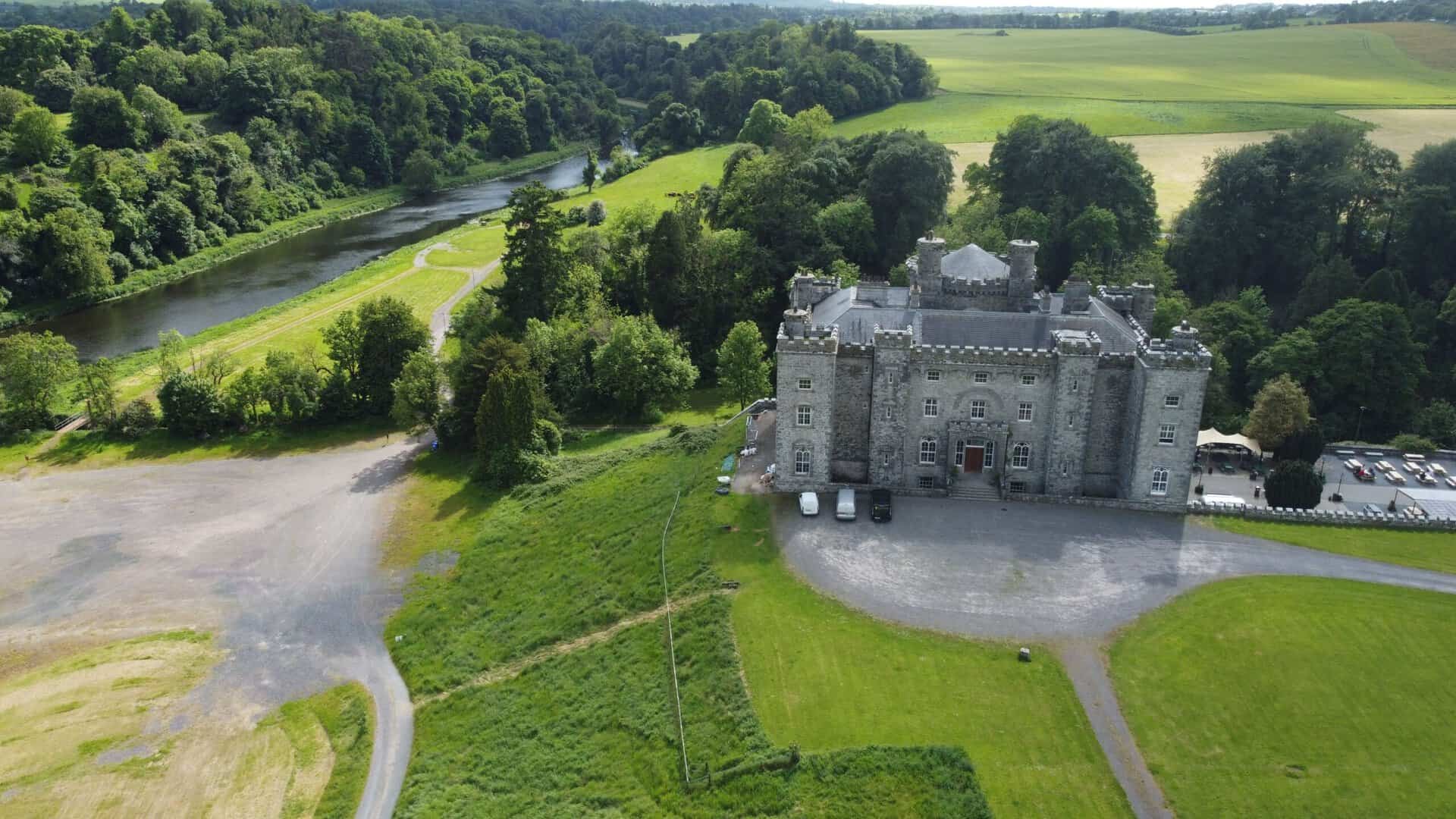
Slane Castle sits on a 1,500-acre estate in the Boyne Valley, just outside Slane village in County Meath. The official estate site describes it as a private venue that opens for tours, events, hospitality and overnight stays by arrangement or on selected dates.
That distinction matters. Slane is not a drop-in ruins site where you buy a ticket at the gate and wander freely through every room. It is better understood as a working private estate with several separate visitor experiences: the castle, the grounds, concerts, dining and the Slane Distillery.
For wider trip planning, the Discover Boyne Valley tourism guide is useful for nearby stops and local context, and our own guide to the 32 counties of Ireland helps if you are placing County Meath into a longer route.
Architecturally, it leans closer to a grand country house with castle styling than to a medieval fortress. If your idea of a castle day out means battlements, gatehouses and a defensive keep, Trim Castle scratches that itch more directly. If you want aristocratic interiors, estate history and stories tied to modern Irish music culture, Slane is the better fit.
That is also why the place works well for groups with different interests. One person gets heritage, another gets whiskey, another wants concert lore, and nobody has to pretend they came only for stone walls.
Documented history places the Conyngham family at Slane from the early 18th century. Over time, the estate developed into one of the major historic properties in Meath, with the house becoming a cultural landmark as well as a private family home.
In modern Irish popular culture, Slane Castle is tied just as strongly to its open-air concerts as to its architecture. The grounds form a natural amphitheatre, and the site became one of Ireland’s most famous live music venues, hosting major international acts over several decades, including U2, David Bowie, Oasis, Madonna and Metallica. If you grew up in Ireland, there is a fair chance Slane means gigs first and Georgian interiors second.
Folklore linked to the wider grounds and locality includes an ancient healing well associated in tradition with Dian Cecht from Irish mythology. Treat that as legend rather than documented estate history. It belongs to the older story-world of the Boyne Valley, which is full of places where archaeology, religion and folklore overlap without becoming the same thing.
The main draw is the estate as a whole. Depending on what is available when you book, that can include guided castle access, views over the grounds, stories about the Conyngham family, and plenty of material on the concert era.
The official site says public guided tours are offered on select dates, while private tours can be arranged year-round by request. Afternoon tea experiences may include a shorter interior route through rooms such as the King George IV Ballroom and the Gandon Room.
The other major on-site experience is Slane Distillery, housed in converted 18th-century stables. Distillery tours are often the easiest way to access the estate in a structured, bookable format, and they are a strong option even if whiskey is not usually your thing. The setting does a lot of the work.
Castle tours focus on the house, family history, architecture and the famous gigs. They are more limited and usually need advance booking through the estate.
Distillery tours focus on whiskey production and the adapted stable buildings. They are usually the more consistently available option, though schedules do change around private events, seasonal demand and estate operations. Always verify details on the official operator site before setting out.
If you only have half a day, the distillery plus a walk through Slane village is the safer plan. If the interior of the house is your priority, build the day around a pre-booked castle tour and treat everything else as a bonus.
Slane is easy to reach by road from Drogheda and Navan in about 20 minutes, and from Trim in around 30 minutes. From Dublin, most drivers take roughly 45 minutes to 1 hour in normal traffic, though the N2 can drag badly at peak times and on event days.
On-site access is easiest when you have a booking tied to the estate or distillery. If you are arriving without one, do not assume you can roam freely across private areas. Advance reservation is the safe move.
Accessibility depends on the part of the experience. Indoor hospitality and distillery areas are generally more manageable than uneven outdoor ground, while nearby hill sites are a different proposition altogether. If step-free access matters, contact the estate directly before booking.
Slane Castle is one of those places where the approach and setting matter as much as the facade. Wide shots work best when you include some of the estate landscape, not just the building itself.
If you are also heading into the grounds or nearby viewpoints, soft light helps. The concert legacy adds another angle too. Even when no event is happening, people tend to photograph the estate with the idea of the natural amphitheatre in mind, not just the front rooms.
The village is worth a proper walk, not just a drive-through. Practical guides to the area point out the Georgian crossroads and the so-called Four Sisters houses as the defining visual feature. It is compact, so twenty minutes on foot covers the core.
A short drive north of the village, the Hill of Slane is tied to St Patrick and early Irish Christianity. It is one of the easiest nearby additions if you want your day to stretch beyond the estate. Ground conditions are more rustic than the village or distillery.
If you want a more overtly medieval counterpoint to Slane, Trim gives you the fortress scale and defensive architecture that Slane does not try to be.
Slane also sits within reach of the wider Boyne Valley circuit. The Heritage Ireland site is the best place to verify access details for state-managed monuments before you lock in a route, and if you are comparing castle styles for a longer trip, our Dunguaire Castle visitor guide and Ross Castle visitor guide show just how different an Irish castle day can feel depending on the region and the building itself.
Yes, if you want variety in one stop. Slane stands out because it combines private-estate atmosphere, music history and a polished distillery experience. It is less convincing for anyone who wants a classic medieval castle with broad self-guided access.
That makes it a strong choice for couples, small groups and adults doing a Boyne Valley road trip. Families can enjoy it too, but younger children may engage more with the grounds and village than with a history-heavy interior tour. If you are building a longer route with several heritage stops, it also fits neatly into a 7 day Ireland itinerary or a broader 10 day Ireland itinerary without feeling like an all-day commitment.
Yes, but not freely every day. Public guided tours run on selected dates, and private tours can be booked by request. Check the official estate site before you travel.
Two to four hours is a sensible minimum if you are doing a distillery visit and seeing the village as well. A castle tour or afternoon tea can stretch that longer.
Yes. The estate’s appeal is broader than the distillery, with architecture, landscape and concert history all carrying their own weight.
Usually, yes. The estate operates as a private venue, and castle access is limited. Booking ahead avoids a wasted trip.
It can be, especially for mixed-age groups pairing the estate with Slane village or the wider Boyne Valley. It is less of a hands-on castle day than some larger public heritage sites.
Its concerts are what many people know first, with major international acts performing in the grounds. It is also known for the Conyngham family estate and Slane Distillery.

Dan is the founder and editor of Ireland Wide. Born and raised in Ireland, he researches the country’s history, mythology and cultural traditions using museum collections, heritage authorities and historical sources. He leads the site’s editorial team, with a particular focus on distinguishing documented history from later folklore and modern interpretations.
At Ireland Wide, our aim is to bring authentically Irish insights to you, wherever you are.
Whether you have some feedback or would like to offer some of your own insights for everyone else to explore, don't hesitate to get in touch with us!