Mc and Mac both come from the Gaelic prefix meaning “son of.” In Irish family history, the two spellings often point to the same surname, and the difference on paper does not always tell you whether a family was Irish or Scottish. In modern records, both forms still turn up side by side, sometimes even within the same extended family.
This guide is part of our Irish Names collection. Browse our complete Irish Names directory for A–Z first names, surnames, Gaelic names, meanings, and themed collections.
This guide rounds up 50 Irish surnames that start with Mc or Mac, with short, practical notes on meaning, Irish forms, and where a name is commonly associated. It is built as a bridge between a surname list and deeper genealogy research, so you can quickly spot the names most likely to connect with your own family line. If you are comparing prefixes and naming patterns, it also pairs well with Irish surnames that start with O, where the prefix works in a very different way.
If you are tracing relatives through Cork, Donegal, Cavan, Armagh, Roscommon, Sligo, Laois, Louth, Antrim, Down, Fermanagh, Leitrim, and Westmeath, a lot of these names will look very familiar. Several of them also appear repeatedly in Ulster family-history work, especially where migration between Ireland and western Scotland muddied the spelling trail a bit.
What Mc And Mac Mean In Irish Surnames
In Irish, Mac means “son of”. Over time, surnames were Anglicized in different ways, which is why you will see both McCarthy and MacCarthy, McCabe and MacCabe, or McAuley and MacAuley. The spelling can shift across generations, church records, immigration papers, and census entries.
That is useful to remember if you are searching old records. A family may appear under more than one spelling, even within the same branch. If you are building a family tree, it is smart to search both versions. It is also worth keeping an eye out for names that dropped the prefix altogether after emigration, especially in North American records.
How This List Was Chosen

This is not every Irish surname that begins with Mc or Mac. It is a curated list of 50 names that are either widely recognized in Ireland, well established in Irish genealogy, or regularly found in surname indexes and family-history records.
Where a meaning is uncertain or has more than one interpretation, the wording stays cautious. Irish surnames can be old, regional, and messy in the best possible way. That usually shows up in conflicting spellings, overlapping Irish forms, and families who carried the same surname without sharing one neat single origin story.
50 Irish Surnames That Start with Mc or Mac
- McAuley or MacAuley
Irish form: Mac Amhalghaidh. Usually explained as “son of Auley,” and the name is especially associated with Cork, Fermanagh, and Westmeath. Older records can also throw up forms like Macaulay or McCauley. - McAuliffe
Irish form: Mac Amhlaoibh. This surname is linked strongly with Cork and is generally traced to the Norse personal name Olaf. It is one of the clearer examples of Viking influence working its way into Irish naming. - McBride or MacBride
Irish form: Mac Giolla Brighde. The sense is “son of the servant of St. Brigid,” and it is closely tied to Donegal. In practice, this is one of those surnames that often stays heavily concentrated in the northwest. - McCabe or MacCabe
Irish form: Mac Cába. Often associated with Cavan and Leitrim, this surname is usually linked to a word meaning cap or hat, and the family is often described as having come from Scotland as gallowglass soldiers. - McCann
Irish form: Mac Annaidh or Mac Annadh. A long-established Ulster surname, especially tied to Armagh and the wider Ulster region. You will also find it well scattered across neighbouring counties. - McCarthy or MacCarthy
Irish form: Mac Cárthaigh. The name means “son of Carthach,” with Carthach commonly explained as “loving.” It is one of the big Irish surnames and is widespread, with especially deep roots in Munster. In county terms, Cork still looms large here. - McCormack or McCormick
Irish form: Mac Cormaic. This means “son of Cormac,” though not all bearers come from one single ancestor because Cormac was a common personal name. That makes it a classic case where the surname alone cannot do all the genealogy heavy lifting. - McCullagh
Irish form: Mac Con Uladh. Usually interpreted along the lines of “son of the hound of Ulster,” and associated with Antrim, Down, and Ulster. It is a strongly northern surname in most family-history indexes. - McDermot or MacDermot
Irish form: Mac Diarmada. Meaning “son of Diarmaid,” this surname is particularly associated with Roscommon and Sligo. The royal associations of the Mac Diarmada line give it a bit more historical weight than many everyday surnames. - McElroy
Irish form: Mac Giolla Rua. Generally read as “son of the red-haired lad” or “son of the red servant,” with strong connections to Fermanagh and Leitrim. Spellings like Gilroy can sometimes enter the picture too, which is not exactly helpful when you are already knee-deep in parish registers. - McEvoy or McAvoy
Irish forms: Mac Giolla Bhuidhe and Mac an Bhuí appear in different traditions. The surname is tied to Laois and Louth and may refer to a fair-haired or yellow-haired ancestor. Local pronunciation has probably done this name no favors over the centuries. - McGee or Magee
Irish form: Mac Aodha. This means “son of Aodh,” a very old Gaelic personal name often rendered as Hugh in English contexts. The Magee form is especially common enough that it deserves equal attention in record searches. - McMahon
Irish form: Mac Mathghamhna. The personal name behind it is commonly understood as linked to bear, so the surname is often glossed as “son of Mathghamhain.” Separate McMahon families developed in different regions, so county matters here more than people sometimes expect. - McDonnell or MacDonnell
Irish form: Mac Domhnaill. This means “son of Dónall” or “son of Domhnall,” with the personal name often explained as “world ruler.” In Irish history, the name is especially visible in the north and west through powerful family lines. - McDonagh
Usually connected to the personal name Donnchadh or a related form in some records, though spelling histories vary. This is one of those surnames that rewards checking several record sets. It can sit awkwardly close to McDonough and even Donagh forms depending on where the clerk put the pen down. - McDonough
Another surname tied to Donnchadh in Anglicized form. It can overlap with other spellings, so parish and civil records matter more than modern spelling neatness. If one branch uses McDonagh and another uses McDonough, that is annoying but not unusual. - McKenna
Irish form: Mac Cionaoith. Usually interpreted as “son of Cionaodh,” an old personal name often linked with fire or born of fire. It remains one of the better-known Ulster surnames. - McKeever
Often given as Mac Íomhair or a related form. The surname is generally associated with a personal name of Norse background. It is another reminder that Irish surname history was never sealed off from the wider Irish Sea world. - McGrath
Irish form: Mac Craith. A long-established Irish surname found in several regions, including Munster and parts of Ulster. Because it spread widely, place and parish usually narrow it down faster than the meaning does. - McGowan
Irish form: Mac Gabhann. This is one of the clearer occupational surnames on the list and means “son of the smith.” Names tied to blacksmithing tend to show up in many unrelated family lines, so this is not a surname that hands over easy answers. - McGuire
Irish form: Mac Uidhir. Usually explained as “son of Odhar,” with odhar carrying the sense of dun-colored or sallow. It is especially associated with Fermanagh and with one of the major Gaelic lordships there. - McCaffrey
Often linked to Mac Gafraidh or a related Irish form. It is frequently explained as “son of Gafraidh,” a personal name with Norse roots. The surname is particularly common in parts of Ulster and the north midlands. - McCafferty
Often associated with Mac Eachmharcaigh or related forms in Irish surname history. Meanings given in secondary sources vary, so this is a surname where local record work helps. Donegal family lines show up often with this one. - McNally
Irish form: Mac Con Ulaidh is sometimes linked with related Ulster naming traditions, though Anglicized histories can cross over with other surnames. Good one to double-check against county records. It is a useful reminder that tidy surname dictionaries and real-life records do not always cooperate. - McNamara
Irish form: Mac Conmara. The name is usually interpreted as “son of the hound of the sea,” and it is strongly associated with Clare. Few surnames are more firmly planted in one county identity than this one. - McInerney
Irish form: Mac an Airchinnigh. This means “son of the erenagh,” referring to a hereditary church office. It is another surname strongly linked to Clare. If you like surnames that preserve old medieval job titles, this is a good one. - McEnery
Closely related in some traditions to Mac an Airchinnigh, though local forms differ. Expect spelling variation in older records. In some families, the leap from one written form to another is large enough to look like a completely different surname. - McShane
Irish form: Mac Seáin. Quite literally “son of John.” Simple, direct, and common enough to cause headaches in genealogy databases. A straightforward meaning does not guarantee a straightforward paper trail, sadly. - McSweeney
Irish form: Mac Suibhne. This surname is associated with a galloglass family and with parts of Donegal. It is one of the best-known names linked to those military-settler traditions in Ireland. - McGinley
Often connected to Mag Fhionnghaile or related Ulster forms. The exact Anglicization trail can be complicated, which is very on-brand for Irish surnames. Northwest records are especially useful here. - McGlinchey
Usually traced to an Ulster Gaelic form and commonly found in the northwest. Local spellings can shift quite a bit. This is the sort of surname that makes wildcard searches feel less like a luxury and more like basic survival. - McCloskey
Irish form: Mac Bhloscaidh. A well-known Ulster surname, especially in Derry and nearby counties. It is still strongly associated with the north. - McFadden
Irish form: Mac Pháidín. This is a patronymic based on a diminutive of Pádraig, so the sense is roughly “son of little Patrick.” That “little” element comes from the personal-name form, not from any judgment on the ancestor’s personality. - McHugh
Irish form: Mac Aodha. Like McGee in many cases, it comes from Aodh, though surnames with the same Irish root do not always share one tidy history. If you are tracing both names in one area, compare them carefully rather than assuming they merge. - McLoughlin
Irish form: Mac Lochlainn. The personal name behind it is often linked with the Norse world or with “land of the lochs.” It is common enough across different areas that regional context does a lot of the work. - McCluskey
Often traced to a Gaelic form related to Mac Bhloscaidh traditions in Ulster. Spelling drift is common. In some indexes it sits close enough to McCloskey to make you stop and double-check every line. - McQuillan
Usually linked to a Norman or Gaelicized family history in Antrim. This is a good reminder that Irish surnames are not all from a single origin stream. Some arrived, settled, shifted language, and became part of the local story anyway. - McAlinden
Generally understood as a patronymic from a personal name related to Ailín or Alan traditions. Most useful in localized family-history research. It is another surname where a parish or townland can tell you more than a general meaning can. - McArdle
Often explained as “son of Ardghal,” with Ardghal carrying the sense of high valor or noble bravery. The surname is particularly associated with parts of Ulster and the northeast. - McAleer
Usually a form connected with a personal name akin to Maol Íosa in some surname traditions, though not all dictionaries agree on the same route. That disagreement is fairly normal once you get into older Gaelic naming material. - McAlister or McAllister
Typically means “son of Alasdair” or Alexander. In Ireland it is especially associated with families in the north and with movement across the Irish Sea. The surname often sits in that Irish-Scottish overlap zone where certainty can be annoyingly scarce. - McAloon
Generally taken as “son of Luan” or from a related Gaelic personal name. As with many shorter names, older spellings matter. Small surnames can leave a surprisingly messy paper trail. - McAndrew
Quite literally “son of Andrew,” though families using it in Ireland may have different regional stories. It turns up in both native Irish and settler contexts, so broad assumptions do not help much. - McArthur
Usually “son of Arthur.” Found in Ireland as well as Scotland, so context is everything when tracing one particular line. On its own, the surname does not choose sides for you. - McAllen
Likely a patronymic tied to a personal name such as Ailín or Alan in Anglicized form. Check for alternate spellings in early records. This one can easily blur into Allen without much warning. - McAdam
“Son of Adam.” A straightforward patronymic that appears in Irish records, especially in the north. Straightforward meaning, less straightforward history, which is very familiar territory by now. - McCall
Often linked to a personal name such as Cathal in some traditions, though surname dictionaries do not always line up neatly on one explanation. It also has strong Scottish associations, so the local record trail really matters. - McCain
Usually connected to Cathán or a related old Irish personal name. Variants can overlap with Scottish records too. If a family moved back and forth across the North Channel, the paperwork may reflect that more than modern identity labels do. - McBeth
Found in Irish surname lists as well as Scottish ones. The history is not purely Irish, but it does appear in Irish family records. It is a good example of how surname lists and national borders do not always line up neatly. - McGillicuddy
A very distinctive Kerry surname, generally linked to a Gaelic family line and best known in Ireland through County Kerry. It is one of those names that sounds so specific you almost expect the county hills to answer when you say it out loud.
Patterns You Will Notice In Mc And Mac Names
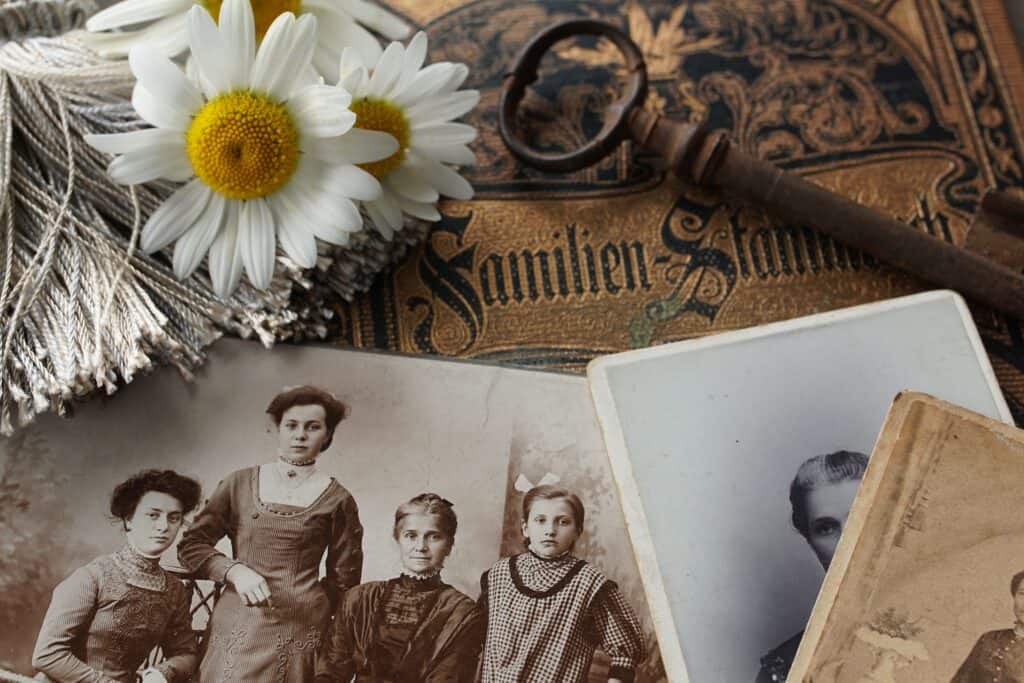
A lot of these surnames fall into a few repeating groups. If you have already looked through Irish last names that start with M more broadly, the same patterns show up again and again.
- Patronymics from first names: McCarthy, McDonnell, McKenna, McHugh, McAndrew, McArthur.
- Occupational or role-based names: McGowan for the smith, McInerney for the erenagh or church steward.
- Religious associations: McBride preserves a connection to St. Brigid.
- Norse influence: McAuliffe and some forms of McKeever and McCaffrey show how Irish naming absorbed Viking-era personal names.
- Ulster and gallowglass history: McCabe and McSweeney are often discussed in connection with military families from Scotland who became established in Ireland.
Mc Vs Mac In Genealogy Research
Do not treat Mc and Mac as separate families by default. The same household may appear under both versions, and clerks often wrote what they heard. That matters in passenger lists, parish registers, and early civil records.
If you are searching databases, try at least three versions of a name: the Mc spelling, the Mac spelling, and one shortened or phonetic variant. For McAuley, for example, that might mean also checking MacCauley, McAwley, or even Cawley depending on the county. It can also help to compare the same family against nearby names in alphabetical lists, including Irish last names that start with N and Irish last names that start with R, because record offices did not always preserve neat modern sorting.
Best Next Steps If You Are Tracing One Of These Names
If your family uses one of these surnames, the next step is usually county-based research rather than surname research alone.
- Start with the county association. McBride points you toward Donegal. McCabe suggests Cavan or Leitrim. McDermot pushes you toward Roscommon and Sligo.
- Search variant spellings. Irish surnames rarely stay obedient for long.
- Check civil and church records together. A neat spelling in one set may be a creative spelling in another.
- Watch for Irish forms. If you see Mac Cárthaigh or Mac Diarmada, you may be looking at the same family under a different language form.

My Irish Family History: The Irish Genealogy Research Workbook
Final Word
The appeal of Irish surnames that start with Mc or Mac is not just the sound of them, though that certainly helps. They hold onto fragments of old first names, occupations, saints, regional loyalties, Norse influence, and medieval power lines.
If your surname is on this list, treat it as a strong starting point, not the last word. In Irish genealogy, the county, the variant spelling, and the Irish-language form usually tell you more than the modern spelling on a passport ever will. And if the records disagree with each other, welcome to Irish family history.