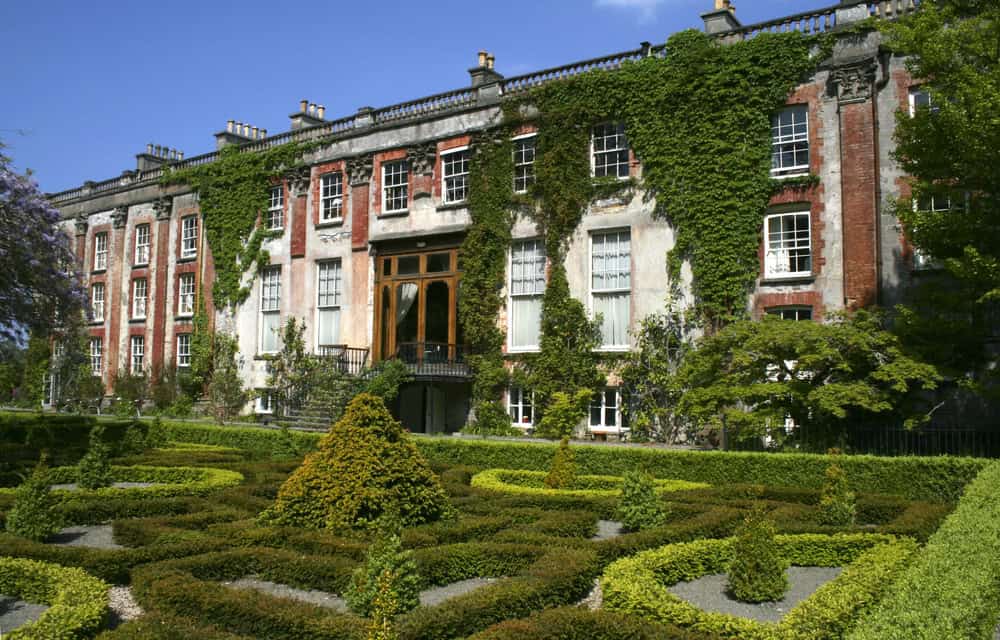

Bantry House and Gardens is one of the best historic-house visits in West Cork, combining lived-in interiors, formal terraced gardens and wide views across Bantry Bay.
The estate sits on the edge of Bantry town in County Cork and has remained with the White family since 1739. It has welcomed the public since 1946, which gives a visit an appealingly unvarnished quality: this is a family-run home with a substantial collection, not a house frozen behind velvet ropes.
Plan enough time for both the house and grounds. The rooms provide the historical texture, but the stepped gardens and bay-facing setting are what tend to linger in the memory.
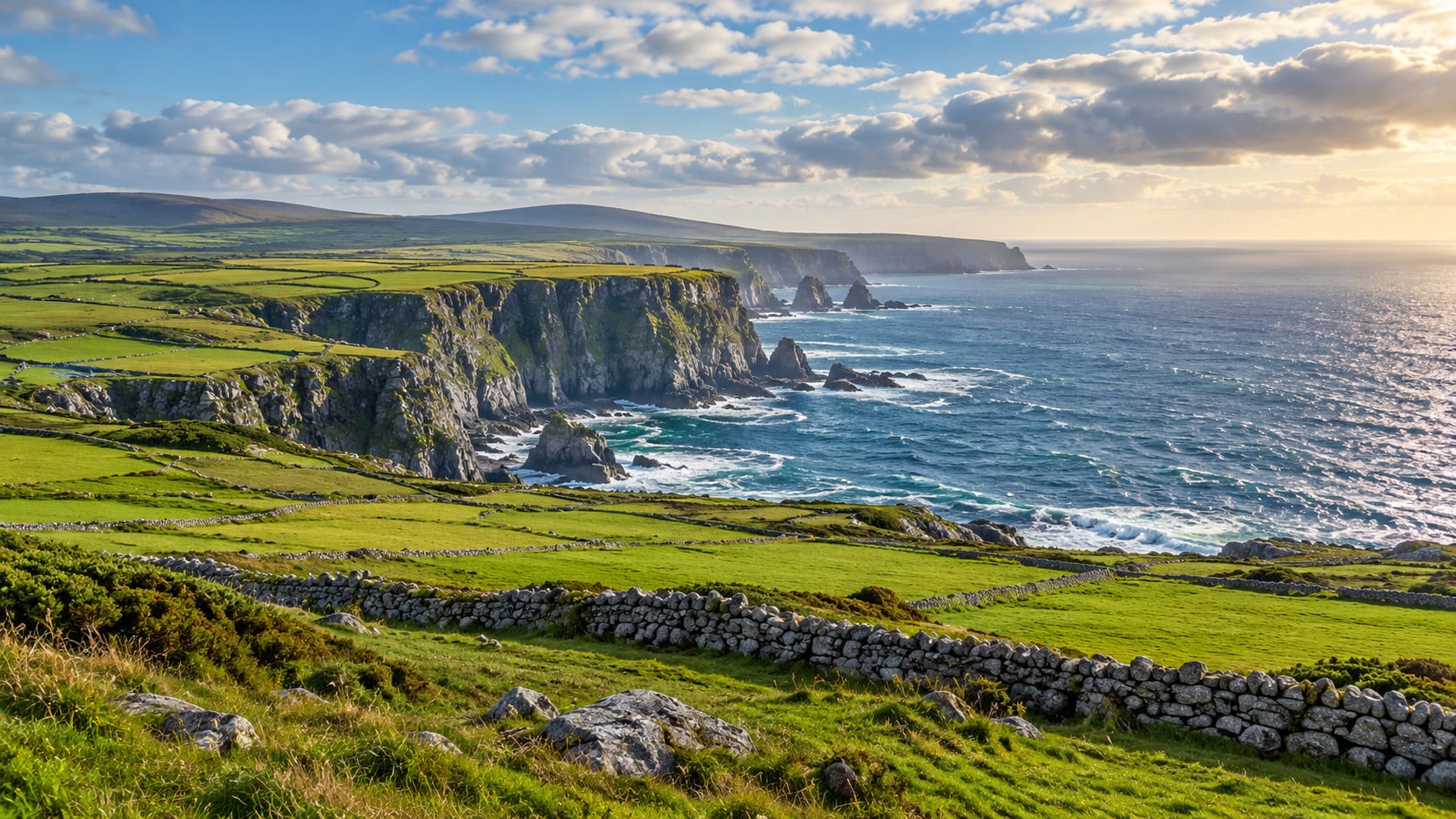
Bantry House overlooks Bantry Bay on Ireland’s southwest coast, with the Caha Mountains visible across the water. The setting does much of the heavy lifting, particularly on a clear day, but there is more here than a scenic lawn and a large old house.
Inside, the family displays an important private collection of furniture and art objects. The rooms retain the atmosphere of a house that is still occupied and managed by its owners, so the experience feels less polished than a major national museum and more personal for it. People interested in Irish country-house history, decorative arts and the White family’s long connection to the area will get the most from the indoor visit.
Outside, the formal garden rises in a sequence of seven terraces. The house stands on the third terrace, placing it within the garden layout rather than simply above it. This layered arrangement is the main reason to take your time instead of treating the grounds as a quick walk after the house tour. Garden fans planning a wider trip can also compare it with the more formal scale of Birr Castle Gardens and Science Centre.
The White family has owned Bantry House since 1739. The property became known as Seafield after Councillor Richard White acquired the earlier house, then called Blackrock, in 1750. The family’s prosperity and landholdings expanded around Bantry Bay over the following decades.
The present garden character is closely associated with Richard White, the second Earl of Bantry, and his wife Mary. Their travels in continental Europe informed an ambitious redesign intended to give the estate the feel of an Italian palazzo. That influence remains easiest to spot in the formal geometry of the terraces, the axial views and the long flight of steps behind the house.
The estate also has a connection to the attempted French landing in Bantry Bay in 1796, when a French fleet supporting the United Irishmen was prevented from landing by severe weather. Bantry House has interpreted this episode through its Armada Centre, adding a useful local-history layer to a visit that might otherwise be all gardens and Georgian grandeur.
Start indoors if you arrive early, especially if the weather looks changeable. The house contains original furnishings and decorative objects from the family collection, and its appeal lies in the accumulated detail: furniture, portraits and rooms that reveal how a grand residence was used over generations.
This is not a rapid, interactive attraction. Give yourself time to read the room notes and look closely, particularly if you are interested in the European influences that shaped the estate.
The garden is arranged across seven levels, with the house positioned on the third. Walk slowly upward and pause to look back toward Bantry Bay. The views open out as you climb, and the terraces make the grounds feel more expansive than they first appear from the entrance.
The layout is structured and formal, though it is not overly manicured in a theme-park way. That slight roughness suits a historic private estate on the Atlantic edge of West Cork.
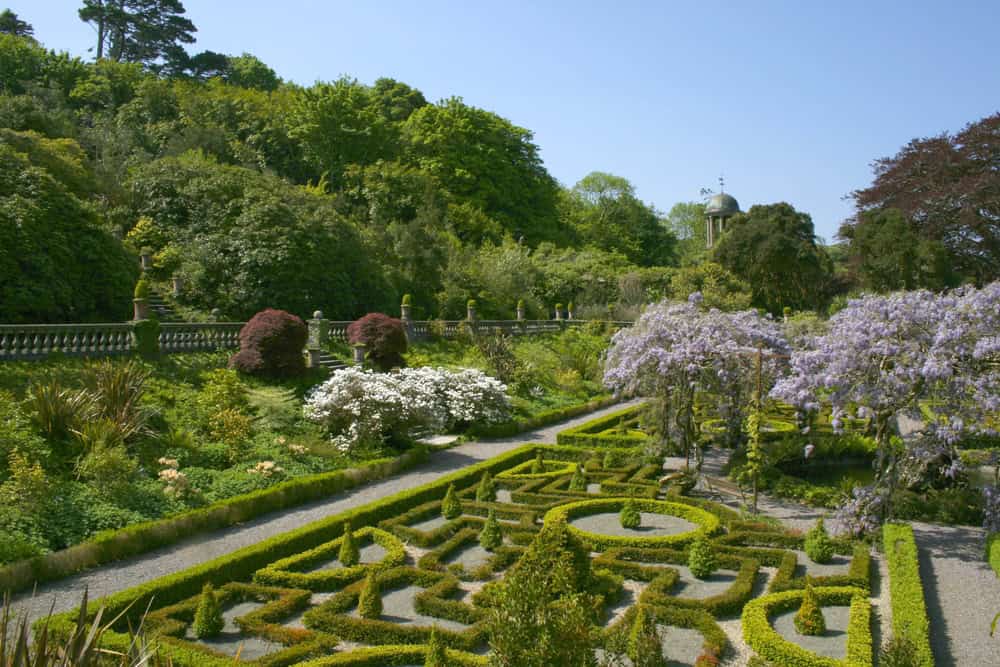
Behind the house, a dramatic run of 100 steps rises from the fountain area. Azaleas and rhododendrons frame this part of the garden, and the steps create the estate’s most recognisable view. They are also a genuine climb, so take them at an unhurried pace and wear shoes with decent grip after rain.
The garden also includes a large wisteria circle and woodland beyond the formal terraces. These areas soften the symmetry of the main design and make a good contrast after the house rooms and fountain steps. Garden-focused visitors should allow extra time during the flowering season, though the exact appearance of plants naturally varies with the weather. For a different take on planting and heritage grounds, Lismore Castle and Gardens makes a worthwhile addition to a longer Ireland itinerary.
Bantry House and Gardens generally welcomes day visitors daily from 10 a.m. to 5 p.m., with last admission at 4:30 p.m. The car park closes at 5:30 p.m. The estate has an April-to-October visiting season, but private weddings and special events can affect access to all or part of the property.
Check the estate’s published opening information before setting out, especially if Bantry House is the main reason for your journey. Standard visits do not require advance booking, while groups of eight or more are advised to book ahead for smoother service.
The estate’s Tearoom makes an easy pause during a visit, particularly after walking the upper terraces. Bantry House also offers Afternoon Tea in the Library, a more occasion-like option that fits the setting better than trying to squeeze in a rushed lunch elsewhere.
For an overnight experience, the East Wing operates as bed-and-breakfast accommodation. Staying there will appeal most to people who want the atmosphere of the house after the day-visit crowds have gone, though availability can be affected by weddings and events. Confirm arrangements directly before building a trip around it.
If you are based in Bantry town, Bantry House works well as a half-day outing. Its position beside the bay also makes it a natural first stop before driving toward the Beara Peninsula, Sheep’s Head or the Mizen Head area. For broader route ideas, see these things to do in Ireland and places to stay.
Late spring and summer are the strongest seasons for the garden, when the terraces, flowering shrubs and bay views make the fullest impression. The garden’s azaleas, rhododendrons and wisteria features give different reasons to visit across the growing season, so there is no single perfect week.
Morning is a sensible choice for people who want quieter rooms and more time outdoors before lunch. Later afternoon can be lovely for softer light across Bantry Bay, but do not cut it too fine because admission ends at 4:30 p.m.
Rain does not ruin the visit. Begin in the house, take tea, then head into the garden when there is a break in the weather. The terraces can be slippery, so leave the ambitious footwear for another day.
Bantry House and Gardens is particularly good for couples, garden enthusiasts, multigenerational groups and anyone building a slower West Cork itinerary. The house gives adults plenty to study, while the terraces and steps offer children a more active way to explore than a room-by-room museum visit.
It is less suited to anyone seeking a fully accessible, flat garden walk. The defining features of the grounds are the terraces and stairways, so mobility needs should be discussed with the estate before a visit. The experience rewards a measured pace, a little curiosity and a willingness to stop looking at the bay more than once.
Allow around two to three hours to visit the house, explore the seven garden terraces, climb the 100 steps and stop at the Tearoom. A shorter visit is possible, but the grounds are best enjoyed without rushing.
Advance booking is not required for standard visits. Groups of eight or more are advised to book ahead, and everyone should check for closures linked to weddings or private events before travelling.
Day visits are generally available daily from 10 a.m. to 5 p.m., with final admission at 4:30 p.m. The estate’s visiting season usually runs from April through October, subject to event-related changes.
No. Dogs are not permitted on the estate.
Yes, provided you are prepared for wet paths and steps. Start with the furnished house interiors, then visit the terraces when conditions improve; sturdy shoes and a waterproof layer are sensible choices.
Bantry House and Gardens earns its place on a West Cork itinerary because it offers several experiences in one stop: family history, decorative interiors, a formally designed garden and a remarkably open view of Bantry Bay. The 100 steps behind the fountain are the estate’s signature moment, but the slower pleasures are just as good: a quiet room in the house, the wisteria circle, and a cup of tea before heading back into Bantry.
Keep your schedule loose, check access arrangements before you go and give the terraces the time they deserve. Grand houses can sometimes feel like homework. This one has enough sea air to prevent that.

Matt Hook is a Canadian writer of Scottish and Irish heritage. He built his writing career creating detailed gaming guides, turning complex mechanics, history and lore into useful information for readers. Matt brings that same research-focused approach to Ireland Wide, where he writes about Irish travel, heritage, history and culture. He also holds CMA and CPA designations as a professional accountant, giving him a strong background in research, accuracy and attention to detail.
At Ireland Wide, our aim is to bring authentically Irish insights to you, wherever you are.
Whether you have some feedback or would like to offer some of your own insights for everyone else to explore, don't hesitate to get in touch with us!