

Ireland rewards travelers who plan their bases as carefully as their sightseeing. Stay in the right place and Ireland feels wonderfully easy. Pick badly and you can spend a lot of your holiday admiring the inside of a rental car.
This guide to Things to do in Ireland – where to stay and visit focuses on a handful of regions that work especially well for first-time and repeat trips. The aim is simple: fewer vague lists, more practical choices.
You will find specific places to visit, the kind of stay each region suits best, and a few planning notes that can save time once you are on the ground.
Ireland looks compact on a map, but driving times can stretch thanks to rural roads, coastal detours, and frequent stops for viewpoints. That is not a flaw. It is half the point.
For most trips, it makes more sense to use two to four bases rather than switching hotels every night. Good base towns let you mix cities, coastal scenery, and historic sites without turning the trip into a packing exercise.
| Base | Best for | What to visit nearby | Stay style |
|---|---|---|---|
| Dublin | Museums, historic sights, easy transport | Kilmainham Gaol Museum, The Little Museum of Dublin, Guinness Storehouse, Trinity College Dublin | City hotel for 2 to 3 nights |
| Galway | West coast city break and road-trip base | Connemara, Wild Atlantic Way sections, possible side trip toward Ballynahinch Castle area | City stay or nearby country hotel |
| County Clare | Sea cliffs and traditional culture | Cliffs of Moher, Miltown Malbay, coastal drives | Small-town hotel, guesthouse, or self-catering stay |
| Killarney | Kerry highlights and scenic touring | Ring of Kerry, Sceilg Mhichíl boat routes, Killarney area lakes and parkland | Classic hotel base for 2 to 4 nights |
| Donegal | Remote scenery, hiking, Atlantic coast | Sliabh Liag, Malin Head, beaches on the Wild Atlantic Way | Road-trip stop, inn, or seaside hotel |
Dublin makes sense as an arrival base because it packs several of Ireland’s best-known attractions into a manageable area. It is also one of the easiest places to explore without a car.
If your priority is walking to major attractions, stay in central Dublin. That keeps museums, restaurants, and rail connections simple. If you plan to collect a rental car, many travelers prefer to leave Dublin before picking it up or collect it as they depart the city. City driving is not usually anyone’s favorite holiday memory.
Best time to base here: year-round, especially at the start or end of a trip. If seasonal planning matters, checking the broader weather in Ireland can help you decide how much museum time versus outdoor wandering makes sense.
Helpful tip: two nights is enough for many itineraries, but three nights gives you room to see the major sights without sprinting between them. If you want evening ideas after the museums close, this city has plenty going on after dark, and there are lots of solid things to do in Dublin at night.
Galway is one of the easiest answers to the question of where to stay in Ireland. It has city energy, strong food and pub options, and quick access to the west.
It also works well if you want to split time between urban comfort and rugged landscapes. Travelers looking for a more upscale countryside stay often consider the wider Galway region, where places like Ballynahinch Castle are part of the luxury conversation.
Stay in Galway city if you want walkable evenings and easy dining. Consider a country stay in the wider county if your priority is scenery and a slower pace.
Best time to base here: spring through early autumn for road trips and longer daylight. For late-summer planning, a look at weather in Ireland in August is useful if you are weighing festival season against bigger crowds.
Helpful tip: Galway is a smart two- or three-night stop if your trip includes Clare or Mayo next.
County Clare is one of the strongest choices for travelers who care about dramatic coastline and classic west-of-Ireland atmosphere. The headline act is obvious, but Clare is better when you allow for more than one stop.
For the Cliffs of Moher, many travelers choose a village or small-town base in west Clare rather than doing a rushed day trip from a bigger city. That gives you a better chance of seeing the cliffs in calmer conditions and at different times of day.
Best time to base here: late spring to early autumn for road conditions, festivals, and longer sightseeing days.
Helpful tip: if you are pairing Clare with Galway, spend at least one night in Clare instead of commuting back and forth.
If you have time for only one base in southwest Ireland, Killarney is the practical favorite. It places you within reach of major scenic routes and boat departures while still giving you a proper town to return to at night.
Accommodation options in Killarney range from straightforward hotels to more traditional stays. The Dromhall Hotel is one example often mentioned by travelers planning a base in the town.
Killarney suits travelers who want to minimize hotel changes while exploring Kerry. It works especially well for two to four nights.
Best time to base here: late spring to early autumn, especially if you hope to take boat trips or combine several scenic drives.
Helpful tip: book early for peak travel periods because Kerry is one of the country’s most in-demand regions.
Donegal feels different from the more classic first-trip circuit. It is bigger, rougher around the edges in the best way, and packed with scenery that often feels less crowded.
Donegal works best for travelers happy to drive and to linger. A small inn, village guesthouse, or seaside hotel makes more sense here than a one-night whistle-stop.
Best time to base here: summer and early autumn for hiking, coastal roads, and longer daylight.
Helpful tip: give Donegal at least two nights. One night here is basically saying hello and then leaving before the kettle boils.
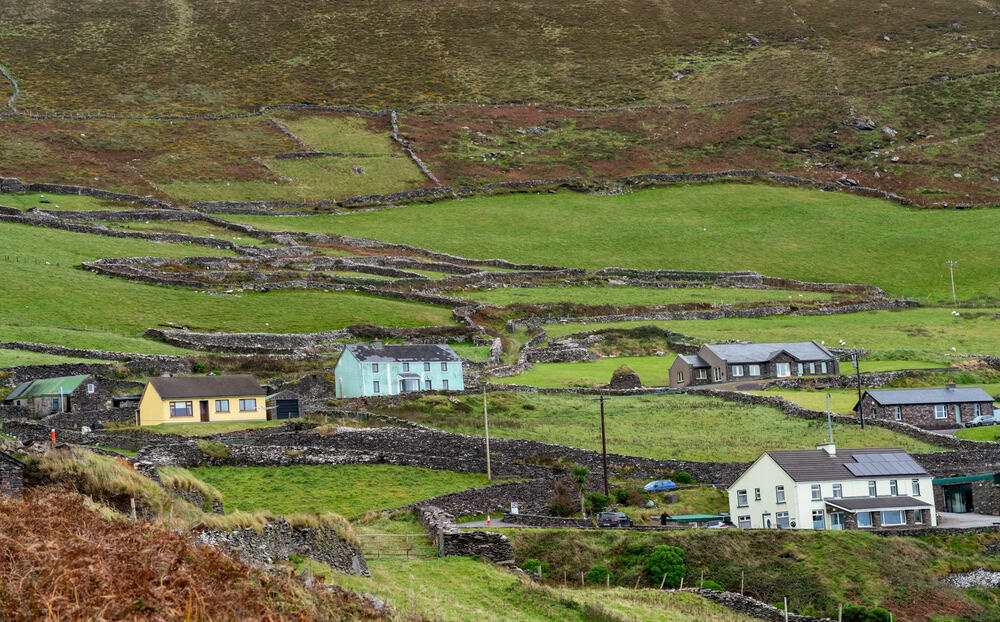
The Wild Atlantic Way is not one attraction. It is a long-distance touring route along Ireland’s western seaboard, stretching roughly 2,500 kilometers from Donegal to Kinsale in County Cork.
If your main goal is scenery, this route gives structure to the trip without forcing you to see everything. In practice, most travelers should choose one or two sections rather than trying to tackle the whole drive.
Best time to do it: late spring to early autumn, when daylight makes slow driving easier and weather disruptions are less annoying.
Helpful tip: do not attempt to sleep somewhere different every night. Pick regional bases and use them well.
If you want a practical starting point, this split works well for many first trips.
If you have longer, add Donegal for a second trip or an expanded west coast route. It deserves proper time.
The best answer to Things to do in Ireland – where to stay and visit is not a giant checklist. It is a smart route. Dublin gives you history, Galway gives you a flexible west coast base, Clare delivers iconic cliffs, Killarney unlocks Kerry, and Donegal brings the raw Atlantic edge.
Put those pieces together well and Ireland does the rest.

Matt Hook is a Canadian writer of Scottish and Irish heritage. He built his writing career creating detailed gaming guides, turning complex mechanics, history and lore into useful information for readers. Matt brings that same research-focused approach to Ireland Wide, where he writes about Irish travel, heritage, history and culture. He also holds CMA and CPA designations as a professional accountant, giving him a strong background in research, accuracy and attention to detail.
At Ireland Wide, our aim is to bring authentically Irish insights to you, wherever you are.
Whether you have some feedback or would like to offer some of your own insights for everyone else to explore, don't hesitate to get in touch with us!